
Optics Valley-Made Laser Sent to Space, Aiding Space Metal 3D Printing Experiment
Jan 21, 2026
Hubei Wuhan
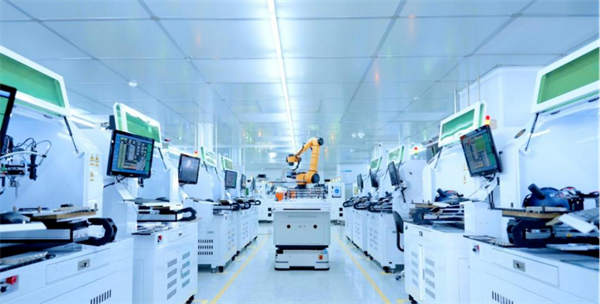
Raycus Laser Intelligent Manufacturing Workshop | Photo Courtesy of Optics Valley Media Center
Recently, the "Lihong-1" Yao-1 flight vehicle successfully completed its suborbital flight test mission at the Jiuquan Satellite Launch Center, with its payload capsule for microgravity laser additive manufacturing experiments successfully recovered. The laser used in this "space metal 3D printing" experiment was produced by Wuhan Optics Valley enterprise Raycus Laser.
During this maiden flight, the Lihong-1 test vehicle reached an altitude of approximately 120 kilometers, skirting the edge of space and briefly breaking through the atmosphere to enter space. The recoverable payload capsule carried experimental equipment, which performed the experiment during its space journey and brought the experimental results back to Earth.
Laser additive manufacturing operates like a 3D printer that uses a laser as its "pen" and metal material as its "ink," constructing metal parts layer by layer through melting and deposition. On Earth, however, gravity interferes with this technology, making it difficult to produce parts with near-perfect quality. In the microgravity environment at the edge of space, this "metal 3D printer" can operate free from gravitational disturbances, offering the potential to fabricate a new generation of spacecraft components with more uniform composition, more perfect internal structures, and enhanced performance.
As the core light source of the equipment, the laser acts like the "heart" of the "space metal 3D printer," ensuring the successful in-orbit operation of the experiment. A representative from Raycus Laser's marketing department explained that to meet the harsh conditions of space—such as microgravity, intense radiation, and extreme low temperatures—the team adopted a special radiation-resistant design. This enables the laser to operate stably across wide temperature variations, focus precisely on 0.1-millimeter-level molten filaments, overcome core challenges such as metal crystallization, and ensure the entire metal part formation process.
Relevant personnel stated that Raycus Laser will collaborate with aerospace research institutions and commercial space enterprises to enable more "Optics Valley-made" lasers to contribute to the production of rockets and other spacecraft.
Source: Department of Science and Technology of Hubei Province















 京公网安备11010802044359
Contact Us:86-10-58882453 86-10-58882413