
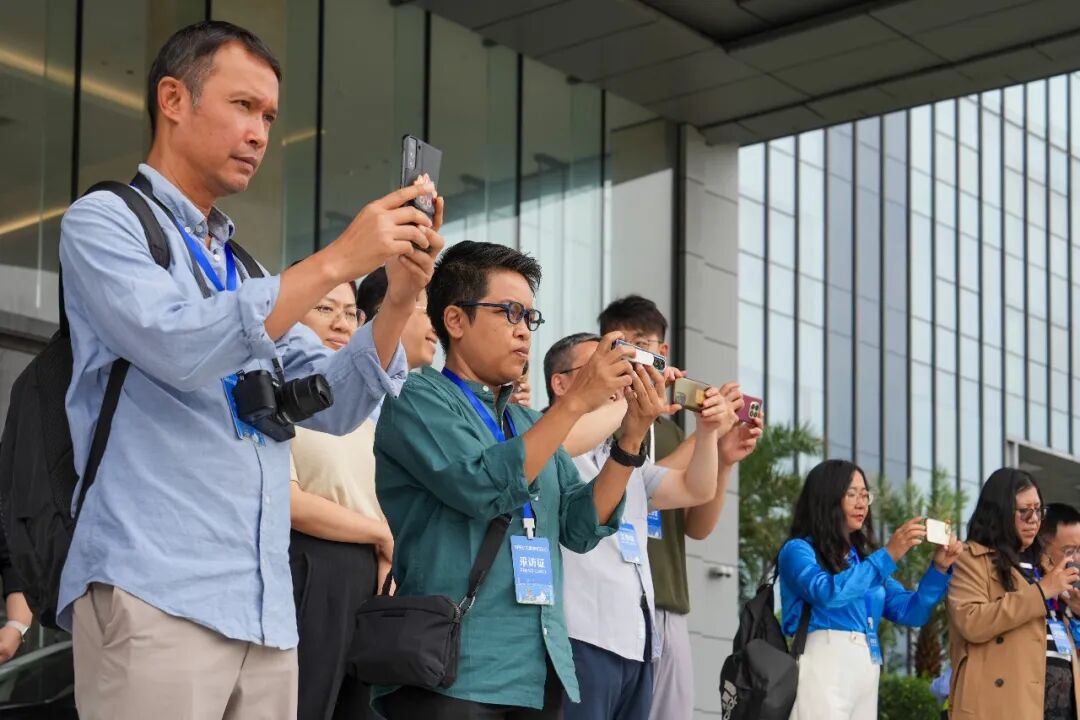
International journalists look on during a demonstration of the Yangwang U9 at BYD’s headquarters in Shenzhen’s Pingshan District on April 23. Photos by Lin Jianping
A group of 16 foreign journalists from Thailand, Indonesia, the Philippines, Vietnam, Malaysia, Chile, Mexico and Peru gathered in Shenzhen between April 23 and 24 for an APEC-themed tour.
The two-day visit offered these international media professionals a firsthand look at a typical Chinese story defined by innovation, openness and integration.
On April 23, the group visited BYD's headquarters in Pingshan and the Qianhai Kerry Center. They also attended a briefing titled “The Stories of CPC: Achievements of the Guangdong-Hong Kong-Macao Greater Bay Area in Practicing Xi Jinping Thought on Socialism with Chinese Characteristics for a New Era.”
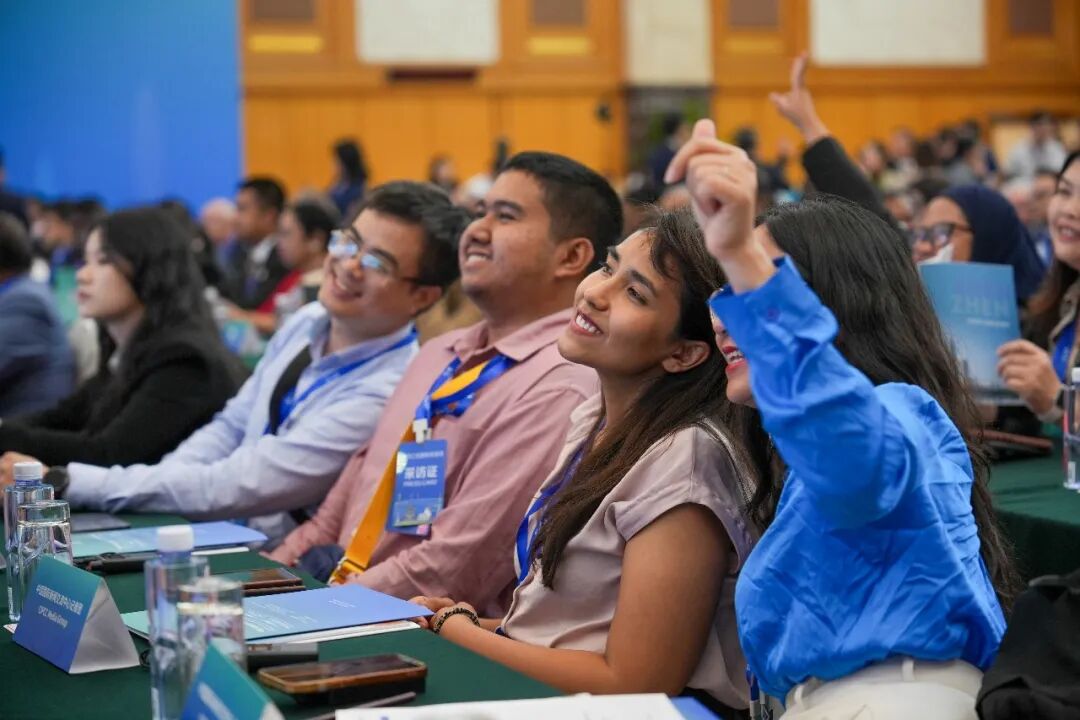
International journalists respond to speakers during “The Stories of CPC” briefing on April 23.
Their second day in Shenzhen focused on technology, particularly AI products and robots. On April 24, they visited Huaqiangbei, known as "China's No. 1 Electronics Street," and the Robot Valley to explore how the city is delivering the latest technological solutions.
‘We are really interested in purchasing one’
Video by Lin Jianping
At BYD’s headquarters, the rapid demonstration of the Yangwang U9 drew gasps from the crowd.
“It’s a very innovative car, out of the ordinary. Really fast,” said Fica Salazar, a journalist from Chilevisión. She noted that Chile has already introduced quite a number of high-tech vehicles from BYD, including the red electric buses, which are “very comfortable.”
Barro Dexter II, a reporter with the Manila Bulletin, said that Chinese brands are becoming increasingly popular not only because of their higher quality, but also because they are “more within the public's reach, unlike those Western brands.” With rising fuel costs, he is seriously considering a Chinese electric vehicle (EV). “These EV alternatives are a good way forward,” he said.
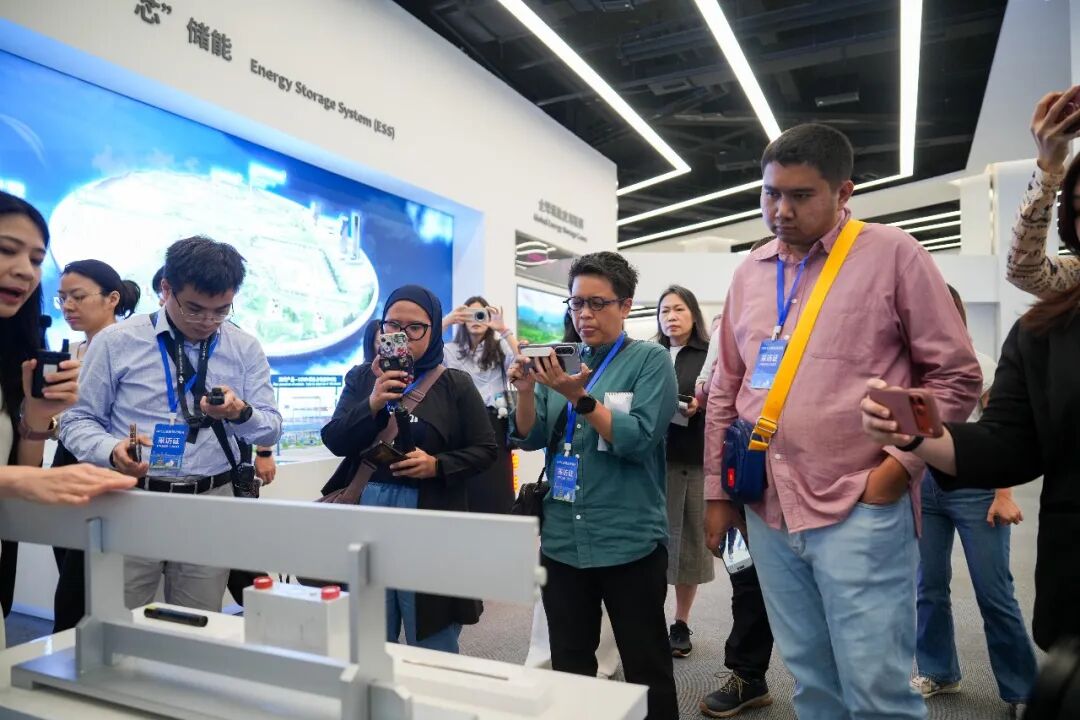
Participants document their visit to BYD’s headquarters in Shenzhen’s Pingshan District on April 23.
Juan Carlos, a journalist from Latina Televisión, saw a broader impact. “This pursuit of making and having better products seems important to me, especially because it helps competitors also strive to reach that level, and that is fabulous for consumers, because that way we all benefit.”
“It can be seen that China’s automotive technology is quite advanced, especially as demonstrated by BYD. It is breaking the stereotypes about Chinese cars, at least here in Latin America,” added Salazar.
‘HK, Macao, and Guangdong cities have become just one’
Video by Lin Jianping
When asked about the Guangdong-Hong Kong-Macao Greater Bay Area (GBA), Disthan Kornkit, international news editor at The Better News in Thailand, called it “amazing.”
“Hong Kong, Macao and all the cities in Guangdong Province are like one city,” he said. He believes this is because “the leaders have vision,” adding, “They have a very, very clear idea of how to turn this entire area into a new future for China, and for the world.”
In his view, the GBA is “the hub, an incubator of innovation.” What is the secret to its success? “Maybe the policy is the number one factor. The second is good infrastructure. Not just a bridge, you have people-to-people connections as well. You have an environment that is good for attracting talent — not only from other places in China to help build up this area, but also from abroad.”
‘Qianhai is like an incubator’
Video by Lin Jianping
At the Qianhai Kerry Center, Luki Aulia, a senior journalist from the Kompas newspaper in Indonesia, described Qianhai as “strategic.” “I think this place is so strategic because it’s at the heart of many industrial areas, and is one of the new engines of China’s economy.”
She said Qianhai is like an “incubator.” “Other places can see this as an example. If this area succeeds, then other areas can succeed too. We hope to see a success story from this area, so that we could also replicate it in other places or countries.”
‘Shenzhen gives me answer’
Video by Chen Siqi
Kornkit arrived in China with a question: how can the country grow its own homegrown technology, and what will drive its “next‑web” revolution? He said he found the answer in Shenzhen.
“Shenzhen, for a long time, has been known as the factory of the world, but now Shenzhen has completely transformed into a global center for innovation,” he said.
The Thai editor explained that the report he mainly worked on will focus on how China contributes to the world through innovation, particularly in artificial intelligence and robotics. More importantly, he said, it will examine how China weaves together different homegrown technologies.
Here in the Robot Valley, it is not just a cluster of companies; it also enables firms to support each other and grow together, he said. “Likewise, this model is not only in Shenzhen but throughout the country, with companies supporting each other within this ecosystem of development, becoming stronger and expanding into world markets with greater ease.”
Source: Shenzhen Daily
Events
More+-
【Shijiazhuang】Oriental Music · Five Continents – Oriental Classic Song and Dance Gala
-

【Changsha】 Paper Airplanes From Childhood– Chengdu Jinli Choir
-

Croatian Rhapsody & Pirates of the Caribbean Crossover Epic World Famous Music Concert
-

Time Concert—Epic of Light and Shadow · Legendary Movement – Classic Film and TV Golden Melody Symphony Concert
-
Registration opens for team event of 2026 Yangtze River Crossing Festival in Wuhan
Discover







 京公网安备11010802044359
Contact Us:86-10-58882453 86-10-58882413