
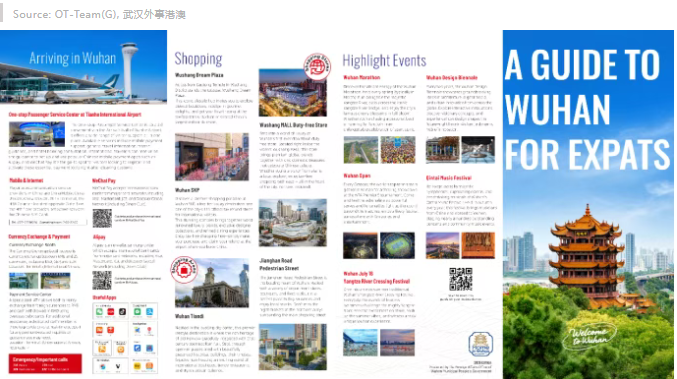
On March 19, Wuhan officially released the English-language foldout guide A Guide for Foreign Nationals in Wuhan, offering a practical and accessible resource for international residents and visitors navigating daily life in the city.
The launch comes amid a growing global trend dubbed “Becoming Chinese,” which has gained traction across overseas social media platforms. Increasingly, foreign travelers are moving beyond checklist-style tourism, seeking instead to engage more deeply with local culture and everyday life. In this context, March in Wuhan—coinciding with cherry blossom season—has emerged as an ideal gateway for immersive experiences in China.
According to incomplete statistics, visitors from more than 60 countries and regions booked hotels in Wuhan this March, while nearly 1,000 inbound tour groups arrived in the city, widely recognized as one of the world’s premier destinations for cherry blossom viewing. Alongside the seasonal influx driven by both the blossoms and the Wuhan Marathon, the city has responded with a thoughtfully designed guide addressing practical needs. It covers everything from setting up mobile payments upon arrival at the airport, to exploring the East Lake Greenway, to locating English-speaking domestic services.
Developed with input from expatriates living in Wuhan, the guide provides comprehensive information across key aspects of daily life—dining, entertainment, transportation, shopping, and healthcare. It highlights distinctive local experiences, such as skiing on the rooftop of Wushang Dream Plaza, processing tax refunds at Wuhan SKP, and visiting Gudesi Temple, known for its unique blend of four architectural styles. Even niche cultural traditions like the city’s annual river-crossing festival—cherished by locals during the summer—are included.
Rather than prescribing “how to live,” the guide offers insight into “how to experience life” in Wuhan. In doing so, it captures the essence of what makes the “Becoming Chinese” trend resonate: a genuine curiosity about, and connection to, everyday life in contemporary China.
The digital version of the guide is now available.

Source: OneTubeDaily









 京公网安备11010802044359
Contact Us:86-10-58882453 86-10-58882413