
"Can technology help humanity compensate for physical limitations?" Journalists and influencers from Indonesia, Azerbaijan, Morocco, Mexico and other countries continued to explore how technology can be used for good in Hangzhou. After visiting the field of embodied intelligence that "takes risks on behalf of humans", the media delegation raised this new question.
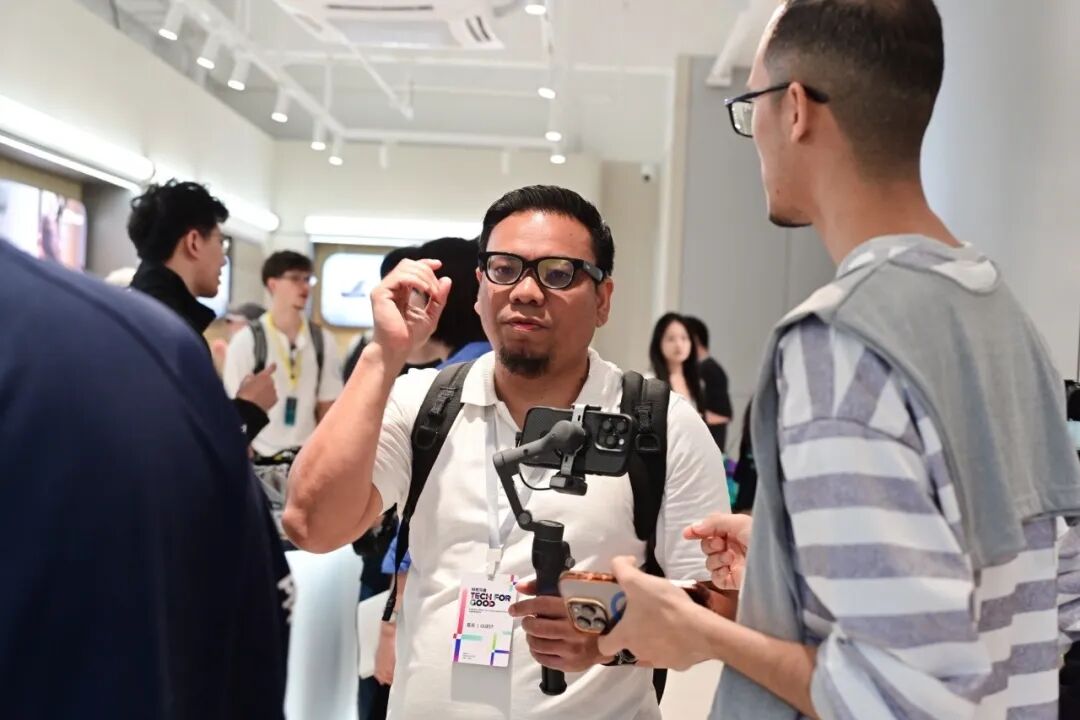
At Rokid, Indonesian RTV News Operations Director Jhoni Marcos filmed himself along the way as he experienced “cool” AI and AR glasses, capturing the entire moment on camera. Finally, he paused at a less “flashy” application scenario. On a display board, Rokid Glasses use a high-precision camera to capture and interpret environmental information, while an AI system analyzes the visuals and transmits detailed descriptions of surrounding objects to visually impaired users through directional speakers. Rokid AR glasses can also help children with autism complete origami activities through animated and voice guidance, supporting the development of fine motor skills and hand-eye coordination. “Children with autism are often highly sensitive to unfamiliar environments, but the engaging and low-pressure interaction of AR can encourage them to participate more actively,” said Julie Zhu, head of Rokid’s Global Operation Center. After hearing this, Jhoni’s eyes lit up. With the help of technology, visually impaired people and others with disabilities may feel more willing to step outside and engage with the world.
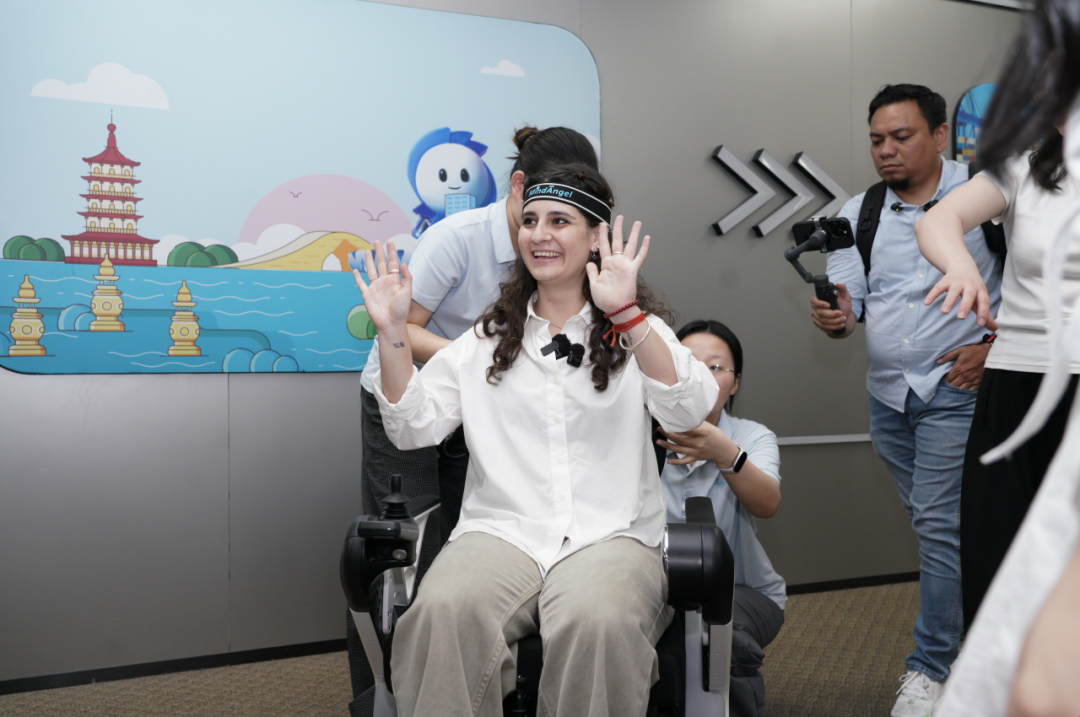
If AR glasses are about rebuilding the way people perceive the external world, then the brain-computer interface technology developed by MindAngel focuses on strengthening the brain’s intent to better control the body. They have built a fully integrated in-house R&D system, covering hardware development, software architecture, and algorithm optimization. “MindAngel’s brain-computer interface technology has already been applied in multiple fields, including healthcare, rehabilitation, and education,” said Hu Dan, deputy general manager of MindAngel,“These applications cover attention training, academic enhancement, autism intervention across all age groups, and early prevention of cognitive impairment in the elderly, among others.”
“Brain-computer interface technology can help many people, especially by supporting intervention and treatment for individuals with autism,” said Andrea Moreno, an influencer from Mexico. During the hands-on experience session, she was the first to sit in a brain-controlled wheelchair. Wearing a lightweight EEG electrode cap, she issued commands using her brain. At first, things didn’t go smoothly. Kazakhstani blogger Kamilla quickly suggested she try thinking in her native language—and indeed, the wheelchair’s response became noticeably smoother and more responsive. Pakistani influencer Aqeel was equally excited, exclaiming, “It feels like a movie has come to life! I’m in Hangzhou, sitting in Professor X’s mind-controlled wheelchair!”
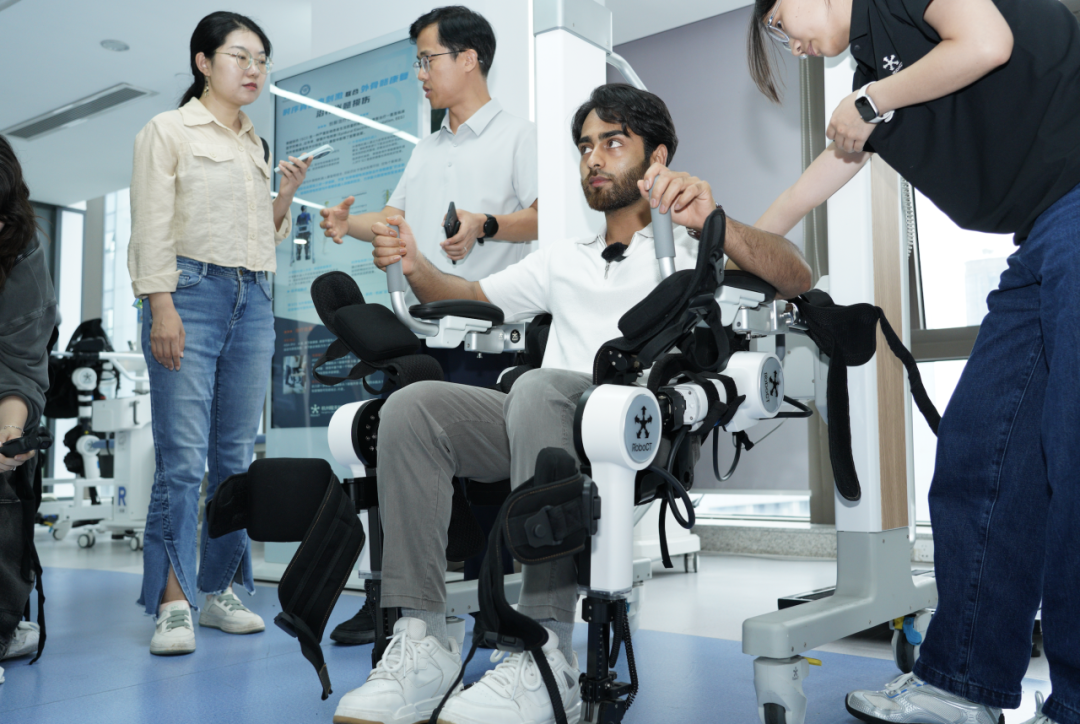
As the experience deepened, Aqeel, who has a medical background, found that instead of fading, his questions only multiplied. At RoboCT Technology, Aqeel immediately began trying out various exoskeleton devices under the guidance of engineers, and quickly raised a series of questions: How do the machines recognize and adapt to patients with different rehabilitation needs? How do they achieve intelligent, real-time adjustments? And are there products available that can support rehabilitation for patients with spinal cord injuries?
Technical staff at RoboCT Technology explained that they have partnered with leading medical institutions such as Beijing Xuanwu Hospital and Huashan Hospital Fudan University, successfully carrying out multiple cases of combined “spinal cord stimulation + exoskeleton” therapy. One patient, who lost the ability to walk after a traffic accident, was able to stand independently 14 days after surgery and walk 5 meters on his own within 28 days.
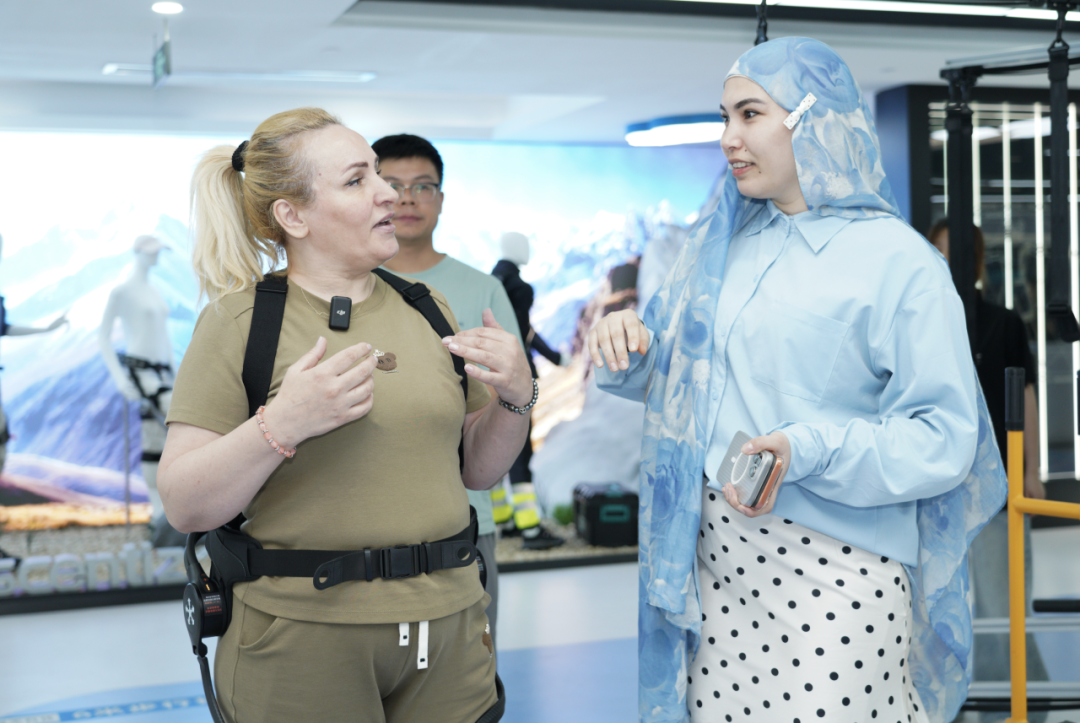
Initiated by the Hangzhou International Communication Center (HZICC), the second phase of the "Gateway to Opportunities, China's Industry Stories" international communication program has gone through a month-long global recruitment campaign. From June 3 to 5, the final delegation brought together overseas media professionals and influencers from countries including Indonesia, Azerbaijan, Morocco, Mexico, Kazakhstan, Turkmenistan, Pakistan, and other countries. They embarked on a journey to explore what is “Tech for Good” in Hangzhou.
Journalist: Wang Jiao, Fang Boyi
Editor: Chen Miaolin
Senior editor: Zhou Ji, Li Zheng
Source: Hangzhoufeel
Events
More+-

Hebei National Orchestra Mid-Autumn Gazing at the Moon National Music Concert
-

Rebellious Old Men Youth Concert — Tangshan Station
-

Discover World in Beijing at 'Colourful World' at CIFTIS!
-

Celebrate Mid-Autumn by Grand Canal! 4th Beijing International Canal Arts Fest to Open Soon
-

2026 Chengdu Open Set to Kick Off
Discover










 京公网安备11010802044359
Contact Us:86-10-58882453 86-10-58882413