
Nantong's Upgraded Talent Policy (4.0): Leveraging a “Policy Ecosystem” to Break the Stalemate of “Involutionary” Talent Competition in the Yangtze River Delta
Mar 25, 2026
NantongNantong, as the central city on the northern side of the Yangtze River Delta, is accelerating the construction of a modern industrial system. Against the backdrop of increasingly intense regional talent competition, Nantong has launched the upgraded version of its Talent Policy (4.0). This policy represents a significant achievement in the continuous iterative evolution of Nantong's talent work, marking a profound shift in its talent policy approach from "inclusive subsidies" to "precision ecological construction."
It is noteworthy that what has been released this time is not a single policy document, but a meticulously designed "1+N" integrated policy package. It consists of the framework document "Several Policies for Promoting High-Quality Talent Development with Greater Efforts," and two special policies: "Several Measures for Supporting the High-Quality Development of AI Talent" (abbreviated as “AI Talent "Tong 8 Measures") and "Several Measures for Supporting the Innovation and Entrepreneurship of Returned Overseas Talents" (abbreviated as Returned Talent "Tong 9 Measures"). This "1+N" policy integration model forms a "policy instruction manual" for talents, fundamentally solving the previous pain point of talent policies being "scattered across multiple sources and difficult to overview," significantly enhancing the policy's accessibility and readability.
The new policy adheres to the principles of being industry-oriented, talent-centric, and ecology-supported. It achieves multiple breakthroughs in financial investment, policy precision, talent coverage, and service guarantees. It is strategic, systematic, and innovative, providing a representative policy sample for prefecture-level cities seeking to seize talent opportunities and drive industrial upgrading.
Core Highlights: Multidimensional Breakthroughs to Create a Strong Magnetic Field for Attracting and Retaining Talent
This new policy breaks away from the traditional single model of talent policies focused on financial subsidies. It builds a comprehensive, full-cycle talent support system by leveraging four dimensions: financial intensity, industrial alignment, full-age coverage, and ecological construction, demonstrating strong competitiveness among domestic prefecture-level cities.
"Substantial" Financial Investment Covering the Entire Innovation Chain
The new policy offers "real gold and silver," demonstrating the city's determination to attract talent. For top talent projects in key industries like artificial intelligence, an "individual case discussion" approach is adopted, with a maximum grant of 100 million yuan, establishing an absolute financial advantage among prefecture-level cities. More notably, the new policy constructs a full-cycle financial support chain covering the start-up, growth, and development stages: the start-up phase offers up to 10 million yuan in equity investment through the "Grant-Investment-Equity" model; the growth phase provides up to 15 million yuan in "Jianghai Talent Loans"; the maturity phase guides social capital such as angel investments and science and technology innovation funds to follow. Simultaneously, a risk compensation fund is established, providing up to 70% risk compensation for loans to "New Technology, New Industry, New Business Model" projects, gradually forming a financial ecosystem of "government guidance + market operation + risk sharing." Among these, the "Grant-Investment-Equity" model innovatively combines fiscal funds with market risks, not only alleviating difficulties for start-ups but also striving for a virtuous cycle of fiscal funds, breaking the traditional one-way output model of fiscal subsidies.
Targeting the AI Track, Deeply Integrating Industrial and Talent Policies
Nantong's designation of artificial intelligence as a key industry is no accident. In the Yangtze River Delta region, with Shanghai focusing on basic research, Hangzhou on application scenarios, and Suzhou on intelligent manufacturing, Nantong targets the integrated track of "AI + Manufacturing." The introduction of the "Tong 8 Measures" is both a precise response to the regional division of labor and a strategic choice reflecting Nantong's effort to build a "differentiated competitive advantage."
The establishment of the special AI Talent "Tong 8 Measures" sends a clear signal: Nantong's emphasis on the AI industry is not just a strategic direction but is also translated into concrete policy support. The new policy does not simply incorporate AI talents into the existing policy framework but focuses on promoting the precise linkage between industrial policies and talent policies:
Scenario-Driven Talent Attraction: Up to 1 million yuan reward for typical AI application scenario projects, precisely attracting application-oriented teams with mature technology and business models.
Ecological Construction for Talent Retention: Support for establishing AI majors and building public training bases, innovatively creating an OPC (Open-Planning Community) to provide a "plug-and-play" one-stop solution for AI start-up teams: office space solves the problem of workspace, inclusive computing power reduces R&D costs, and living facilities eliminate worries. Addressing the "asset-light, technology-heavy, high-flexibility" characteristics of AI start-up teams, the OPC community significantly lowers the barrier to starting a business. It is a practical implementation of the "space-as-a-service" concept, forming a complete closed loop from talent cultivation to entrepreneurial incubation.
"Grant-Investment-Equity" Innovative Support: Supporting AI entrepreneurial talent projects with up to 10 million yuan through the "Grant-Investment-Equity" method, converting fiscal funds into equity, sharing risks and growth with talents.
Covering Young Talent, Full-Chain Guarantees Demonstrating Urban Warmth
The policy achieves full-cycle, multi-level coverage for young talent, spanning from college to doctoral students, from current students to postdocs, and from job seeking to settling down:
Job Seeking Stage: The design of youth hostels offering up to 60 days of free accommodation reflects deep insight into the job-seeking cycle of young talent. It takes an average of 30 to 45 days for a college graduate to go from submitting resumes, attending interviews, and securing a position to starting work. By extending the free period, Nantong effectively reduces the "trial-and-error cost" for young talent, demonstrating the policy wisdom of moving from "attracting" to "retaining." University teachers and students invited to Nantong for talent recruitment activities can enjoy up to 2,000 yuan in transportation subsidies and up to 7 days of free accommodation and meals.
Early Employment Stage: A living allowance of up to 3,000 yuan/month is provided, with the entitlement period extendable from 3 to 5 years.
Settling Down Stage: The talent housing voucher system includes college graduates (80,000 yuan), with amounts of 100,000 yuan for bachelor's degree holders, 150,000 yuan for master's degree holders, and 300,000 yuan for doctoral degree holders. It is noteworthy that Nantong's inclusion of college graduates in its talent housing voucher scheme is relatively rare among prefecture-level cities in the Yangtze River Delta. Most cities' housing voucher policies only cover young talent with bachelor's degrees or above. Nantong's "downward extension" strategy aims to build a multi-level skilled talent force and reflects the importance it places on industrial workers and technical backbones, laying a solid foundation for improving the city's population quality and development vitality.
Building a Talent Ecosystem, Two-Way Efforts in Marketization and Humanization
The new policy abandons the government's "going it alone" model for talent attraction. It focuses on three aspects—university-local integration, market participation, and full-cycle services—to build a high-quality talent ecosystem:
University-Local Integration: Supporting university teachers to take leave for entrepreneurship (retaining personnel relations for three years) and enterprise experts to hold part-time positions in universities. Joint talent attraction resettlement subsidies of 500,000 to 2 million yuan per person are provided, striving to break down the "walls" between industry, academia, and research, and promote the free flow of talent.
Market Participation: Offering substantial rewards to talent-attracting entities such as enterprises, institutions, and human resources agencies, actively building a societal-wide network for talent attraction.
Full-Cycle Service: The "Jianghai Talent Card" not only addresses routine matters like spousal relocation and children's education but also thoughtfully introduces parental care subsidies. This directly addresses a core concern of high-level talent—most high-level talent come from other provinces and cities, facing the real dilemma of "settling in a new place" versus "balancing loyalty and filial piety." Through this innovative design, Nantong helps solve the challenge of balancing young talent’s "immediate family" and "extended family," serving as a typical case of talent services extending from "individualization" to "familiarization"
Value Outlook: Anchoring on Talent Core, Empowering High-Quality Development
The Nantong Talent Policy 4.0 Upgrade is a high-quality policy document with clear industrial orientation, distinct talent levels, rich support methods, and a warm service ecosystem. Its core value lies not only in the substantial financial investment but also in its profound understanding and grasp of the laws of talent development and the needs of industrial development.
Strategic Determination: Leading Future Industrial Development with Talent
The new policy not only focuses on future industries like artificial intelligence, striving to lead industrial upgrading with talent, but also appropriately binds fiscal funds with industrial risks through innovative mechanisms like "Grant-Investment-Equity." This strategic determination reflects Nantong's clear awareness of positioning itself and making precise efforts within the Yangtze River Delta industrial division of labor. The special design of the "Tong 8 Measures" moves industrial policies and talent policies from "parallel tracks" to "integration," providing important institutional guarantees for "gathering talent through industries and revitalizing industries through talent."
Systematic Thinking: Building a Full-Chain Talent Support System
From top scientists to young university students, from free accommodation during job seeking to subsidies for house purchases, the policy strives for an organic combination of "reaching for the sky" and "covering the ground." More notably, the policy design runs through the entire lifecycle of talent "attraction, cultivation, utilization, and retention," with each link interconnected and mutually supportive, initially forming a relatively complete institutional closed loop. This systematic thinking advances Nantong's talent work from "fragmented policies" towards a "systematic ecosystem."
Reform Courage: Breaking Development Bottlenecks with Mechanism Innovation
The "Grant-Investment-Equity" model combines fiscal funds with market risks, exploring the transition from "blood transfusion" to "blood production"; the OPC community lowers the threshold for entrepreneurship with the "space-as-a-service" concept; parental care subsidies extend the service reach from the talent themselves to their family units. These innovative designs showcase Nantong's reform courage and governance warmth as a key city in the Yangtze River Delta, providing a "Nantong exploration" for solving common problems in talent work.
Demonstrative Significance: Providing a "Nantong Sample" for Prefecture-Level City Talent Policies
Against the backdrop of "trillion-yuan cities" competing to attract talent, Nantong's "1+N" policy package attempts to build a replicable and iterable talent governance system. Its value lies in: not simply stacking preferential policies, but exploring a reconstruction of the policy supply logic; not blindly competing over financial amounts, but striving for precise alignment with industrial needs; not the government monopolizing everything, but attempting to build a multi-governance ecosystem. This provides a reference model for prefecture-level cities across the country to transition from "policy subsidies" to a "policy ecosystem."
Implementation Outlook: From "Policy Documents" to "Governance Effectiveness"
Any good policy must undergo the test of implementation to move from "document" to "reality." While the systematic nature and innovation in Nantong's new policy design are commendable, several key issues still require focused attention during the implementation process.
Sustainability and Risk Controllability of Funding Mechanisms
The new policy features substantial financial support, especially the "Grant-Investment-Equity" model and the design of the innovative financial chain, demonstrating the government's sincerity in sharing risks with talent. However, in practical operation, the following aspects require meticulous design:
The exit and circulation mechanism for "Grant-Investment-Equity" remains unclear. "Grant-Investment-Equity" converts fiscal funds into equity, with the original intention of solving enterprises' urgent needs while striving for a virtuous cycle of fiscal funds. However, at the operational level, issues such as how to price the equity, who the holding entity is, how to set the exit path and timeline, and how to recycle exit proceeds for re-support, if lacking clear institutional design, could lead to two outcomes: either being "afraid to invest" due to concerns about state asset loss, or forming new "idle funds" due to unclear exit mechanisms. It is recommended to explore the establishment of a "talent equity circulation pool," introducing third-party professional institutions to participate in evaluation and exit design, striving to ensure that fiscal funds can be "invested, exited, and circulated."
The "tolerance level" and practical definition of the risk compensation pool. Providing up to 70% risk compensation for loans to "New Technology, New Industry, New Business Model" projects reflects tolerance for innovation. However, during implementation, how to scientifically define the boundary between "normal risk" and "management negligence"? If the standard is too strict, the risk compensation may become ineffective; if too lenient, it may lead to moral hazard. It is necessary to establish a professional and objective fault-tolerance determination mechanism in the policy detailed rules, clarifying the conditions for liability exemption under due compliance.
The supporting pressure and implementation differences between city and county levels. Many financial supports in the new policy require matching funds or bearing by the city and county levels. The financial strength of Nantong's various districts and counties is uneven. Whether they can fully and timely provide the matching funds directly affects the actual "temperature" of the policy in different places. It is recommended to establish a municipal-level financial coordination and adjustment mechanism, providing appropriate preferential support to financially difficult areas to ensure fair implementation and balanced effectiveness of the policy across the city.
Precise Alignment of Industrial Demand and Talent Introduction
The new policy targets the AI track with the "Tong 8 Measures," reflecting a clear industrial orientation. The key to the policy lies in "precision," and this is precisely the aspect requiring the most effort during implementation.
A dynamic identification mechanism for industrial demand is not yet fully developed. What specific talents are needed for the integration of AI and manufacturing? Algorithm architects, data engineers, or compound talents familiar with industrial mechanisms? The demand varies greatly across different niche tracks. Without regular enterprise demand surveys and dynamically updated industrial talent catalogs, structural mismatches such as "introduced talents not needed by enterprises, needed talents not introduced" may still occur.
The challenge of effective supply for "scenario-driven talent attraction." The design offering "up to 1 million yuan reward for typical AI application scenario projects" is ingenious. But the key is, where do high-quality "scenarios" come from? Should enterprises actively declare them, or should the government sort out and release them? How to ensure the authenticity and attractiveness of the scenarios? It is recommended to establish a municipal-level AI scenario library, regularly release a "Scenario-driven Talent Attraction List," encourage enterprises to pose questions, talents to answer, and the market to verify, striving to make scenarios truly become the "phoenix trees" attracting talent.
The functional integration and operational challenges of the OPC community. The OPC community, offering "office space + inclusive computing power + living facilities," provides a "plug-and-play" one-stop solution for AI start-up teams. However, the operation of such communities is highly professional: how to continuously supply computing power at inclusive prices? How to upgrade entrepreneurial services from "basic property management" to "industrial empowerment"? How can the OPC truly evolve from a "physical space" to an "innovation community"? These issues need to be explored and answered in practice.
Cross-Departmental Coordination and Efficient Implementation of the Service System
The new policy focuses on three aspects—university-local integration, market participation, and full-cycle services—to build a talent ecosystem, which places higher demands on the coordination ability across departments, levels, and entities.
Barriers to "two-way flow" in university-local integration. Supporting university teachers to take leave for entrepreneurship and enterprise experts to hold part-time positions in universities aims to break down the walls between industry, academia, and research. However, in practice, how to ensure social insurance continuation, professional title evaluation, and assessment/promotion during the leave for entrepreneurship? How to determine the teaching qualifications and supervisor status for enterprise experts taking part-time positions at universities? If these details are not addressed, talent flow may still be "open in name but blocked in reality." It is recommended to subsequently formulate implementation detailed rules for university-local talent flow, clarifying operational norms for social insurance coordination, mutual recognition of professional titles, and distribution of achievement benefits.
The service capacity of the "Jianghai Talent Card." The "card" not only addresses routine matters like spousal relocation and children's education but also innovatively introduces parental care subsidies, directly addressing core concerns of talents. However, implementing this service requires data sharing and business collaboration among multiple departments, including civil affairs, health, human resources and social security, and finance. It is recommended to use the "one-stop online service" as a foundation, promoting "one-time submission, background coordination, and completion within a time limit" for talent service matters, and exploring institutional innovations such as mutual recognition of talent qualifications and social insurance coordination with cities like Shanghai and Suzhou.
The "precision" and "standardization" of market-oriented talent attraction incentives. Offering substantial rewards to talent-attracting entities such as enterprises, institutions, and human resources agencies aims to build a societal-wide talent attraction network. However, during implementation, how to scientifically define "successful talent attraction"? Is it based on the employment contract, the length of service, or output performance? If the definition is too broad, it may lead to arbitrage through "talent relocation"; if too strict, it may dampen the enthusiasm of market entities to participate. It is recommended to establish a two-tier determination mechanism of "basic reward + performance incentive," ensuring basic motivation while guiding long-term service.
The Nantong Talent Policy Upgrade (4.0), with its "1+N" innovative structure and comprehensive support system, provides a valuable reference for prefecture-level cities to build systematic talent policy systems. The above discussion is not a critique of the policy but an attempt to anticipate the "growing pains" it may encounter in complex real-world environments. The vitality of a policy ultimately depends on its implementation. It is believed that this new policy, full of sincerity and innovation, can be continuously refined and improved during implementation, truly transforming into a powerful driving force for the mutual growth of talents and the city. It will help Nantong continue to break through in the Yangtze River Delta talent competition, injecting continuous vitality into the city's high-quality development and the integration of the Yangtze River Delta.
Source: Source: Huanqiu Talent
Chinese Source:https://mp.weixin.qq.com/s/Jq7U5-D69vPbcat5s4AOZQ
The English version is for reference only. If there are differences between the English version and the Chinese version, the Chinese version shall prevail.
Events
More+-
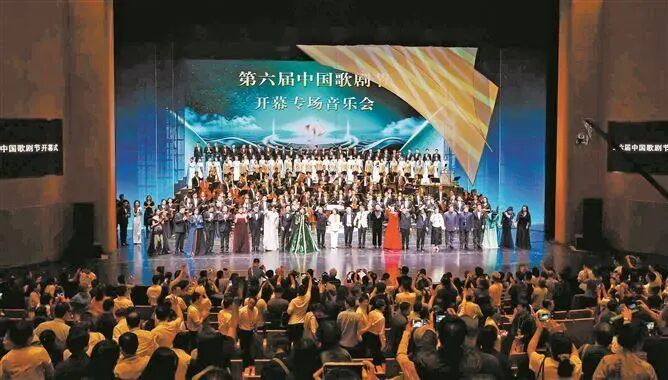
China Opera Festival opens in Xiamen
-

2026 Qingdao · Grand Theatre Art Festival 2026 Citizens' Concert Yesterday Once More · Century Classics — Oscar Golden Hits String Concert
-

Registration for 2026 Shenzhen Marathon to open Sunday
-

Source: Beijing Youth Daily; official WeChat account of the Beijing Marathon
-

Russian Soprano Aisulu Salmanova Chinese and Foreign Classics Concert
Discover









 京公网安备11010802044359
Contact Us:86-10-58882453 86-10-58882413