

Chinese people embraced the first day of sanfu, the hottest and dampest period of the year, in unique ways across the country. Sanfu, also called China's "dog days of summer", refers to three 10-day periods that are predicted to have the hottest days of the year. In the Chinese lunar calendar, Sanfu refers to the three 10-day periods that are predicted to be the hottest days of the year, which are called Toufu, Zhongfu and Mofu. Sanfu usually comes between mid-July to mid-August. As a millennium-old tradition, Chinese people are spending sanfu like their ancestors.
Traditional customs – When the dog days come, people tend to lose their appetites, and jiaozi, or boiled dumplings, can refresh people's feelings toward food. In many parts of China, it's a tradition to have dumplings on the first day of Sanfu. The dumplings have been given a special name — Toufu Dumplings. The second phase of Sanfu is traditionally a time for consuming noodles because it is believed to help people sweat and relieve internal heat. As Mofu comes, the weather turns cool, and it is easy to get cold if a person keeps eating noodles drenched in sweat. People, especially those living in North China, customarily eat the Chinese egg pancake.
TCM wisdom – In traditional Chinese medicine, sanfu is considered a particularly suitable time for treating illnesses. Sanfutie, a special treatment, has been used by Chinese people for hundreds of years. Sanfutie, or Sanfu medicinal patch, is a bandage made of traditional Chinese herbal medicine. Practitioners of traditional Chinese medicine (TCM) believe that receiving Sanfutie during the hottest summer days is effective for coughs, asthma and arthritis; it is a patchwork solution for winter ills in summer. The treatment is based on the TCM principle of yin and yang, which believes the balance of both elements in the body is vital for good health. Sanfutie contains a paste of herbs that are "hot" in nature, and when applied to specific acupuncture points, usually on the back and neck, they replenish the yang elements. These patches have been used in TCM since earliest recorded times, according to Huangdi Neijing (The Inner Canon of the Yellow Emperor), more than 2,000 years ago, the time-tested textbook for TCM practitioners.
Regional food customs – In Tai'an, Shandong province, people flocked to barbecue shops to eat mutton on sanfu. The custom of eating mutton during sanfu can be traced back to the Yao period, about 4,200 years ago. According to Chinese medical theory, drinking hot mutton soup can disperse the cold in the stomach caused by drinking cold beverages. There is also a custom in Southern Shandong province where people drink mutton soup during Sanfu, which is called "summer mutton soup". It is believed that mutton which is hot in nature can relieve internal cold. As the weather in Changsha, capital of Hunan province, is hot with heavy rainfall in summer, people there eat rooster during Sanfu, especially during Toufu. They believe that it can clear the damp. There is an old saying that goes "A rooster at the start of Sanfu, a healthy body the whole year."
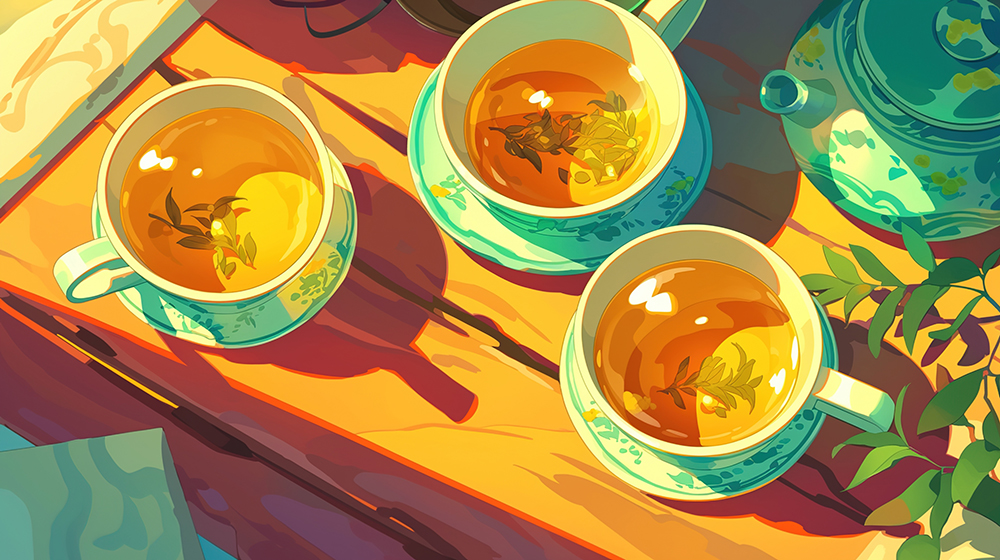
Jasmine tea tradition – In the scorching heat, the jasmine flowers are blooming in Fuzhou, Fujian province. Sanfu is the busiest time for the jasmine tea industry. During the sanfu period, jasmine flowers contain the highest level of essential oils, which is indispensable for first-class jasmine tea.
Cultural note – Interestingly, in the West, people observed that the brightest star in the night sky, Sirius, rises with the sun at dawn during the hottest time of the year. Believing this brought double the heat, they called this period the "dog days". Both China's Sanfu period and the "dog days" in Western countries show that different cultures have shared memories of summer's intense heat.
In TCM theory, sanfu days offer the ideal window to drive out excess cold from the body and fend off winter illnesses ahead of time.
Source:Chinajob












 京公网安备11010802044359
Contact Us:86-10-58882453 86-10-58882413