
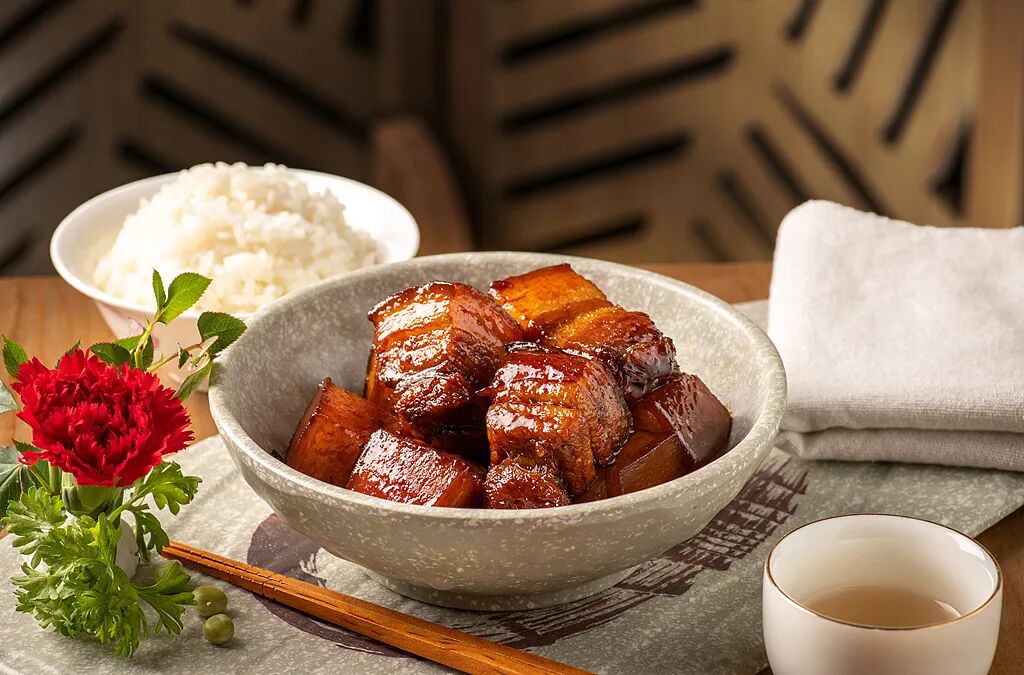
In Shanghai, red-braised pork belly — a soy sauce-braised dish known in Chinese as hong shao rou (红烧肉, hóng shāo ròu) — is more than a beloved local specialty. For many residents, it evokes family meals and the comforting taste of home.
The dish is instantly recognizable: deep amber-red cubes of pork belly, meticulously cut, with distinct layers of skin, fat, and lean meat. It may look simple, but achieving perfection requires precision. Heat, time, and seasoning must be carefully balanced, with no element pushed too far.
Red-braised pork belly feels equally at home on a family dining table or in an upscale Shanghai restaurant, a rarity for a dish rooted so firmly in homestyle cooking.
Origins: slow cooking, long history
Early references to meat stewed in seasoned liquid appear in Qimin Yaoshu (齐民要术, qí mín yào shù), an agricultural text attributed to Jia Sixie and compiled around the sixth century. While it does not describe today's red-braised pork belly, it records early slow-cooking techniques that would later influence Chinese braising.
A later, better-known example is Dongpo pork (东坡肉, dōng pō ròu), a slow-braised pork dish associated with the Song Dynasty (960-1279) poet Su Dongpo (1037-1101) and closely linked to Jiangnan culinary traditions.
Over time, these techniques merged with local tastes in Shanghai. The city's version came to emphasize pork belly, dark soy sauce for color, and rock sugar to achieve a balanced sweetness.
What defines Shanghai-style red-braised pork belly
At its core, Shanghai-style red-braised pork belly is defined by balance.
It is sometimes described informally as "a soy sauce bottle in one handand a sugar jar in the other", a simple way of describing its sweet-savory profile.
When well executed, the dish presents three distinct textures:
- The skin becomes soft and slightly elastic, rich in collagen.
- The fat layer melts into a smooth, almost creamy consistency.
- The lean meat remains tender while retaining its structure.
The sauce should lightly coat each piece, glossy but not heavy, rich but not overpowering. The flavor is gently sweet and savory, with neither element dominating.
In many households and restaurants, additional ingredients are added to the pot, such as bean curd knots, bamboo shoots, or chicken and quail eggs. These absorb the sauce and help balance the richness of the dish.
Where to try it in Shanghai (Yuan Yuan)
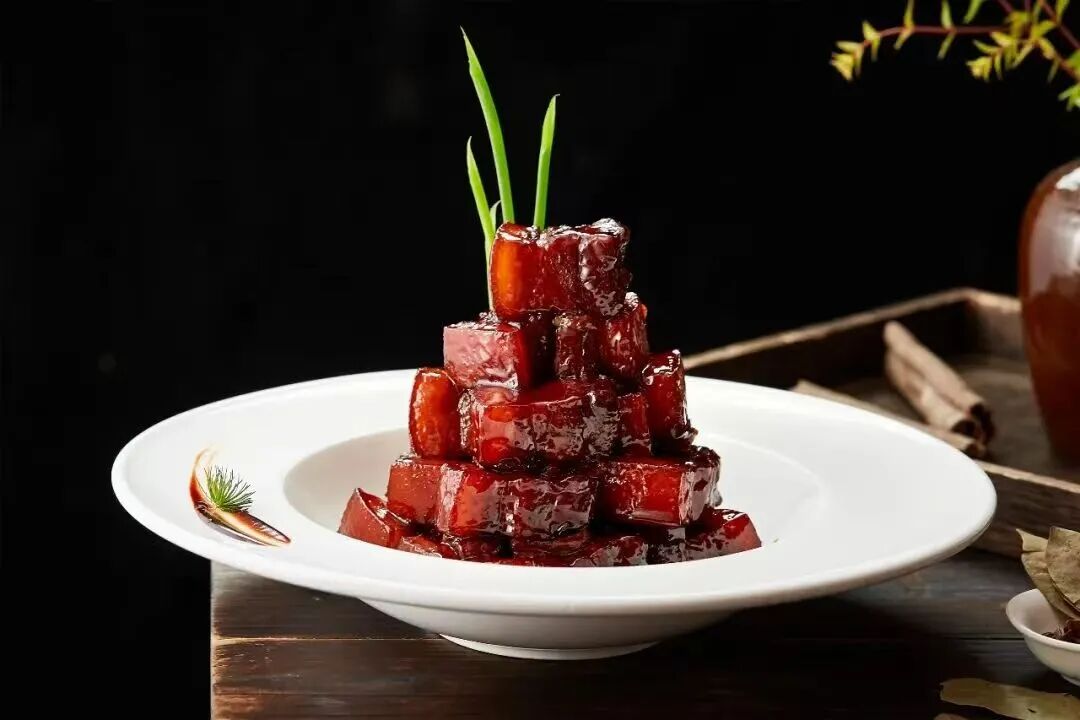
Often regarded as one of Shanghai's most established destinations for red-braised pork belly, Yuan Yuan has been serving the dish since 1999 and continues to draw a steady stream of regular diners.
The restaurant uses pork belly with ribs attached to achieve a harmonious fat-to-lean balance. The dish is prepared in traditional Shanghai style, featuring dark soy sauce for color, rock sugar for sweetness, and a long, slow braise without any thickening agents.
- Address: 2F, Lippo Plaza, No 222 Middle Huaihai Road
- Business hours: 11 am to 9:30 pm
- Price: 168 yuan ($24.59) per serving
Lyceum Restaurant
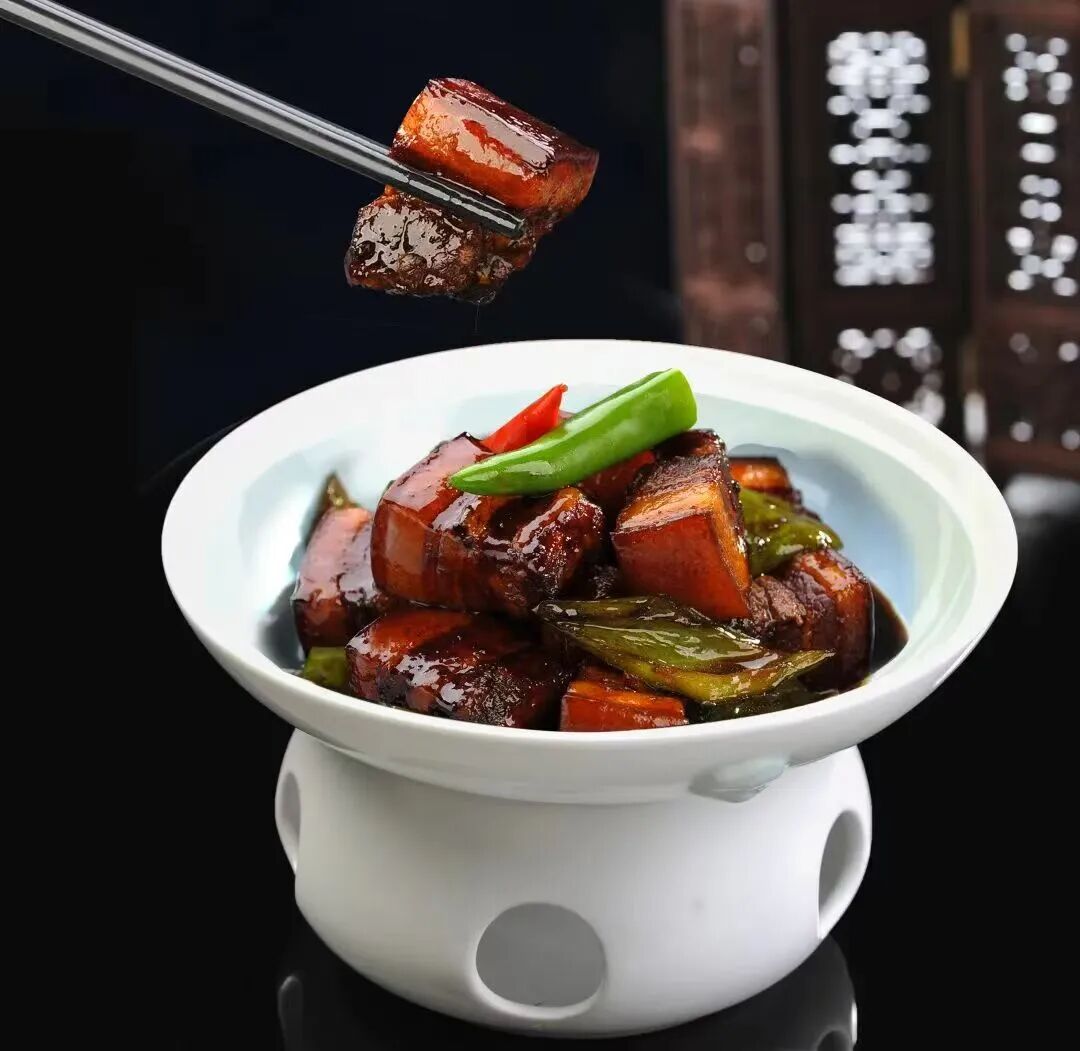
Located on Jinxian Road, Lyceum Restaurant is a long-standing neighborhood eatery with a simple layout and limited seating. It does not accept reservations, so queues are common.
Its red-braised pork belly is cooked in a wok over steady heat. The sauce is reduced until thick enough to coat the pork while remaining relatively light, resulting in a soft texture that still holds its shape.
- Address: No 130 Jinxian Road
- Business hours: 11 am to 2 pm, 5 pm to 9 pm
- Price: 54 yuan per serving
Laokele Shanghai Cuisine
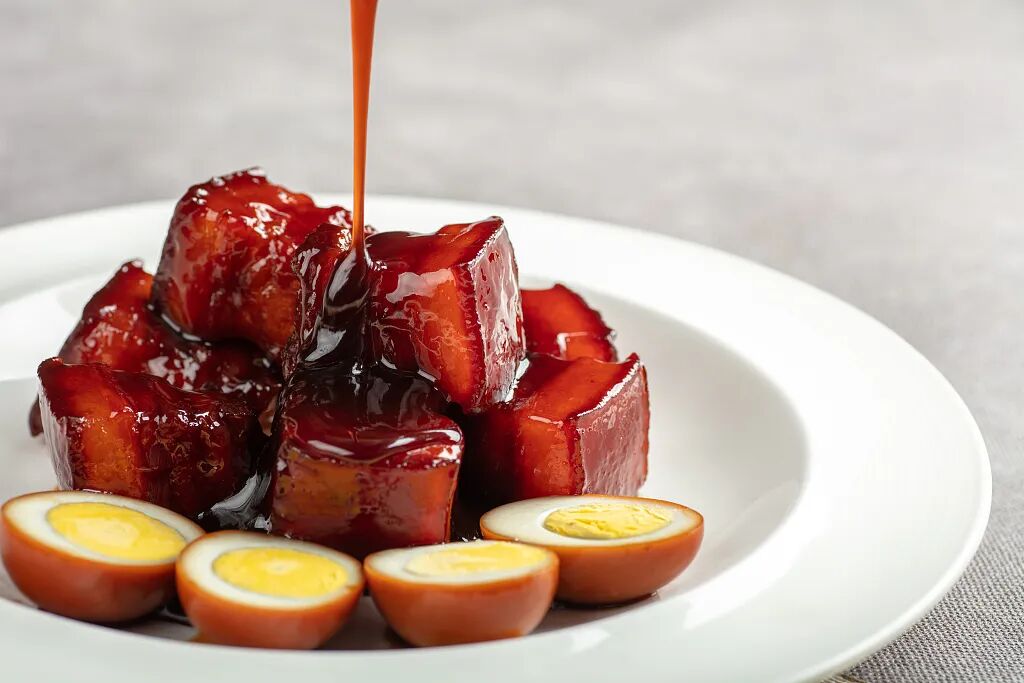
The name "laokele" refers to a nostalgic Shanghai expression describing people with old-fashioned manners and a lifestyle closely associated with the city.
Its signature red-braised pork belly uses a repeated simmering process that allows the sauce to fully penetrate the meat. The result is richly flavored pork with a glossy, thick glaze and tender texture. Quail eggs are often added, absorbing the sauce and enhancing the dish.
- Address: 4F, No 399 Jiujiang Road
- Business hours: 10 am to 9:30 pm
- Price: 78 yuan per serving
Homes Shanghainese Restaurant
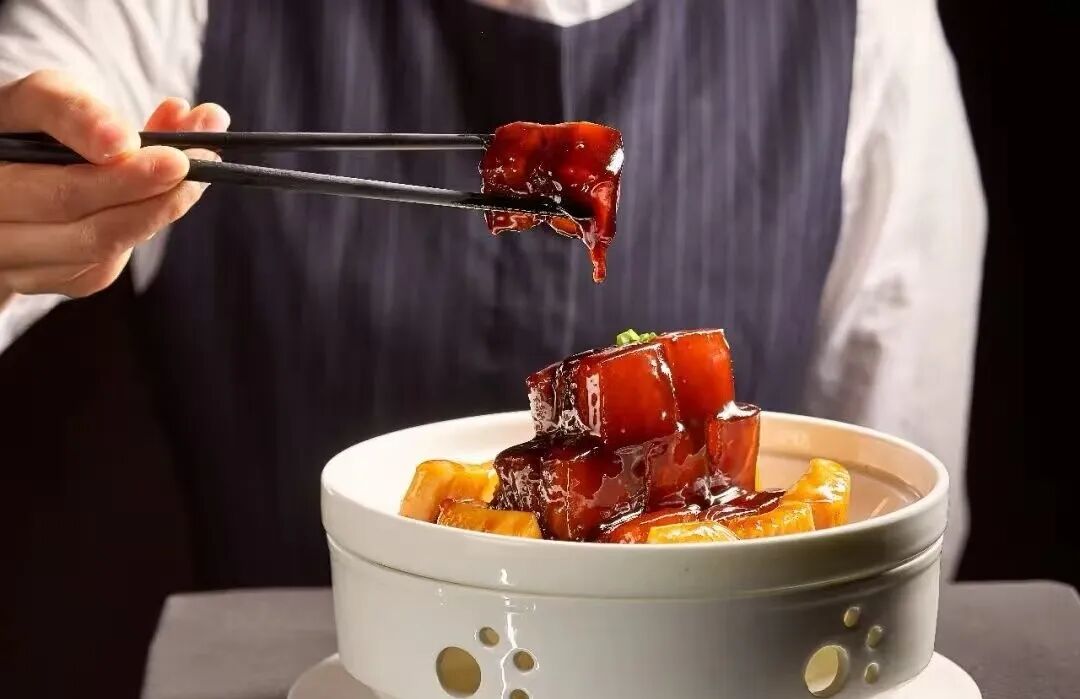
Homes takes the view that trimming away fat removes essential flavor. When properly cooked, the fat should feel soft and integrated rather than heavy.
Its version focuses on rendering the fat until it becomes tender and aromatic, creating a rich but balanced mouthfeel.
- Address: No 47 Xinle Road
- Business hours: 11 am to 2 pm, 5 pm to 9 pm
- Price: 118 yuan per serving
Fu 1015
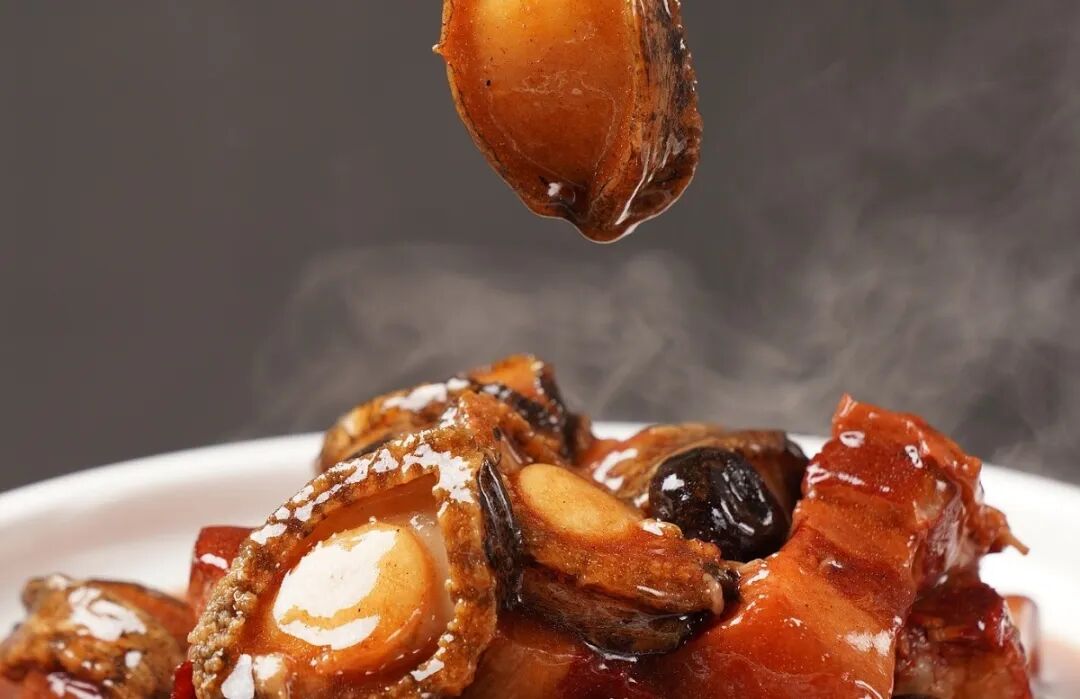
At Fu 1015, one variation pairs red-braised pork rice with black truffle and abalone. The pork is first braised in a traditional soy-based sauce until tender, then cooked together with abalone.
It is served in a small clay pot over rice and finished with black truffle shaved at the table, adding an earthy aroma that contrasts with the sweetness of the dish.
- Address: No 1015 Yuyuan Road
- Business hours: 11 am to 2 pm, 5:30 pm to 11 pm
- Price: 208 yuan per portion
Ren He Guan
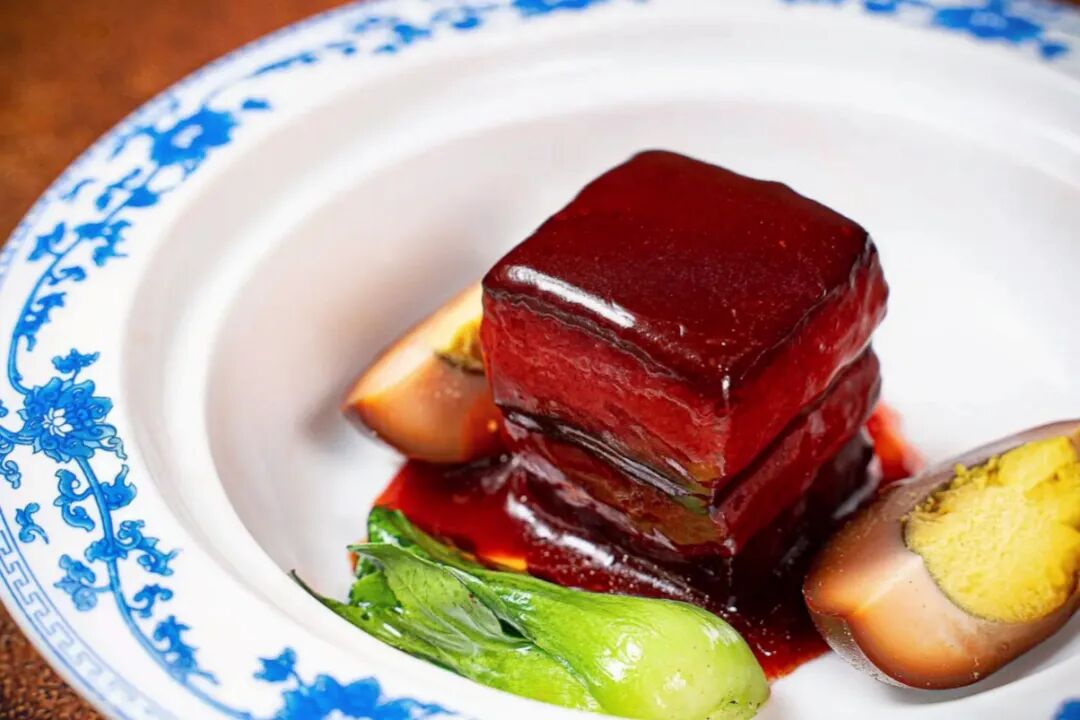
With over 200 years of history, Ren He Guan represents one of the older lineages of Shanghai cuisine.
Its red-braised pork belly is served in individual portions, often paired with half a braised egg. The dish features neatly cut cubes with distinct layers and a moderately sweet sauce that remains balanced.
- Address: No 407 Zhaojiabang Road
- Business hours: 11 am to 9:30 pm
- Price: 27 yuan per piece
How to make it at home
Ingredients
- 500 g pork belly, skin on
- 25 g rock sugar
- 2 g salt
- 10 ml Shaoxing wine
- 1 scallion knot
- 3 slices of ginger
- 10 ml dark soy sauce
- 25 ml light soy sauce
- 5 ml rice vinegar
- Cooking oil, as needed
Method
Prepare and shape the pork
Scrape off any surface residue, then rinse the pork belly under warm water. Place it in a pot of cold water and bring to a boil. Once boiling, reduce to a gentle simmer and cook until just set. Turn off the heat and allow the pork to cool in the cooking liquid.
Remove and place in a shallow tray. Press with a cutting board or weight to help it set into a compact shape. Once firm, cut into even cubes, about 3 to 4 centimeters each.
Lightly brown
Pan-fry the pork until it turns lightly golden and the fat begins to render.
Braise
Pour off the excess fat. Add Shaoxing wine and a splash of rice vinegar, cover briefly, then add ginger and scallion.
Stir in the soy sauces and salt, ensuring the pork is evenly coated. Add enough hot water to just cover the meat. Bring to a boil, then reduce to a gentle simmer and cook for about two hours.
Reduce
Add rock sugar and increase the heat slightly. Allow the liquid to reduce until it thickens and coats each piece evenly.
Serve
Arrange the pork in a neat grid, usually 3 by 3 or 4 by 4 pieces.
(Sources: thepaper.cn, Xinmin Evening News, venues mentioned above, VCG)
Source: Intl Services Shanghai
Events
More+-

2026 ITF World Tennis Tour Junior Finals to Kick Off
-
Craftsmanship in Every Landscape & Sichuan Charm in Every Breeze—2026 Yiyuan Garden Premium Sichuan-Style Penjing Exhibition
-

Tango Show: Zoo—Cartoonist Tango’s New Solo Exhibition
-

Fuxi: A Feast for the Universe—Qiu Jiongjiong Solo Exhibition
-

Regardless. How—Chen Xi Solo Exhibition
Discover











 京公网安备11010802044359
Contact Us:86-10-58882453 86-10-58882413