
The drizzle has just paused.
Here comes the last solar term of spring,
Hold off on the heat and humidity, please.
For I haven't yet had my fill of the lingering charm of spring blossoms in Hangzhou.
Solar Terms and the Universe is a special video series jointly produced by Hangzhoufeel, the International Education School of Zhejiang Chinese Medical University, and the International Relations Office of ZCMU. Each episode provides you with intimate knowledge about Solar Terms and health tips.
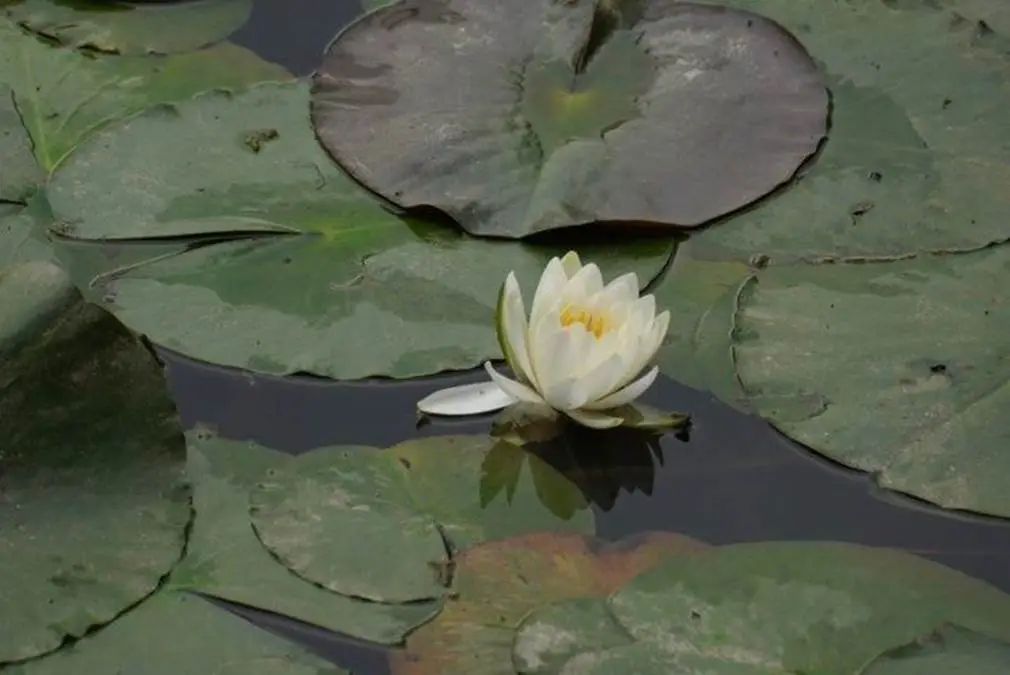
The Lotus in the Hangzhou Botanical Garden are gradually blooming during Grain Rain (Photo from City Link)
Now, rainfall is becoming more frequent, and the spring blossoms have reached their peak. The steamer weather in Hangzhou is just around the corner.
For farmers, this is the golden period for the growth of rice and the spring tea leaves. The nourishment of spring rain is especially crucial for the germination and growth of crops like cotton. As the old saying goes, "Plant cotton during Grain Rain, and you'll see flowers by Grain in Ear." However, there's also a warning that "Continuous rain can rot the cotton seeds," showing that while moisture brings life, it can also pose a threat.
When humidity is too high, it can be overwhelming, just like how wooden furniture beads with water droplets and mold grows in the corners of bookshelves during the plum rain season. Excessive dampness in the human body can also affect the spleen and stomach functions, leading to a heavy feeling or skin problems like eczema.
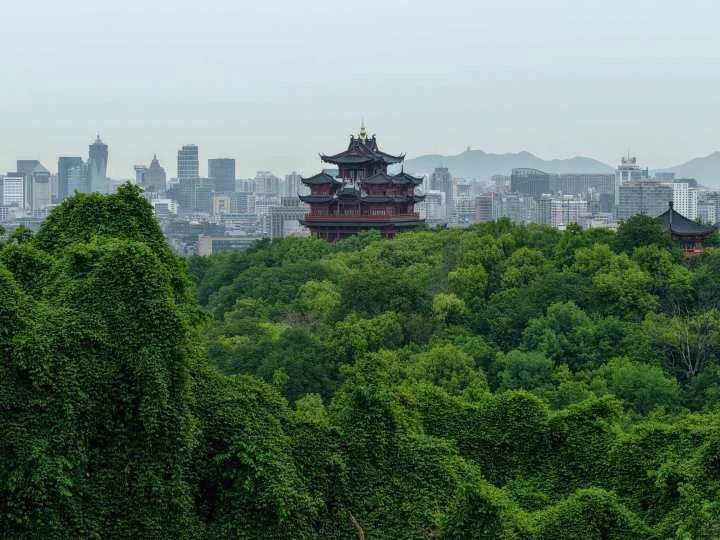
Hangzhou on a cloudy day (Photo from City Link)
To meteorologists, humidity is the physical presence of water vapor in the air; but in traditional Chinese medical classics, dampness has always carried a philosophical connotation.
The Yellow Emperor's Inner Classic, in the chapter Suwensay says: The Divergent Channels of the Meridians states: "When fluids enter the stomach, their refined energy is dispersed upward to the spleen. The spleen then distributes this essence, which ascends to the lungs, regulates the water passages, and is conveyed downward to the urinary bladder. Thus, the fluid essence is spread throughout the body, and the five viscera function in harmony." This illustrates the vital roles of the spleen, stomach, lungs, kidneys, and bladder in the normal metabolism of body fluids. However, when this "humidity" becomes excessive, the body feels uncomfortable and may develop various ailments. TCM refers to this condition as "excessive dampness".
In TCM, dampness is categorized into "external dampness" and "internal dampness." External dampness originates from the environment, while internal dampness arises from the spleen and stomach. For instance, a thick and greasy tongue coating is akin to a dike soaked in rain, with mud seeping from its surface; if dampness and turbidity descend to the skin, it can cause swelling in the lower limbs.
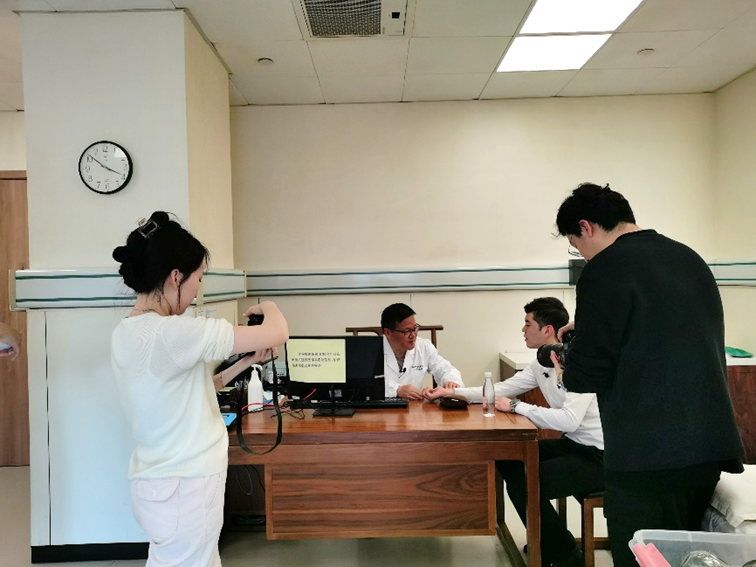
Filming the Grain Rain video(Photo by Jiang Zhongdi)
Dealing with dampness, TCM neither advocates confrontation nor suggests avoidance. Instead, it promotes "adaptation" and "facilitation." This wisdom is subtly embedded in our daily habits. For example, the red adzuki bean duck soup, Poria cake, and Job's tears water on the dining table... these Chinese common foods can help people feel refreshed and energetic.
In today’s episode of Solar Terms and the Universe, Dr. Chu Hailin suggests that you can press a few acupoints yourself to eliminate dampness and strengthen the spleen.
The first one is the Zusanli acupoint, located on the outer front side of the lower leg, one transverse finger width to the side from the anterior crest of the tibia. It works like a pumping station to boost the functioning of the spleen and stomach.
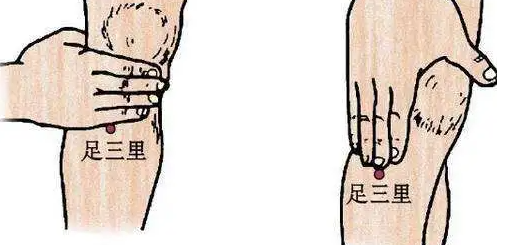
Zusanli acupoint(Photo from Phoenix New Media)
Yinlingquan acupoint is located on the medial side of the lower leg, in the depression between the lower edge of the medial tibial condyle and the medial side of the tibia. It acts like a sluice gate, helping to regulate and disperse the stagnation of dampness within the body.
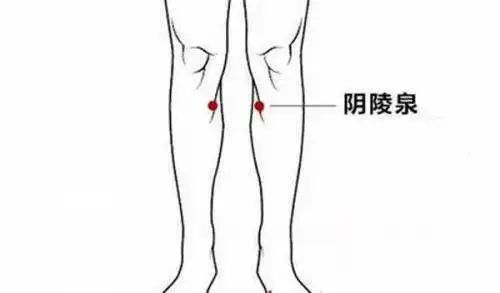
Yinlingquan acupoint(Photo from Phoenix New Media)
Sanyinjiao acupoint is located on the medial side of the lower leg, 3 transverse finger widths to the upper side from the tip of the medial malleolus, to the back of the medial side of the tibia. It is the meeting point of the liver, spleen, and kidney meridians.
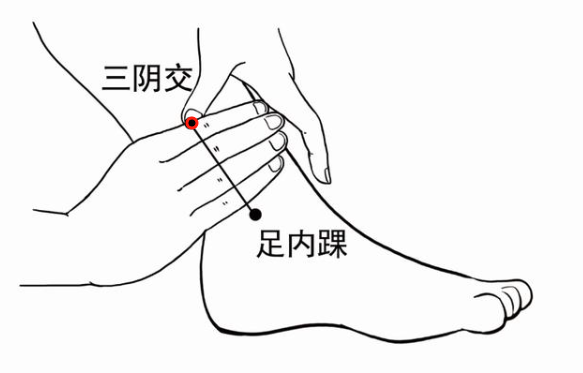
Sanyinjiao acupoint(Photo from Sina News)
Dampness is never an enemy, it is a normal part of the seasonal changes in nature. This also reminds us to re-examine the relationship between humans and nature—enjoying the benefits that a warm and humid environment brings, while learning from rice plants to transform excessive moisture into the power for growth and development.
The official website of the Health Commission of Beijing Municipality
Acupuncture and Moxibustion, published by China Traditional Chinese Medicine Press
The Spiritual Pivot: Acupuncture Points, published by People's Medical Publishing House
Journalist: Wang Jiao
Editor: Daria Fominykh
Senior editor: Zhou Ji, Li Zheng















 京公网安备11010802044359
Contact Us:86-10-58882453 86-10-58882413