
Hands-on experience from brush to silk: the artistry of West Lake umbrella patterns
May 22, 2026
Hangzhou

Last Sunday, while the sun blazed outdoors, a refreshing ambiance filled the Hangzhou Arts and Crafts Museum. On the afternoon of May 17, as a special edition of the "Hangzhoufeel International Craft Experience Camp", a unique "West Lake Silk Umbrella Brush-Dyeing Workshop" took place in a cozy classroom on the museum's first floor.
More than twenty international guests gathered -- hailing from Mexico, South Africa, Russia, Poland, India, Ethiopia, Yemen, Tajikistan, and beyond. Among them are 12 international students from Zhejiang Vocational College of Commerce. Under the guidance of museum instructors, they had the chance to personally explore this national intangible cultural heritage, often called the "Flower of West Lake".
The event began with bilingual presentations by museum educators Ke Ning and Zhang Kexin, who led the group into the century-old story of the West Lake silk umbrella. Dubbed "living encyclopedias of arts and crafts" by the participants, they traced the umbrella’s origins back to 1932, when Mr. Du Jinsheng first created it, and explained the ingenious use of light bamboo for the ribs and silk for the canopy.
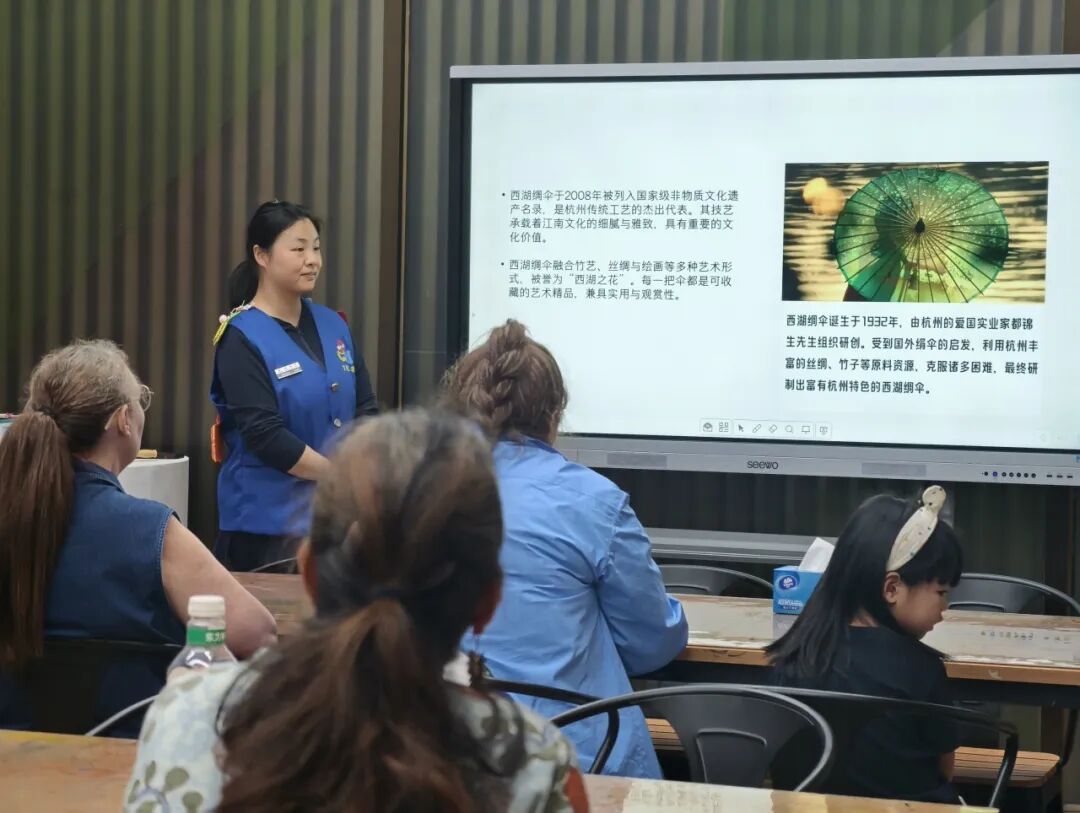
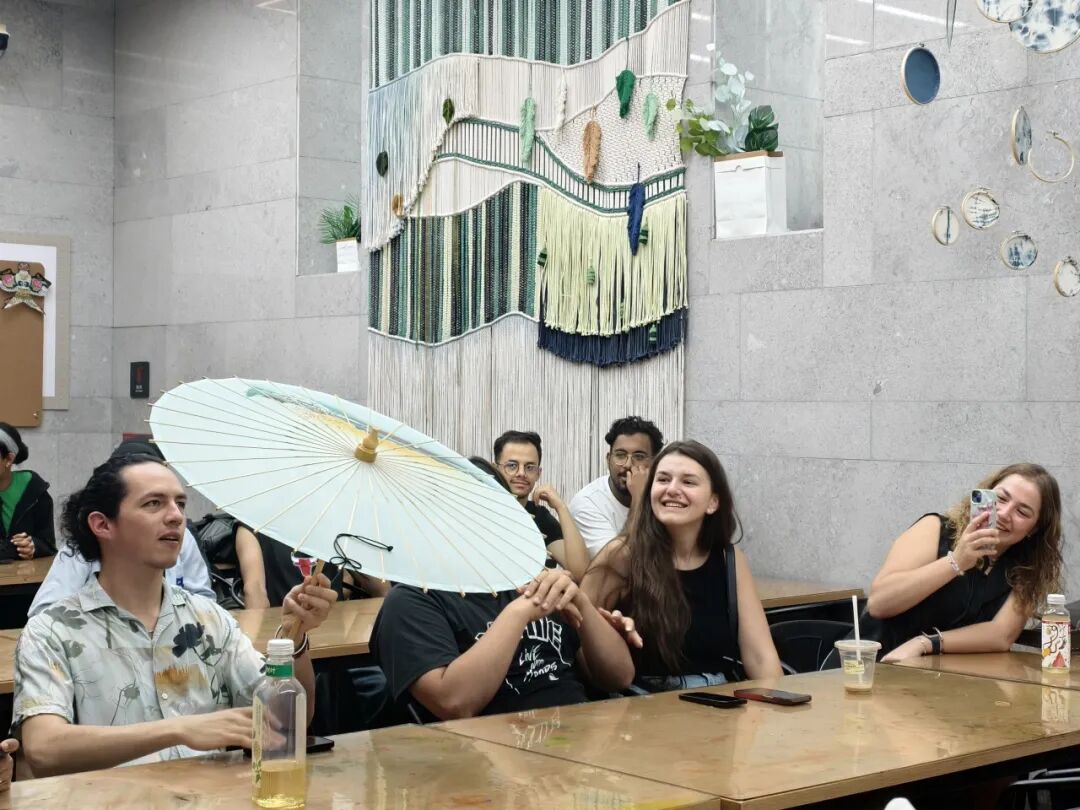
"What amazed everyone most," the instructors noted, "is that when opened, it’s an umbrella, but when closed, it becomes a single bamboo stalk -- the 35 ribs from one bamboo pole, after splitting and matching, fit so perfectly that they restore the original bamboo tube." Peter Waddell, a photography enthusiast from South Africa, couldn’t resist pulling out his camera and snapping multiple shots of the silk umbrellas on display.
The highlight of the day was brush-dyeing, the most dreamy of the "three floral techniques". Zhang Kexin demonstrated the process: a patterned stencil was placed over a stretched silk panel, and a brush dipped in pigment was rubbed back and forth across a wire screen. The pigment, like mist, drifted through the screen and scattered onto the silk. In an instant, a misty West Lake landscape appeared before their eyes.
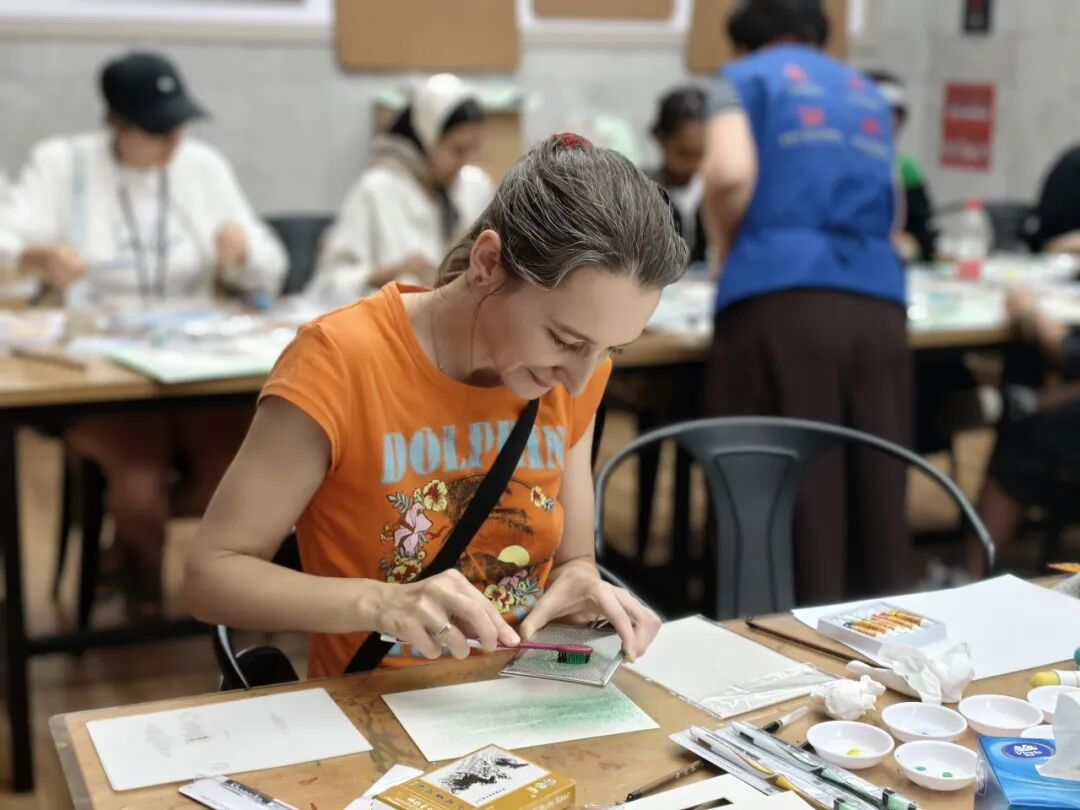
"It's like magic!" exclaimed Emer Cordoba, a music teacher from Mexico, eager to try. He chose a stencil depicting the Three Pools Mirroring the Moon, carefully brushing the dye left and right. When he lifted the stencil, he cried out in surprise, "I’ve painted West Lake at dusk!"
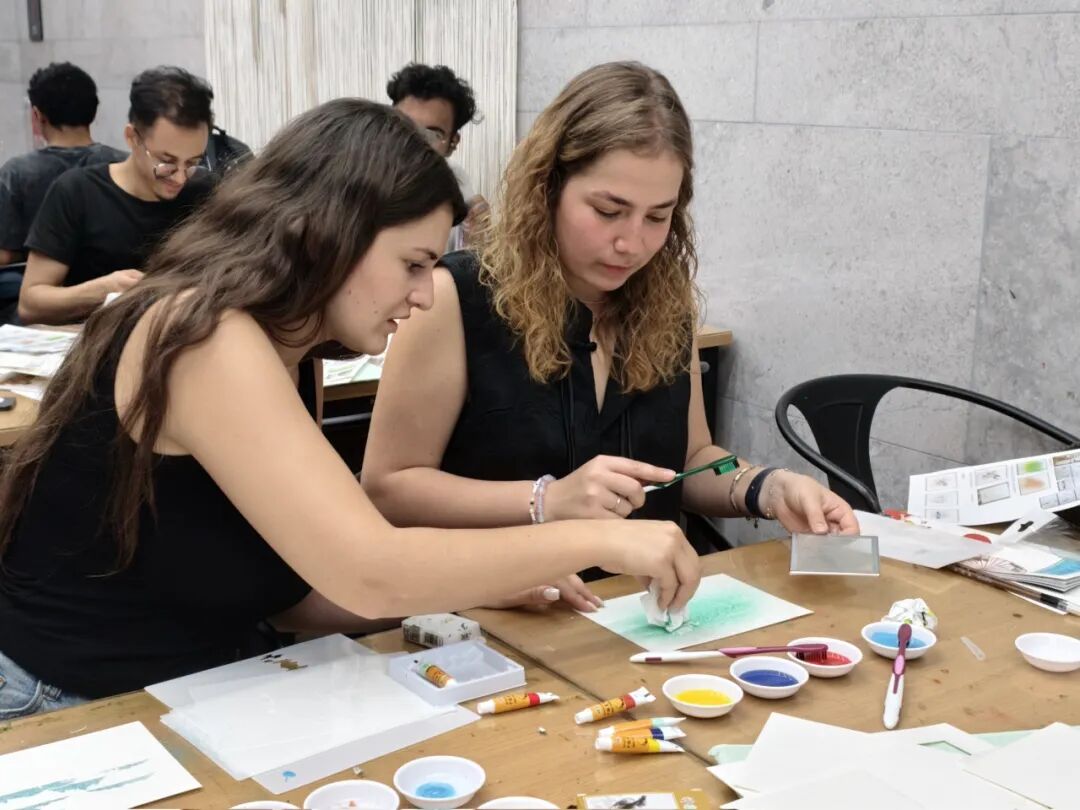
The liveliest moment came from everyone’s "creative reinterpretation" of colors. Although they used identical stencils -- Three Pools Mirroring the Moon or Melting Snow on Broken Bridge, two of the Ten Views of West Lake -- each person’s choice of pigment density and color combinations varied.
Emer Cordoba favored warm orange and ochre: "I want to show the sunset over West Lake, like a warm lullaby." Shaburova Varvara, a Russian student, chose cool blue-green tones: "This is West Lake in the early morning mist -- tranquil and mysterious -- I think it better represents the poetry of Jiangnan."
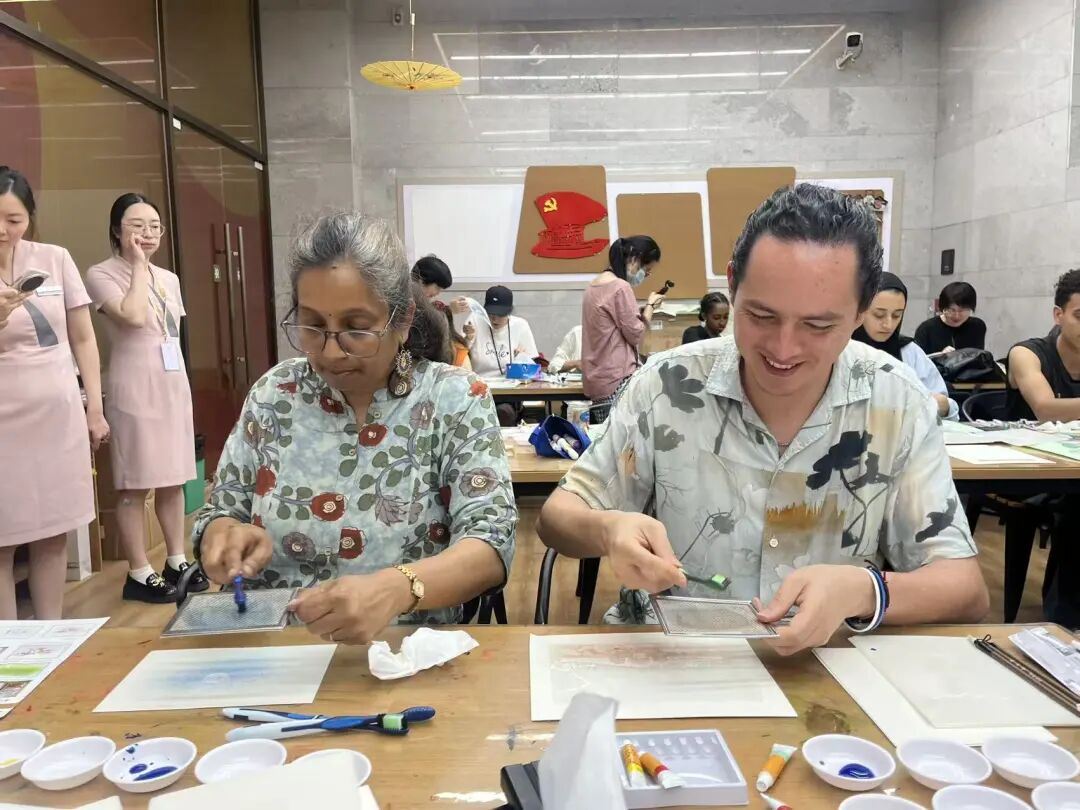
Lee-Anne, a teacher from South Africa, got even more inventive: she dyed the background pale purple and used deep emerald green for the lotus leaves in the foreground. "I wondered if Monet’s water lily style could blend with Chinese brush-dyeing." The result was surprisingly harmonious, earning enthusiastic praise from instructor Ke Ning: "That’s the charm of handcraft -- everyone can infuse it with their own emotions."”
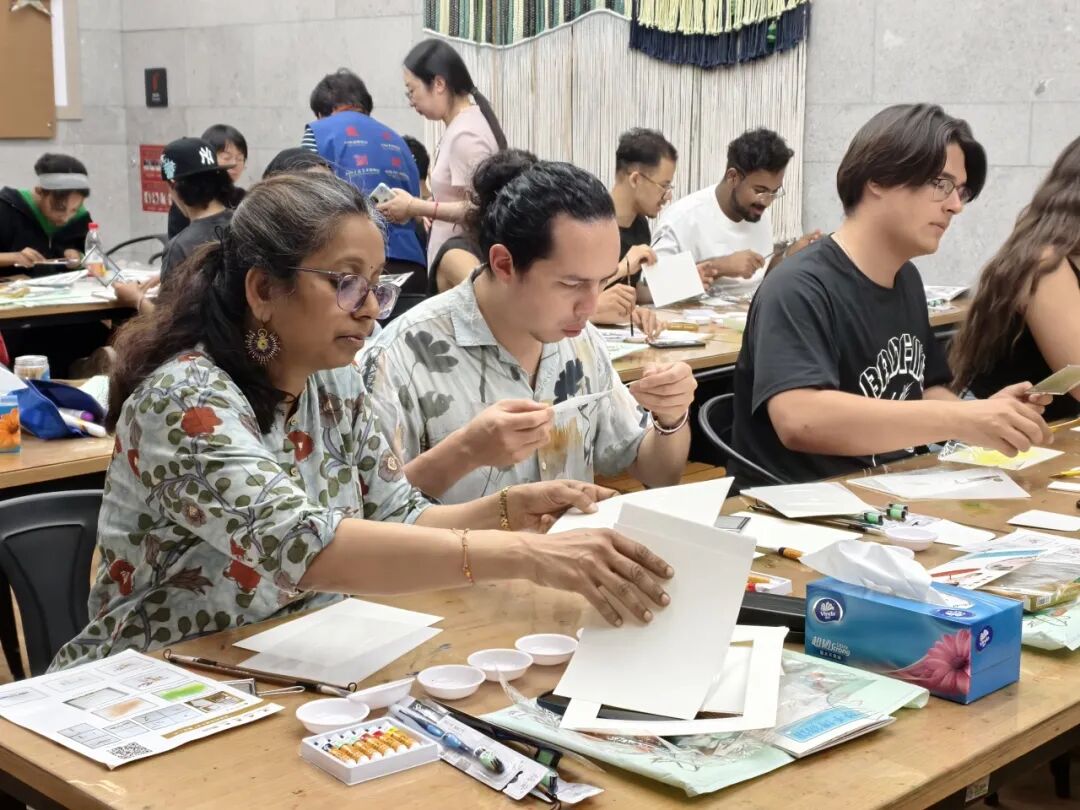
Madhuri Vasantharao, from India, reflected as she worked: "I only knew about oil-paper umbrellas before. Today I learned how silk and bamboo can ‘fall in love’ so ingeniously. And I especially love the name ‘brush-dyeing’ -- it really feels like brushing the pigments into flower petals."
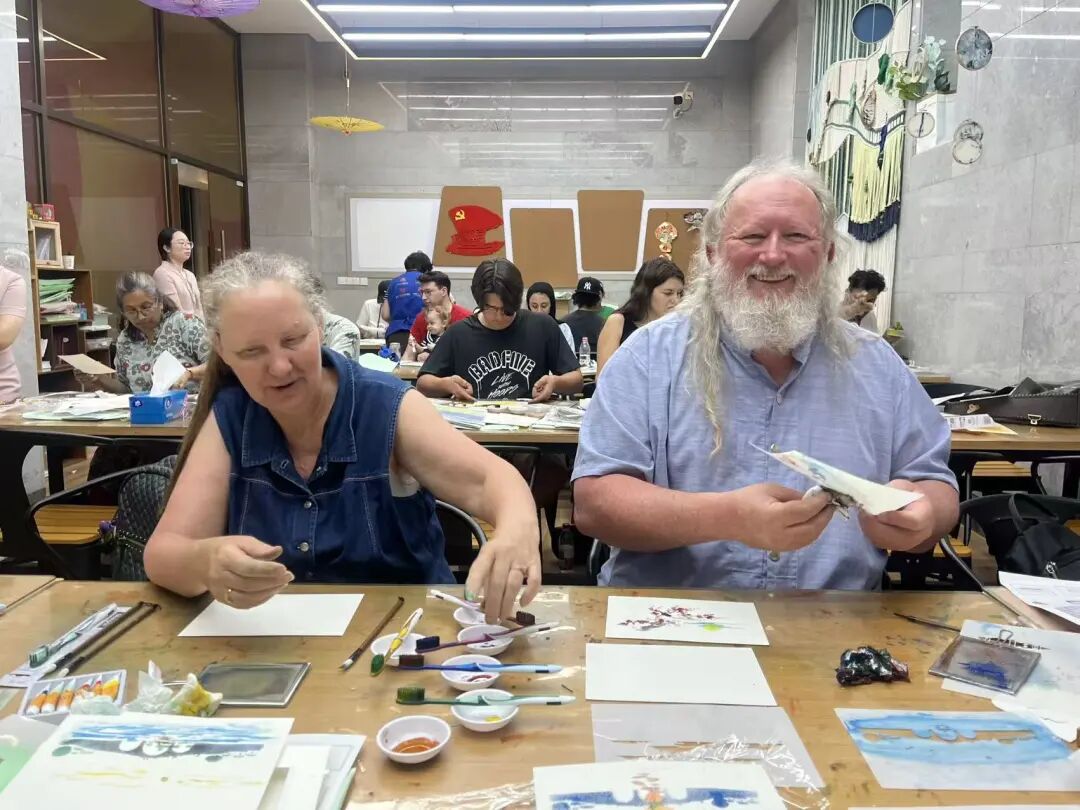
After two hours, each participant had created one or two brush-dyed pieces. But more precious than the artworks was their newfound understanding of traditional Chinese culture.
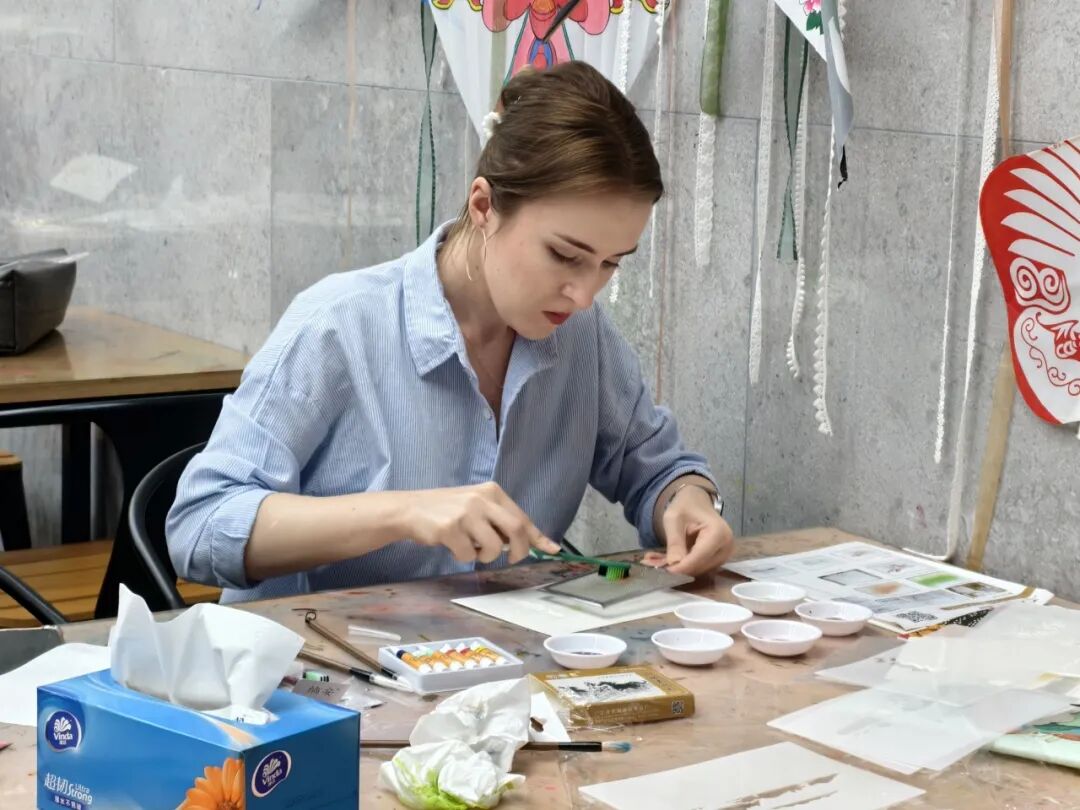
"I’ve been in Hangzhou for three years, and it’s already my second home," said Russian student Shaburova Varvara seriously. "Every time I join such an intangible cultural heritage experience, I understand more about Chinese aesthetics, character, and the spirit that links the past to the future."
Paulina Farkowska from Poland smiled sheepishly: "I thought it would be easy, but it turned out to be much harder! Still, when the pattern emerged, I felt such a sense of achievement. Thank you to the teachers for being so patient."
Peter from South Africa concluded: "This wasn’t just a craft class -- it was a cross-cultural dialogue. From selecting bamboo and matching the ribs to using stencils and applying colors, every step showed me the Chinese dedication to ‘exquisiteness.’"
The "Hangzhou International Craft Experience Camp -- West Lake Silk Umbrella Brush-Dyeing Special Session" took place on the eve of International Museum Day (May 18). A representative from the Hangzhou Arts and Crafts Museum explained that brush-dyeing was chosen because it is visually appealing, hands-on, and representative. "The soft, misty effect of brush-dyeing fits perfectly with foreign friends’ imagination of the ‘misty rain poetry’ of Jiangnan. Plus, it’s relatively easy to learn and brings a real sense of accomplishment."
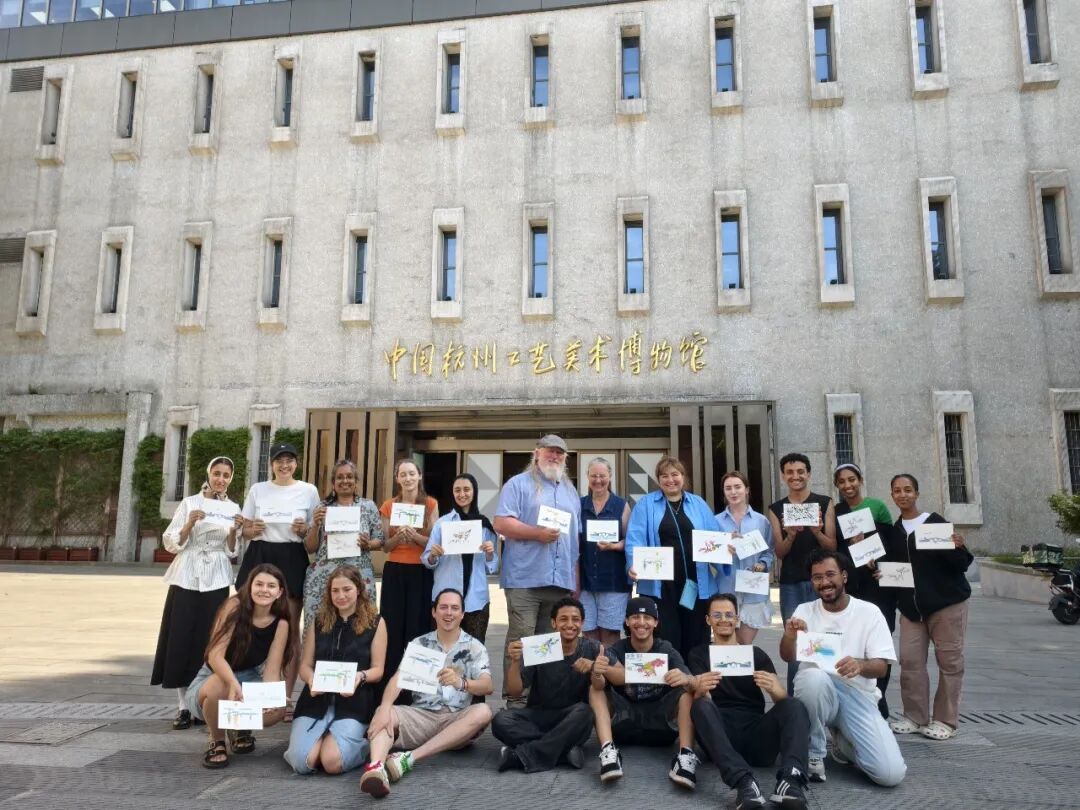
The museum is promoting its "West Lake Silk Umbrella Brush-Dyeing Workshop" as a key program this year, and partnering with the "Hangzhou International Craft Experience Camp" has extended its reach to an international audience. As Zhang Kexin said during the group photo: "Handicraft has no borders. The moment you pick up the brush, you become a messenger of arts and crafts culture."
After the event, everyone posed with their brush-dyed artworks on the museum’s plaza. The dappled sunlight shimmered, and the Three Pools Mirroring the Moon designs flickered in and out of view. In that moment, a thousand years of intangible heritage and today’s Hangzhou completed a beautiful relay -- amid laughter and the shadows of umbrellas.
Source: Hangzhoufeel










 京公网安备11010802044359
Contact Us:86-10-58882453 86-10-58882413