
Azerbaijani editor welled up with tears testing disability support exoskeleton in Hangzhou
Jul 20, 2026
HangzhouAfter strapping on an exoskeleton device, Esmira Gasimova, Senior Editor at Azerbaijan Television and Radio Broadcasting, cautiously took her first step. The device felt surprisingly light while providing steady support to her legs. Step by step, she was walking more comfortably and confidently. By the second and third steps, her movements felt increasingly natural. Then, unexpectedly, her eyes began to well up with tears.
"In our country, many elderly people and people with disabilities need technology like this," she said, her voice trembling slightly. "I truly hope we can bring innovations like this to Azerbaijan."
How is technology changing people's everyday lives? Beyond impressive demonstrations, where are robots actually being used in the real world? And why Hangzhou? What makes this city such fertile ground for so many innovative tech companies? Esmira and fellow journalists arrived in Hangzhou seeking answers to some of the world's most pressing questions about technology. Over the course of their visit, they began to find those answers.
Embodied AI isn't just for show, it's solving real-world problems
"I've seen plenty of videos on YouTube of robots dancing and doing backflips. They look amazing," said Moroccan influencer Ossama Abbad. "But what can they actually do?" That question appeared on nearly every interview outline prepared by the visiting group.
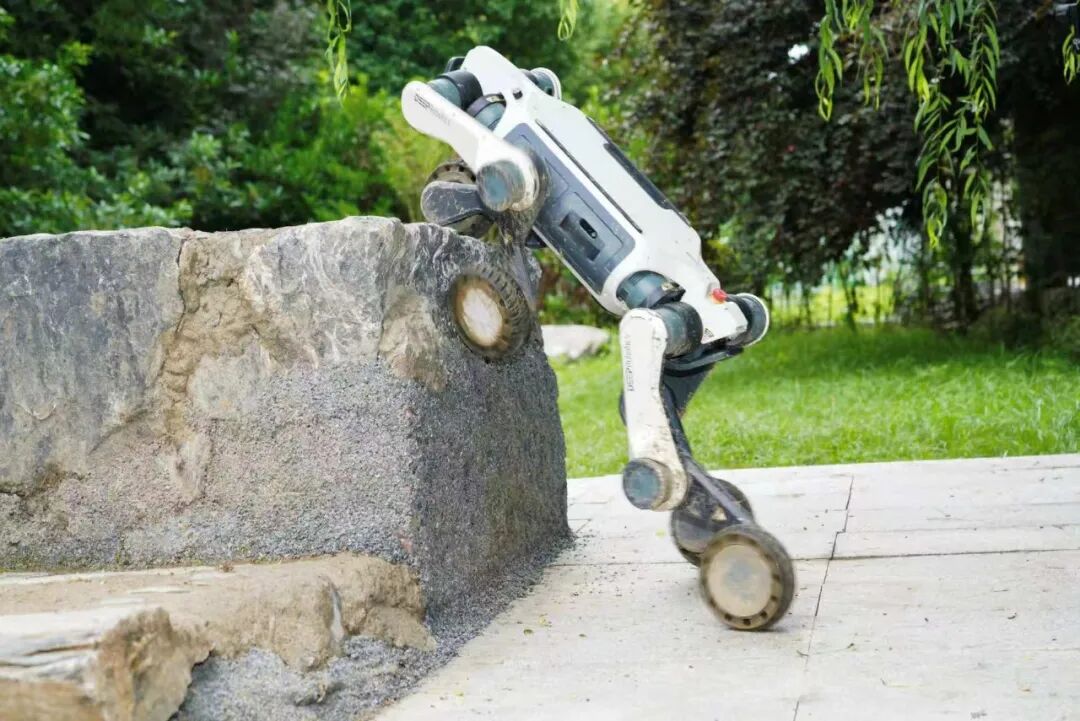
At the outdoor demonstration site of DEEP Robotics, one of Hangzhou's so-called "Six Little Dragons", engineers set up a series of challenging obstacles: steep ramps, elevated platforms, and open-grid industrial staircases. The quadruped robot moved swiftly across the course, climbed a 45-degree staircase with remarkable stability, then turned around and leaped onto a raised platform, completing the entire sequence with effortless precision.
According to engineers, DEEP Robotics’ quadruped robots are now being deployed in power stations, factories, and utility tunnel inspections. They can accurately read various instrument gauges, achieve an average mean time between failures of over 1,000 hours, and are replacing humans in hazardous environments such as toxic, oxygen-deficient, or collapse-prone areas for reconnaissance and rescue operations.
Ossama nodded and said, “This is probably what we truly want to see — not just performances.”Before making that remark, he and the Pakistani influencer, Aqeel Fiaz, took on a humanoid robot in a push-up “challenge.” The crowd burst into laughter, and the scene looked just like one of those viral “tech entertainment shows” commonly seen across the internet. But standing in the real-world operational demonstration area, their questions suddenly felt more profound.
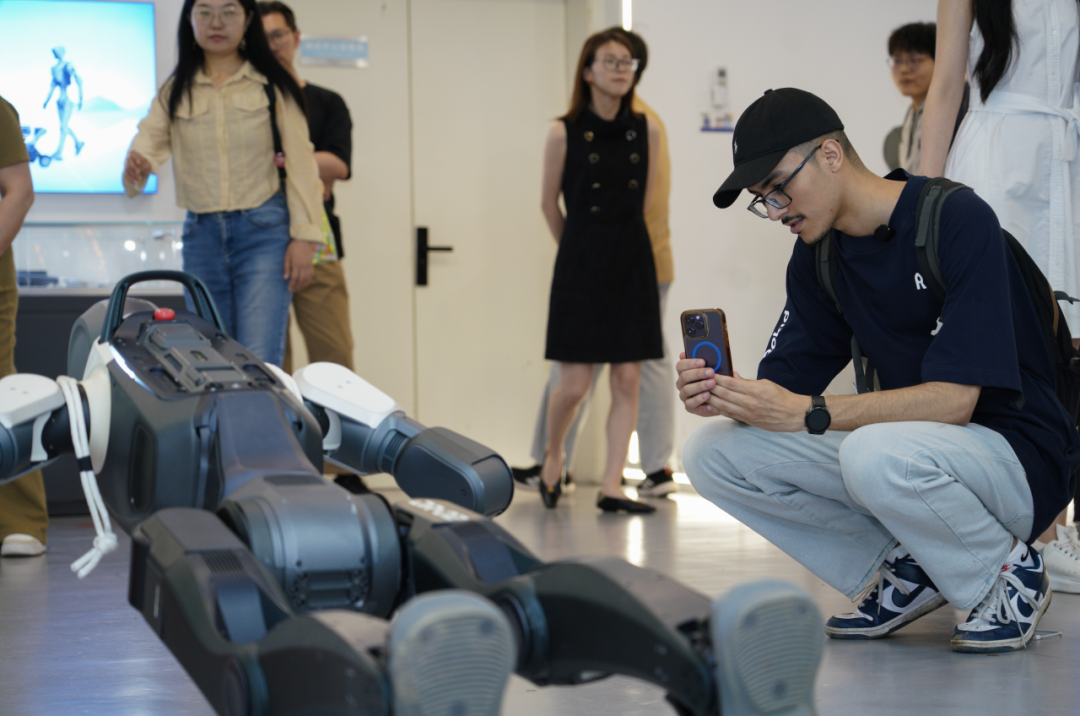
“The real value of robots lies in their ability to be applied in real-world scenarios, to autonomously identify problems, and to take over dangerous tasks from humans,” Aqeel said as he recorded his reflections on camera.
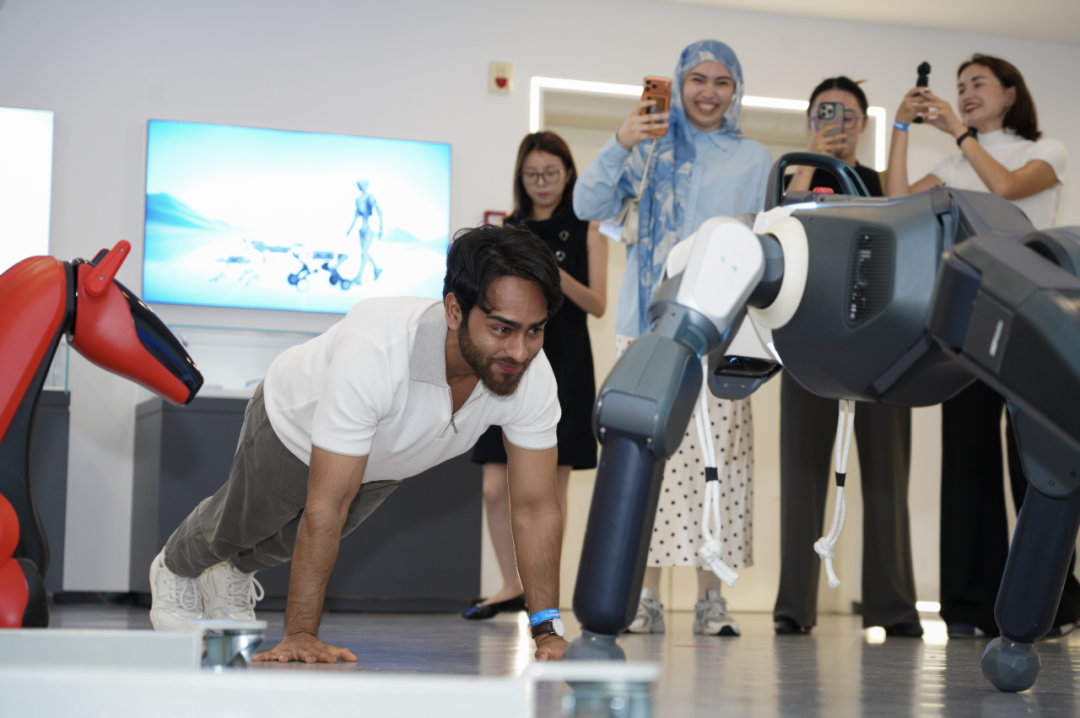
“Our country’s robots are still focused on agricultural production, while China’s robots have already become part of everyday life. The impact of technology on people is truly astonishing,” said Kazakhstani influencerKamilla Akhmedova.
This answer was further confirmed at Transfar Innocity. Here, Ossama met Deep Robotics’ partner, which focuses on autonomous inspection solutions using quadruped robots. They are developing a system that enables robots to navigate independently, perceive their surroundings, recognize targets through AI, and support remote monitoring and control services. Behind robots is a complete system—one that can detect where risks are, know how to report them, and determine how end systems should respond accordingly. “Practical applications like this are not developed by a single company, but through collaboration among multiple tech enterprises in Hangzhou,” Ossama nodded repeatedly, as if completing a long process of logical validation. “I think I may have found one of the secrets behind Hangzhou’s rapid tech development.”
Initiated by the Hangzhou International Communication Center (HZICC), the second phase of the "Gateway to Opportunities, China's Industry Stories" international communication program has gone through a month-long global recruitment campaign. From June 3 to 5, the final delegation brought together overseas media professionals and influencers from countries including Indonesia, Azerbaijan, Morocco, Mexico, Kazakhstan, Turkmenistan, Pakistan, and other countries. They embarked on a journey to explore what is “Tech for Good” in Hangzhou.
Source: Hangzhoufeel













 京公网安备11010802044359
Contact Us:86-10-58882453 86-10-58882413