
China Slowly Won My Heart – Why Do International Cultural Celebrities Fall in Love with Hubei?
May 13, 2026
HubeiAscending the Yellow Crane Tower to experience millennia-spanning history and romance, walking into the Hubei Museum to witness the profound breadth of Chu culture, and experiencing "harmony between humanity and nature" on the East Lake Greenway... Since April 20, the "Here Comes the World – Chinese and International Cultural Celebrities’ Jingchu Journey" event has been held in Wuhan, Hubei Province. Cultural celebrities from Germany, Peru, Russia and other countries, together with senior Chinese experts in international communication, gathered to personally experience Hubei’s profound historical depth, distinctive cultural character, and vigorous innovative vitality.
On April 21, the delegation ascended the legendary renown Yellow Crane Tower. Peng Rui, a Peruvian expert with china.org.cn, drew inspiration from the profound richness of Chu culture. Her column "Peng Rui Talks About China" uses language that overseas netizens can readily understand and an international perspective to vividly tell China’s story, and has been republished by over 300 mainstream media outlets in Spain and multiple Latin American countries.
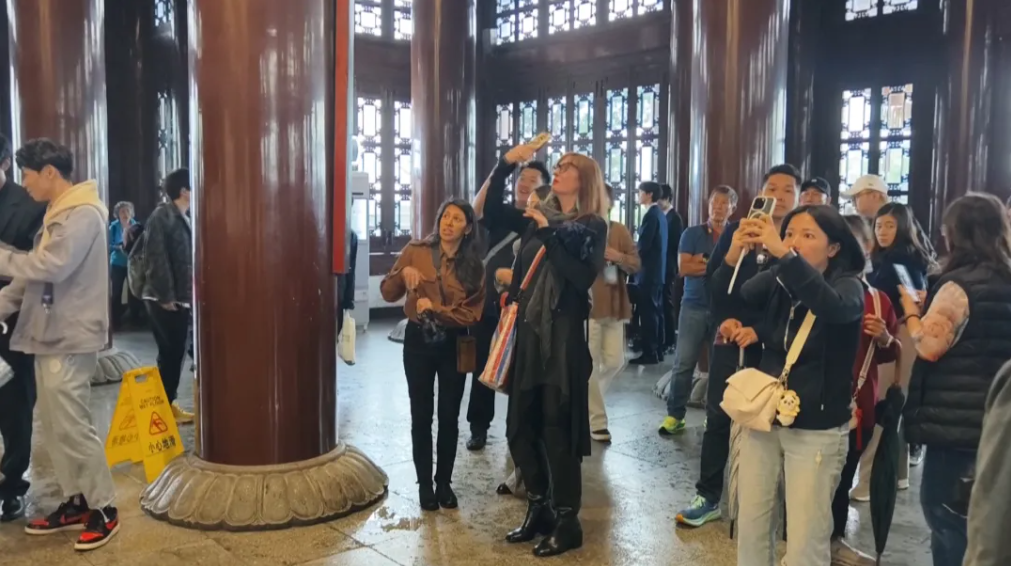
Peng Rui, a recipient of the Chinese Government Friendship Award, a Spanish-language expert with the Multilingual Department of china.org.cn, and a Peruvian expert, stated that the scenery at the Yellow Crane Tower is extremely beautiful. Standing in the tower, one can take in the panoramic view of the entire city, and the city’s vigorous development trend is clearly visible – exactly the kind of content she hopes to present to overseas audiences through her videos. In her view, the most valuable themes for international communication remain culture and history, because these elements best reflect the living conditions of local people and serve as important bonds for connecting the emotions of Chinese and foreign people. This aligns closely with her original intention of dedicating years to telling China’s stories to the Latin American world.
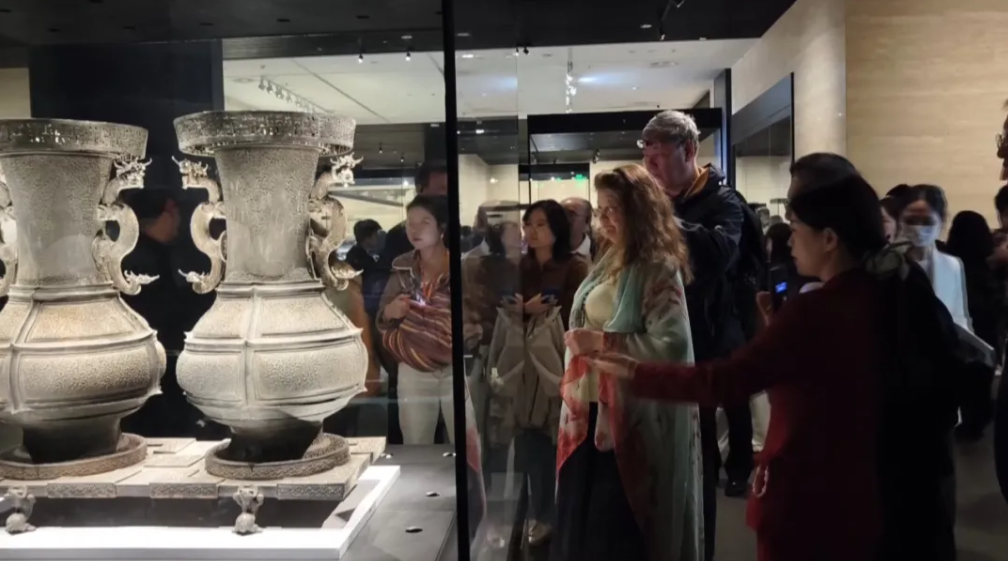
At the Hubei Museum, Olga Dubkova, a Russian expert from Xi’an International Studies University, was particularly eye-catching. Having lived in China for 17 years, she has built a bridge between Chinese and Russian cultures with her pen. Her published and translated works on Chinese themes have exceeded 20 million words in total, enabling countless Russian readers to draw closer to and understand China. Olga Dubkova admitted that when she first arrived in China about thirty years ago, she was intensely homesick and desperately wanted to return to her country. However, as she engaged deeply with the Chinese people, continued to deepen her study of the Chinese language, and gradually explored China’s famous historical and cultural sites, China’s charm slowly infiltrated her heart and merged into her being. She believes that once you fall in love with a place, you willingly dedicate your knowledge and abilities to it without reservation.
The delegation also walked along the Wuhan East Lake Greenway, quietly experiencing the beautiful scene of "harmony between humanity and nature" amidst the lake and mountains. Martin Woesler, a German sinologist, marveled that the East Lake Greenway has achieved ecological development akin to "green gold," allowing him to truly appreciate the vivid implementation of China’s ecological civilization strategy.
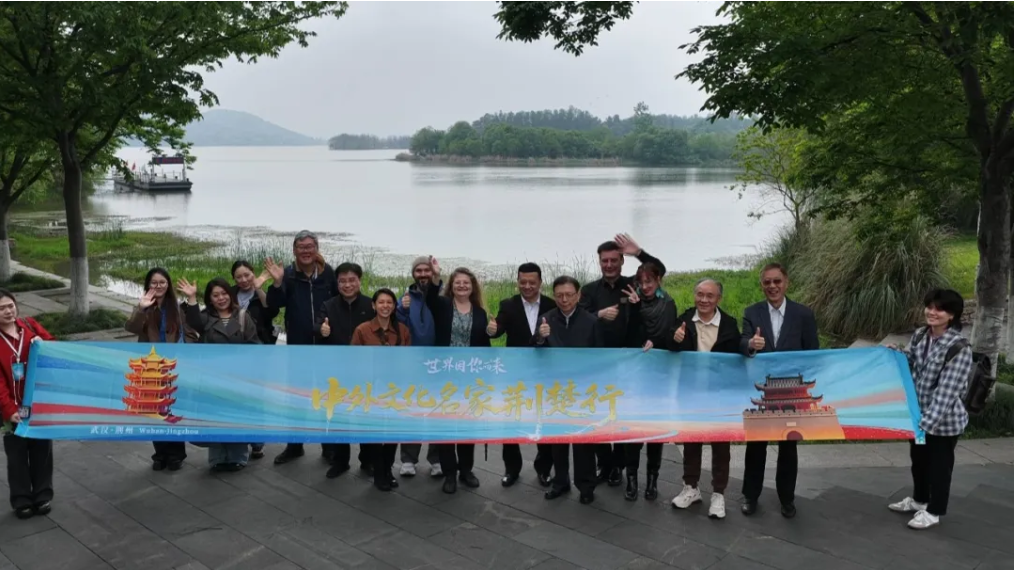
Martin Woesler, a recipient of the Chinese Government Friendship Award, a member of the European Academy of Sciences and Arts, and a German sinologist, praised the remarkable ecological achievements of the Wuhan East Lake Greenway. This was his third visit to Wuhan, and compared to his initial visit in the 1990s, the city has changed tremendously, with the water quality of East Lake being particularly cleaner. He stated that Wuhan’s ecological environment is very pleasant and highly worthy of being visited and experienced by people from both home and abroad.
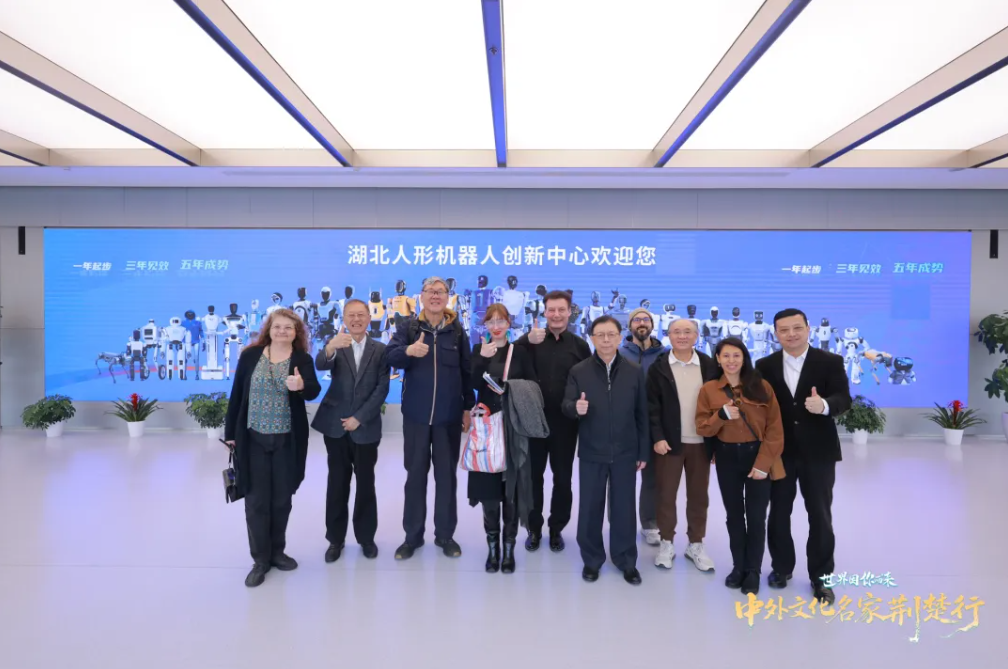
Beyond the profound historical heritage and beautiful landscapes, Wuhan’s technological innovations also amazed the delegation. The Hubei Humanoid Robot Innovation Center, located in Optics Valley, is the largest of its kind in China with the most diverse scenarios. The delegation deeply experienced the application scenarios of humanoid robots in daily life and expressed high praise for Hubei’s cutting-edge robotic technology achievements.
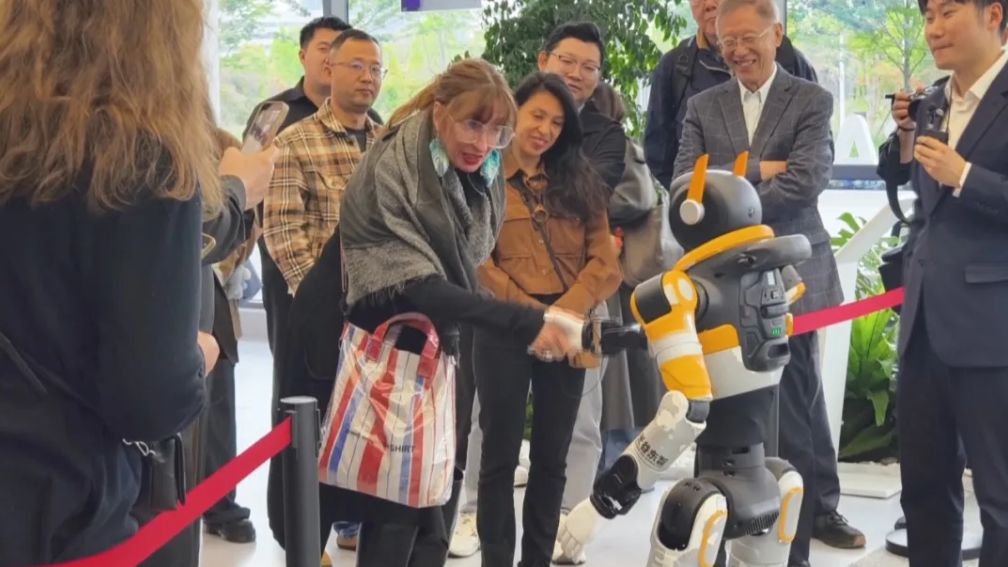
Wang Zhongyi, former Editor-in-Chief of the Asia-Pacific Communication Center of the China International Communications Group (CICG) and Chief Japanese Translator at CICG, said that he was deeply awestruck after visiting the Hubei Humanoid Robot Innovation Center. He was both surprised and deeply gratified by the starting point, development speed, and scale of China’s research on embodied robotics. He believes that the development prospects of embodied humanoid robots are closely related to the process of Chinese-style modernization, and that their developmental value deserves close attention.
The delegation also visited the former residence memorial hall of the Mao Zedong by the shore of East Lake to revisit red memories. Burkhard Risse, a recipient of the Chinese Government Friendship Award who has long been engaged in China’s foreign translation and publishing efforts, was deeply impressed by the visit. Risse stated that through this visit, he deeply understood why the Chairman Mao loved the East Lake Hotel – the beautiful natural environment here, along with the camphor and osmanthus trees visible everywhere, is extremely attractive. More importantly, this place carries many memories of the leader regarding Wuhan’s revolutionary history. He believes that this visit will help him better grasp the direction of his translation and editorial work, and more accurately convey China’s stories to foreign readers.
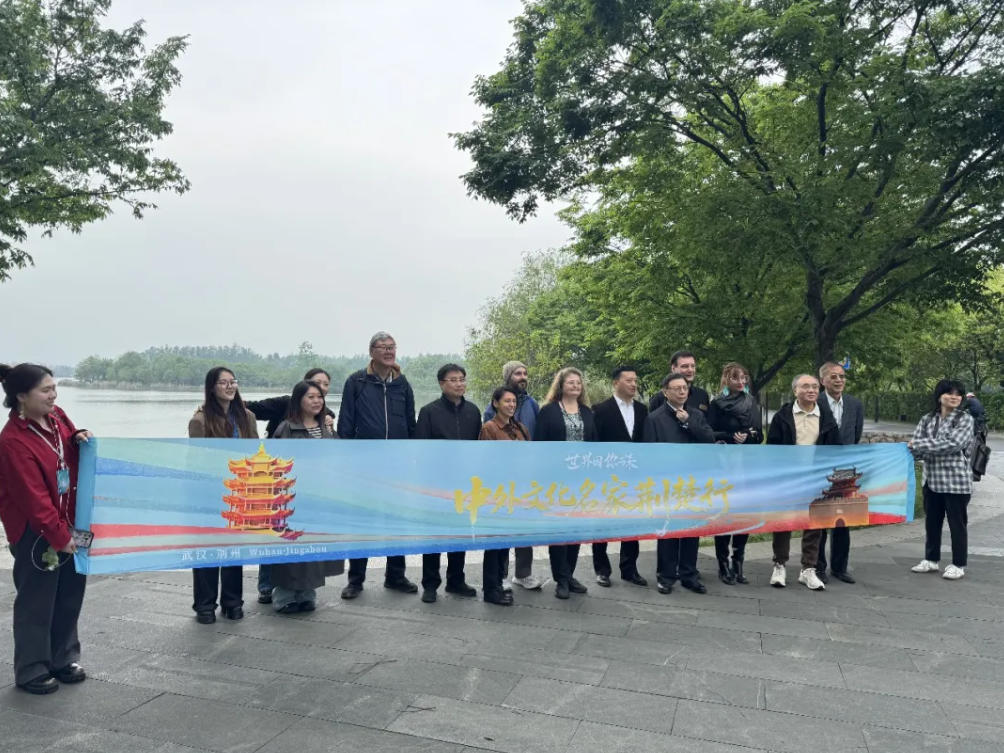
During the "Here Comes the World: Chinese and International Cultural Celebrities’ Jingchu Journey" event, the Chinese and international cultural celebrities will also visit Jingzhou to promote Hubei’s uplifting development momentum to audiences both at home and abroad.
Wang Gangyi, former Vice President of the China International Communications Group (CICG) and Executive Vice President of the Translators Association of China (TAC), stated that Hubei is like a huge treasure pot, centrally carrying China’s traditional culture, contemporary culture, and red culture. Through this brief interaction with foreign cultural celebrities, he deeply felt that Hubei’s contemporary culture fully showcases the humanistic vitality and innovative vitality that this land has radiated over the past decades of reform and opening-up, as well as its unique charm rooted in tradition yet surpassing tradition. These precious vitalities deserve to be vigorously promoted.
Source: Changjiang News(长江新闻号)
The English version is for reference only. If there are differences between the English version and the Chinese version, the Chinese version shall prevail.
https://mp.weixin.qq.com/s/T0_rysOhzg6hxb9qlCupK








 京公网安备11010802044359
Contact Us:86-10-58882453 86-10-58882413