
ZHANG CHENGLIANG/YAN DONGJIE/CHINA DAILY
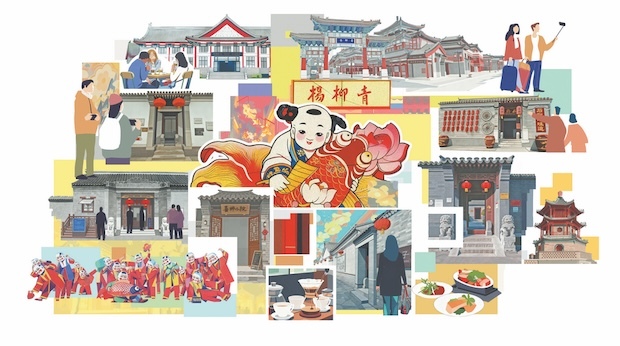
Editor's Note: An array of Chinese cities have maintained their cultural memories in the form of historical neighborhoods that have only added to their multilayered charm and vigor with the passage of time. China Daily is taking readers on a journey to some of these timeless areas. In this installment, we stroll around Tianjin's time-honored Yangliuqing Ancient Town along the Beijing-Hangzhou Grand Canal, talk to the inheritors of woodblock paintings, and taste the savory cuisine amid the town's harmonious fusion of tradition and innovation.
Yangliuqing Ancient Town, with its origins dating back to the Northern Song (960-1127) and Liao dynasties (916-1125), is nestled along the Grand Canal, in Tianjin's Xiqing district.
Historical records, such as The History of Jin, note that Liukou (the earliest name of Yangliuqing) was established in 1214 during the Jin Dynasty (1115-1234), with Wanyan Yaozhu appointed as the first inspection commissioner of Yangqing.
The town flourished during the Yuan (1271-1368), Ming (1368-1644) and Qing (1644-1911) dynasties as the Grand Canal became a vital north-south artery.
The architecture of Yangliuqing blends northern and southern styles from the Ming and Qing periods, featuring intricate brick, wood and stone carvings. This cultural gem now stands at the heart of the Grand Canal cultural belt.
In 1757, Qing emperor Qianlong witnessed a bustling scene of "countless sails and masts crowding the waterway", reflecting the town's role as a thriving trade hub.
Goods like southern sugar, Songjiang cloth, and Jingdezhen porcelain were distributed via the Ziya River and Daqing River, reaching deep into Hebei province and fueling a vibrant "land-and-water port" economy.
The canal also spurred industries such as shipbuilding, cargo escorting, and warehousing. Local traditions, like the incense-laden Dawang Temple for safe voyages and the lively Canal Opening Festival, further highlight the town's deep ties to its waterways.
Today, the ancient town preserves a 120,000-square-meter historic area, which showcases Tianjin's unique cultural legacy, including New Year paintings, traditional courtyard residences, canal heritage, and folk customs.
The Yangliuqing section of the Grand Canal, a World Heritage site identified by the UNESCO, was constructed during the Yuan Dynasty.
Spanning 12 kilometers, it served as a vital waterway linking Beijing and Tianjin with the southern region.
The canal trade spurred the rise of wealthy merchant families, such as the Shi, Dong, Han, and Zhou clans, whose grand residences laid the foundation for the town's architectural splendor.
The Yangliuqing Courtyard Complex is one of the largest and best-preserved clusters of Qing Dynasty residential architecture in northern China.
The most iconic among them is the Shi Family Mansion, built in 1875. Once the residence of Shi Yuanshi in the late Qing era, the 6,900-sq-m compound is renowned for its exquisite carvings.
Its layout, architectural style, and artistic details reflect the cultural and folk traditions of the period from 1840s to 1930s, earning it the title among the "Finest Mansions in North China".
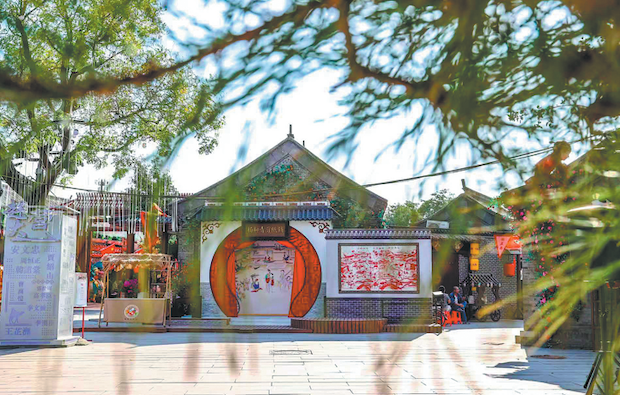
A corner of the ancient town decorated with Yangliuqing elements. CHINA DAILY
The town boasts 38 intangible cultural heritage items, with Yangliuqing woodblock New Year paintings being the most iconic. This folk art, which originated in the Ming Dynasty and peaked in the mid-Qing era, is celebrated for its auspicious themes and vibrant colors.
Recognized as a national intangible cultural heritage in 2006, it was also included in Tianjin's first Traditional Craft Revitalization Directory. Demonstrations of its techniques are held at the Yangliuqing Folk Culture Museum and the New Year Painting Gallery.
Another treasure is Yangliuqing paper-cutting, a 300-year-old craft that represents Tianjin's intangible heritage. Blending northern and southern techniques, this art form, based on delicate engraving skills, has been listed in Tianjin's Municipal Intangible Cultural Heritage Directory and Traditional Craft Revitalization Directory.
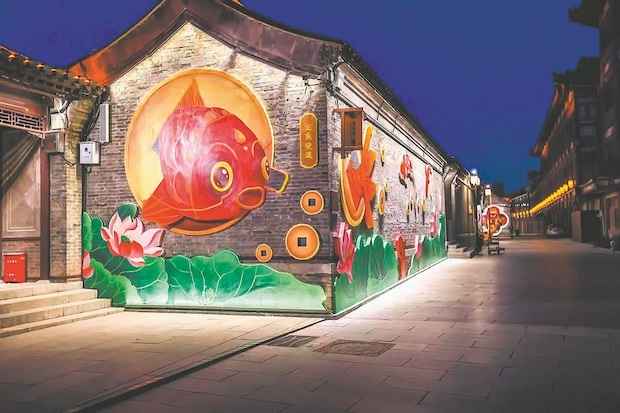
This year, the Yangliuqing Ancient Town, Tianjin, renovated its night views to welcome visitors from home and abroad. CHINA DAILY
Adhering to the principle of "never breaking the flow, every line interconnected", the craft balances the bold outlines of northern styles with the refined precision of southern engraving.
These traditional crafts gradually became commercialized alongside the town's thriving trade. Stepping into the Yangliuqing Folk Culture Museum, visitors encounter over 100 cultural creative products that showcase the perfect marriage of traditional culture and modern innovation.
The vibrant New Year painting motifs have been reimagined as practical and charming creative products, from adorable clay dolls hugging carp to canvas totes adorned with leaping fish patterns and gently unfurled antique-style folding fans, introducing this heritage to the world through innovative forms.
These cultural products represent the diligent work of designers from Xiqing district's tourist service center. From simple New Year painting displays to vivid clay figurines to practical items like folding fans, night lights, tote bags, mugs, and T-shirts, designers have maintained the essence of traditional New Year paintings while continuously innovating.
While the forms and varieties evolve, the core spirit of New Year paintings remains unchanged. Every design and service revolves around preserving its essence. Whether in product design or cultural promotion, the Yangliuqing Folk Culture Museum always centers on the fundamental values of New Year paintings.
Nowadays, through innovative approaches, such as intangible cultural heritage workshops and university inheritance programs, this traditional art not only survives but thrives, becoming a representative of Tianjin's distinctive culture and demonstrating the contemporary vitality of traditional heritage.
Today, Yangliuqing transcends its role as a geographical landmark, emerging as a vibrant cultural corridor where history and modernity converge. Strolling through its timeworn streets, visitors encounter artisan workshops preserving ancient crafts alongside chic cafes and immersive exhibitions.
This harmonious fusion of heritage and innovation revitalizes the town, ensuring its legacy thrives in the contemporary world.
Wang Nanyi and Cai Muzi contributed to this story.
Contact the writers at yandongjie@chinadaily.com.cn
(Source:chinadaily.com.cn)
Source:en.tj.gov.cn









 京公网安备11010802044359
Contact Us:86-10-58882453 86-10-58882413