
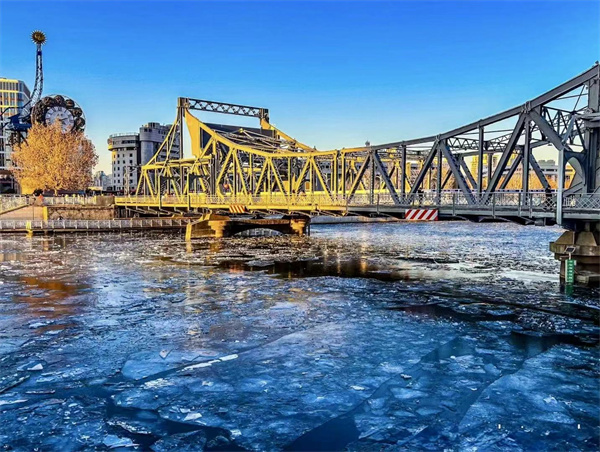
Haihe River
Tianjin is a prime example of a major Chinese city that considerably transformed itself in recent years. Today, a modern metropolis, it attracts a growing number of visitors desiring to relish in its success.
The city initially grew on extensive low-lying lands formed from sedimentary deposits carried over thousands of years, by rivers flowing steadily towards the Bohai Sea.
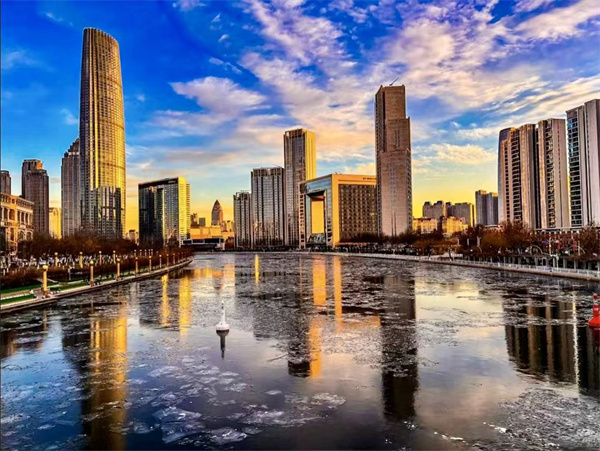
Haihe River
The Haihe, known as Tianjin's 'Mother River' is only 69 kilometers long. It forms the final section of this 17,800 sq.km catchment. Composed of approximately 300 tributaries draining a vast area of northern China, it stretches up to Shanxi province. Initially, some tributaries directly reached the sea but access was cut following construction of the Grand Canal.
Tianjin sits at a juxtaposition of river, canal and sea. It was where the Grand Canal flowed northwards from Hangzhou before merging with the Haihe. This helped the early walled city become an ocean gateway for Beijing. The Northern Grand Canal flows today beneath iconic Tianjin Eye ferris wheel, before connecting with Beijing’. By early 19th century, the river was straightened, deepened so allowing ocean-going vessels into central Tianjin.
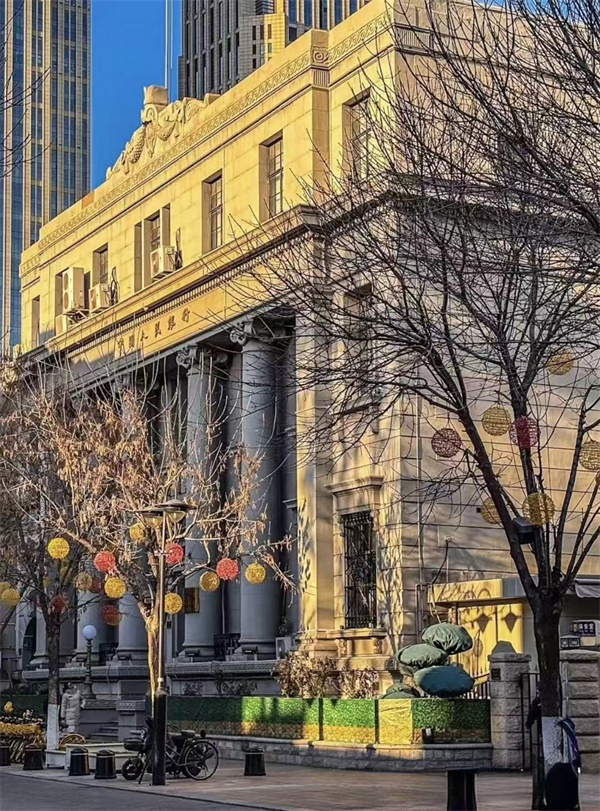
Classical-style architecture on Jiefang North Road
Its relationship with waterways was an important factor in Tianin's growth, becoming one of Northern China's most prosperous cities. However its location would receive considerable international attention leading to the 1860 Treaty of Tianjin. That can be traced back to 1840's Opium Wars, focusing initially on southern China's Guangzhou and the Pearl River Delta.
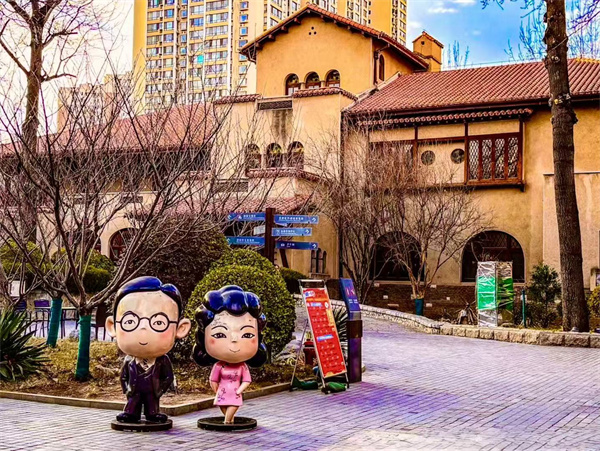
Jingyuan (‘Garden of Peace’)
With Tianjin, the initial territorial impacts were French (1860-1946) and British (1860-1943) concessions. Eventually nine countries would establish their definitive districts, located geographically close to the original Chinese city. The western powers ran such areas as semi-independent enclaves. The wartime period with Japan (1938-1945) witnessed an end to the Concession period.
Much of the pseudo-classical architecture, particularly from earlier 20th century remains intact. It reflects a period when the city would claim to have China's first Wall Street.
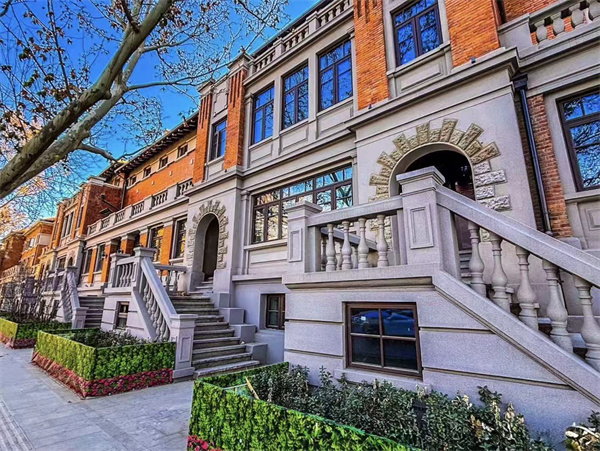
Italian style architecture 2026
The 1950's and 1960's saw rapid development of heavy industry, reliant on coal, spread across northern China. Tianjin then no longer a major international business centre. The once important maritime trade that formerly boomed within its heart steadily declined.
When I first visited Tianjin, in 1996, the city was rarely mentioned in guide books on China. It had lost its vitality, indeed appearing somewhat tired.
In contrast, look at Tianjin today. It has successfully transformed into one of Northern China's more dynamic and indeed exciting cities. It has become a 'must visit' destination, particularly for China's rapidly growing domestic tourist numbers.
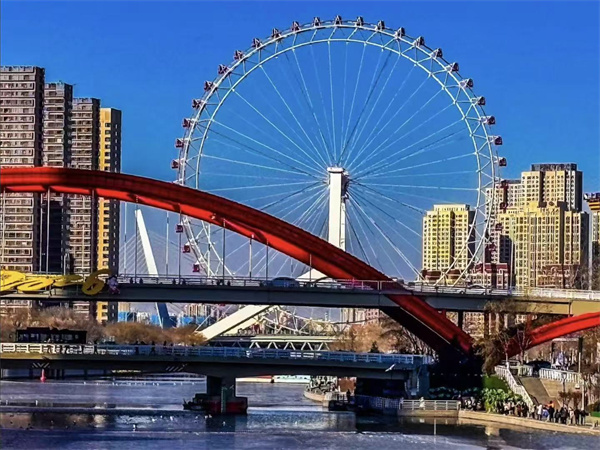
Tianjin Eye
Very important has been investment in infrastructure. In 2008 Tianjin was linked to Beijing by China's first high-speed rail. Today, its three main stations form a hub radiating out across China. International freight trains connect with Central Asia and Europe. Within Binhai New Area, where the Haihe reaches the Bohai Gulf, is Tianjin's vast port. Largest in Northern China, it ranks as one of the world's largest by throughput tonnage.
Tianjin's Binhai International Airport has grown into a major hub serving both domestic and international routes.
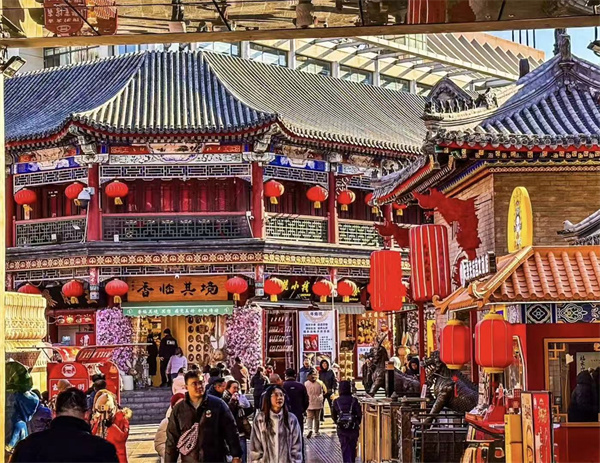
Ancient Cultural Street
Anyone arriving today at Tianjin's centrally located railway station will emerge onto a bright environment around the Haihe River. Gone are grey skies of the earlier industrial era, replaced by mostly blue. The river has become a major asset in promoting tourism. The derelict former harbour facilities have been transformed into a clean, traffic free riverside corridor. Perfect for walking, cycling, outdoor activities with panoramic views of the modern city.
Tianjin is recognised as a 'City of Bridges'. This includes historic icons such as Jiefang Bridge, dating from1927, known then as 'International Bridge'. Most bridges are recently constructed and modern in design. At night, they and riverside buildings are illuminated with eye-catching light displays. A flotilla of contemporary river boats carry visitors on popular sightseeing cruises passing what now are symbols of this 21st century city.
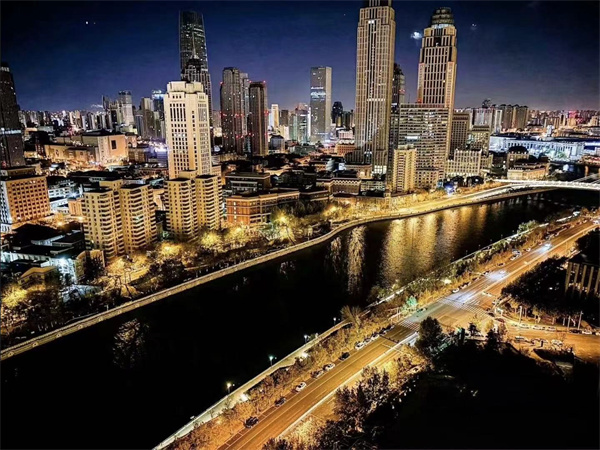
Haihe River
Very important in Tianjin’s transformation has been its management and renovation. The city becoming a popular location for filming, whether amidst a contemporary image of its vibrant river district or the more sophisticated architectural beauty set amidst a blend of tranquil parklands and gardens.
What Tianjin has achieved is increasingly being recognised domestically and internationally. Such is the scale of restoration that parts of Tianjin have become a vast outdoor collection of unique architecture representing Italian, British, French styles Some areas, such as Jiefang North Road continue to offer banking and commercial facilities within the original buildings. That road and adjacent avenues are perfect for walking or cycling amidst captivating early 20th century architecture.
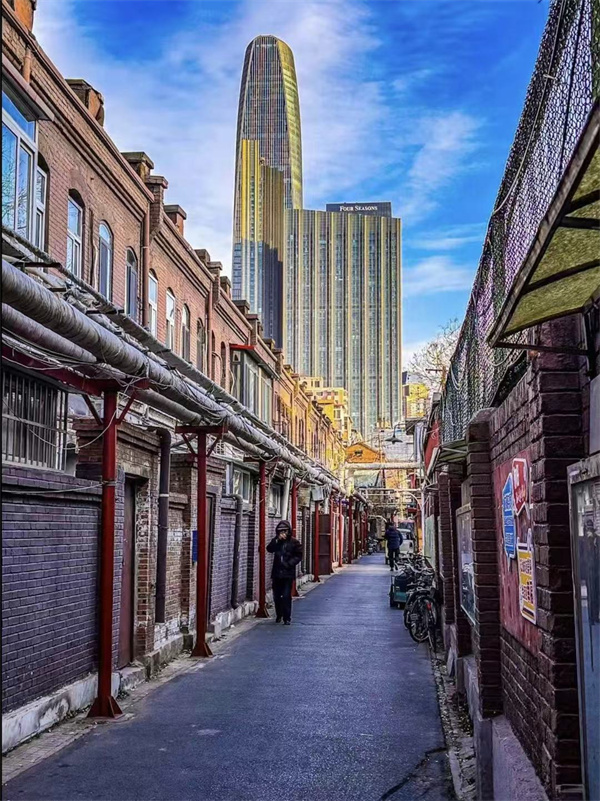
Alley at Anshandao
To the south, dating from 1863, stands the Astor, China’s first international hotel. Set within a pleasant location overlooking delightful Jiefang Park. it has retained an image of a British country lodge, Today it attracts discerning visitors looking for unique experiences during their stay in Tianjin. The city, of course, also has a range of modern international hotels, some with superb views over the Haihe River.
Near that park rises former headquarters building of Kailian Mining Administration. Dating from 1921, it recently has undergone renovation, turning it partly into a museum.
The surrounding area, boasting delightful cafes and restaurants, is home to the Anglican Arts Centre. Restored from a former British church, it is now one of Tianjin’s exciting cultural destinations.
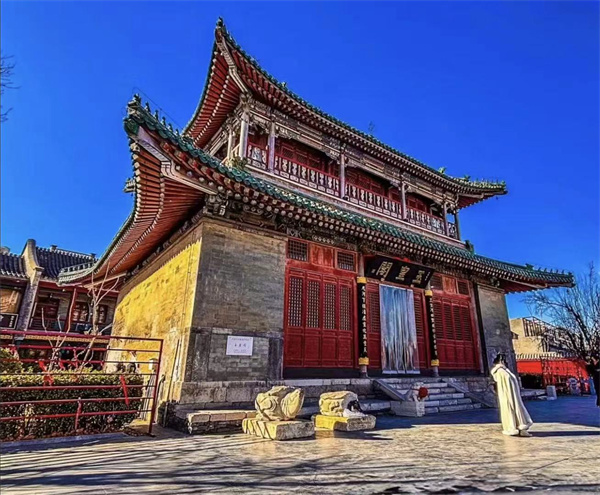
Yuhuang Pavilion at Ancient Cultural Street
On the northern side of the Haihe River, a large area formerly was the Italian Concession. It features architecture from different parts of Italy, delightful for walking it is referred to as Tianjin Haihe Italian Style Town. The area, centred on Marco Polo Square, is an increasingly popular area of restaurants, cafes, shops and more.
Tianjin has shown the way, taken a lead in not destroying its past but adapting it into facilities that will attract visitors while enhancing its economic growth. Pedestrian shopping streets, such as Heping Lu and Binjiang Dao, have retained a classical feel. They feature some of the city’s early bazaars restored to serve the modern era.
Close to the Haihe River, there is also a vibrant tourist district, the ‘Ancient Cultural Street,’ dating from 1986. At the north entrance, rises 1368 constructed Yuhuang Pavilion. The street is fascinating to explore, offering many examples of Tianjin’s cultural heritage along with local food specialities. Half way along is a real cultural gem. Compact Tianhou Palace dates back to the Ming Dynasty. It is dedicated to Sea Goddess, Mazu, providing protection for sailors and fishermen going out onto the seas in small, traditional wooden vessels. Many such temples are found along coastal southern China and amidst Chinese communities across southeastern Asia. Where the temple is located in Tianjin, this was formerly a very busy area connected to the sea.
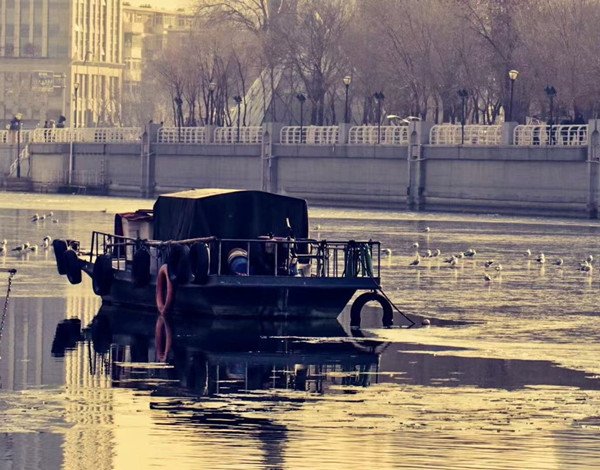
North Grand Canal
Anshan Dao is another fascinating street. Less developed than some of the more popular central streets, is mainly home to local people, the ‘laobaixing’. The area features everyday markets and restaurants. Once part of former Japanese Concession, it is noticeably different to former British, French or Italian districts. Buildings mostly smaller, modest but include several grand western buildings. One, a Spanish-style villa known as Jingyuan or Garden of Peace, was where Last Emperor, Pu Yi, lived between 1929 and 1931.
Anshan Dao connects with one of Tianjin's early commercial streets. Jinjie or Golden Street - an extension of pedestrian Heping Lu. Featuring examples of ‘Art Deco’ design it has also recently undergone restoration of its earlier commercial role. In contrast, side alleys lead to popular Shenyang Street antiques district where bargaining over prices is the norm.
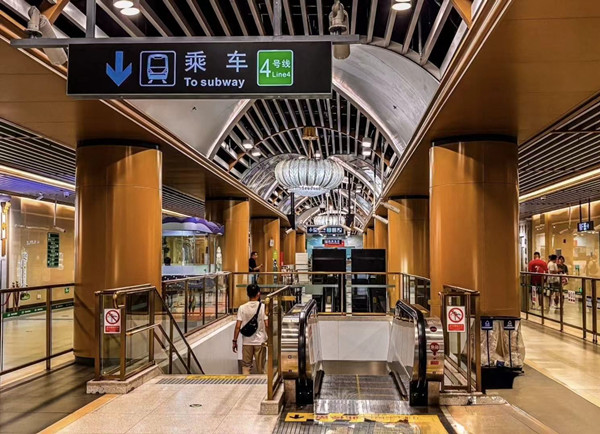
JinJie Metro Station
There is so much to see, to appreciate what Tianjin has to offer. It is, of course, an increasingly modern city where a first visit can result in regular returns.
Although located close to Beijing, it is noticeably different in cuisine and dialect. A large proportion of its population are native Tianjin people, their strong pride in the city obvious. This is shown in the friendliness and welcome towards visitors.
By Bruce Connolly (exploringtianjin.com)
Source:www.exploringtianjin.com








 京公网安备11010802044359
Contact Us:86-10-58882453 86-10-58882413