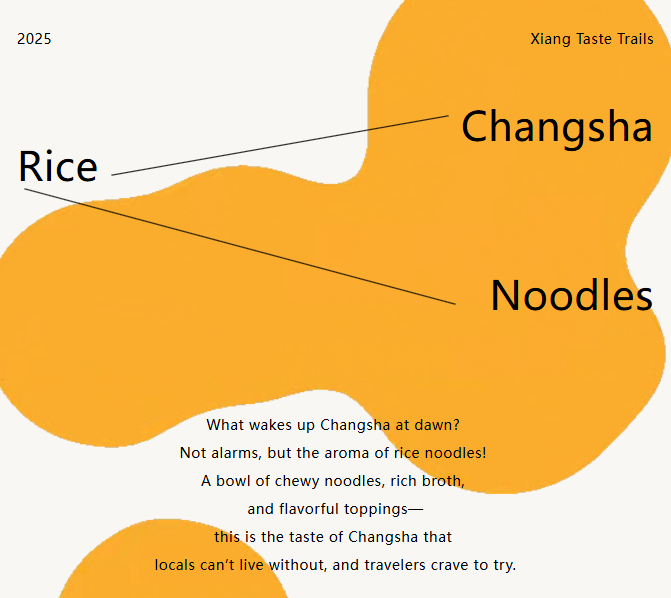
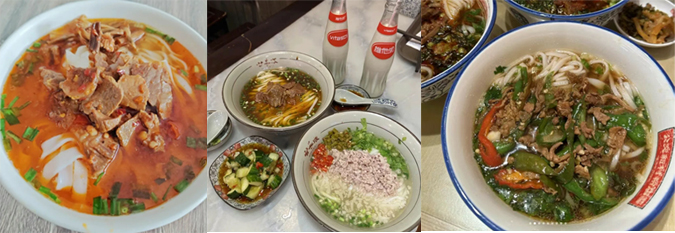

In Changsha, alarm clocks are never the protagonists of the early morning. As dawn breaks, warm yellow lights flicker on in rice noodle shops deep in the old alleys. Thick, milky bone broth bubbles away in large iron pots, mixing with the rich aroma of braised spices and the fragrant spiciness of chili oil, drifting through window cracks to fill the streets and lanes. Discerning Changsha locals follow the scent, and after a bowl of perfectly blanched rice noodles, all drowsiness fades away — this bowl of rice noodles, embodying the centuries-old essence of old Changsha, has long been a taste deeply etched in the bones of locals.
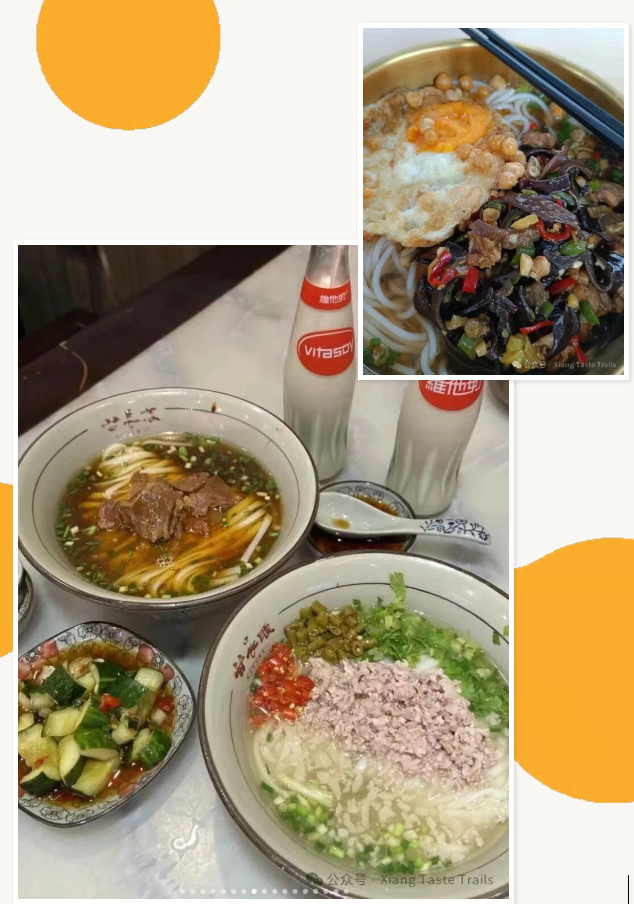
The early morning of Changsha is never without the sound of "slurping noodles". As early as five o'clock in the morning, time-honored rice noodle shops on street corners are already open for business. The boss nimbly wipes the greasy wooden tables while adding firewood to the stove. The soup base, made by simmering pork bones, marrow bones and old hens all night, turns as white and creamy as milk. With a gentle stir, the fresh aroma of bone marrow hits the nose. Steam rises from the edge of the pot lid, forming a thin mist at the shop entrance. Even passers-by who aren't hungry can't help but take a few more glances and involuntarily drift towards the shop.
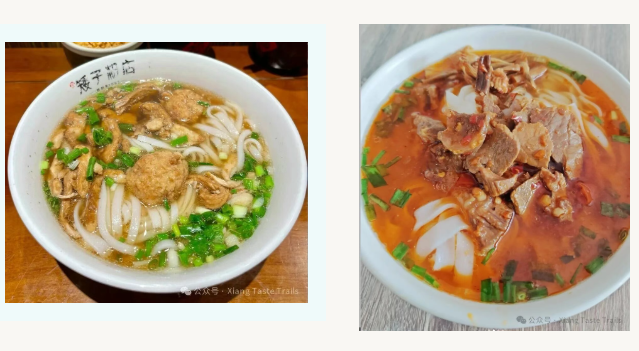
The soul of Changsha rice noodles lies first in the noodles themselves. Round rice noodles are made from late rice, firm and chewy, resistant to cooking and not easy to break; flat rice noodles are made by grinding early rice into pulp and steaming, thin and smooth, perfect for soaking up the soup's flavor. Most old Changsha locals prefer flat rice noodles, saying they better capture the essence of Hunan flavor. The skill of the noodle blanching chef is even more crucial. With his left hand, he grabs a handful of dried rice noodles, and with his right hand, he lifts the pot lid. He puts the noodles into the boiling water and stirs quickly, then fishes them out precisely after more than ten seconds, drains the water, and puts them into a coarse porcelain bowl. He ladles a spoonful of thick milky bone broth as the base, spreads the pre-braised ingredients, pours a spoonful of homemade secret chili oil, and finally sprinkles with bright green chopped scallions and minced garlic. A bowl of authentic Changsha rice noodles is then served steaming hot on the table.
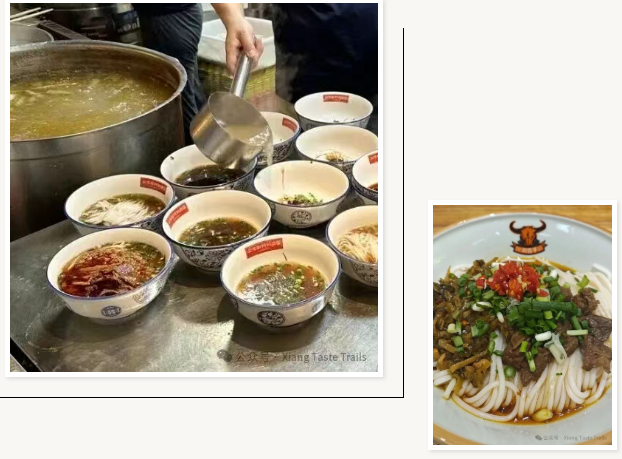

If rice noodles are the "bones and muscles" of Changsha rice noodles, then toppings are their "soul". The toppings of Changsha rice noodles are never simple decorations, but carefully made starring flavors. There are three main categories — braised, stir-fried, and simmered — each with its own characteristics. The rich variety of choices allows regular customers to have a different taste every month.
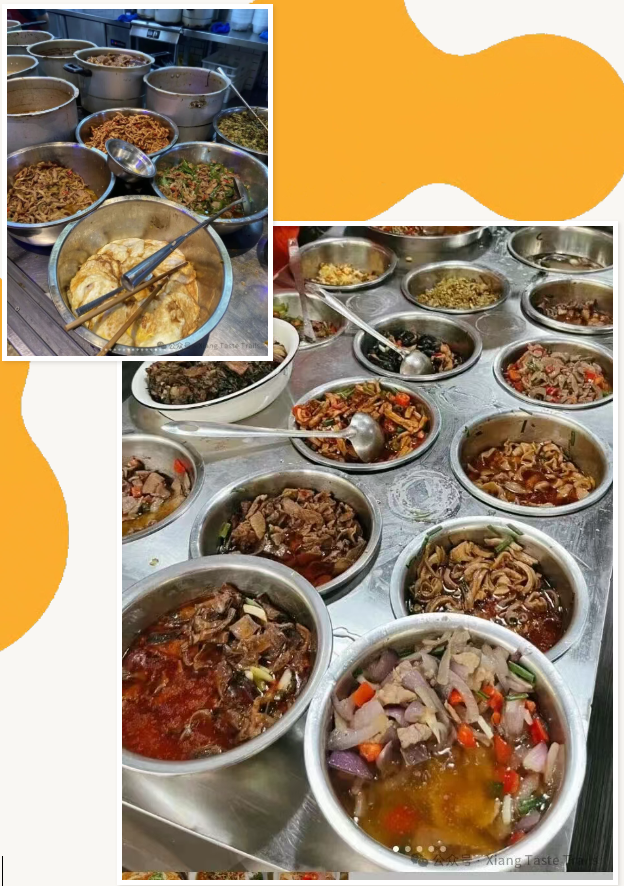
Braised toppings are undoubtedly classic and the most test of a shop's craftsmanship. More than a dozen spices such as star anise, cinnamon, bay leaves, and amomum tsao-ko are simmered with light soy sauce, dark soy sauce, and rock sugar to make braising soup. The ingredients need to be blanched in advance to remove fishy smells, then simmered in the braising soup for more than two hours until the spice flavor is fully absorbed. Braised beef has a tight texture, sliced evenly, and tastes salty, fragrant and slightly sweet; braised pork intestines are thoroughly cleaned, free of any fishy smell, soft and glutinous with a chewy texture; braised eggs are soaked in the braising soup, with the egg white fully flavored and the yolk creamy, a must-order for many. Stir-fried toppings excel in "wok hei" (the smoky flavor from high-heat stir-frying). The chef waits until the iron wok is glowing red, pours in rapeseed oil, adds the ingredients and stir-fries quickly, mastering the heat perfectly. Sour and spicy chicken gizzards are crispy, tender and refreshing, with a sour and spicy taste that hits the taste buds directly; Stir-fried sliced beef with green peppers is tender and not tough, with the fresh aroma of green peppers; Minced pork with sour cowpeas is salty, fragrant and appetizing, a perfect match for rice noodles. Simmered toppings emphasize "slow work yields fine results". Ingredients such as pork ribs, pig's trotters, and beef brisket need to be marinated in advance, then simmered in a clay pot for more than three hours until the meat is tender and falls off the bone, and the soup is thick and flavorful. When poured over the rice noodles, every strand is coated with the delicious soup.

Changsha's rice noodle shops are never just simple eateries, but small worlds carrying the human feelings and trivialities of old Changsha. In the small street-side eateries, several slightly outdated wooden tables are neatly arranged, with vinegar bottles, soy sauce bottles and homemade chopped chili on the tables, filled with diners. Office workers hold bowls and slurp noodles quickly, occasionally chatting with the boss about the day's news; old neighbors sit around a table, slowly slurping noodles while chatting about neighborhood trivialities, from Zhang's grandson to Li's grocery shopping tips, with endless topics, creating a lively and warm atmosphere.
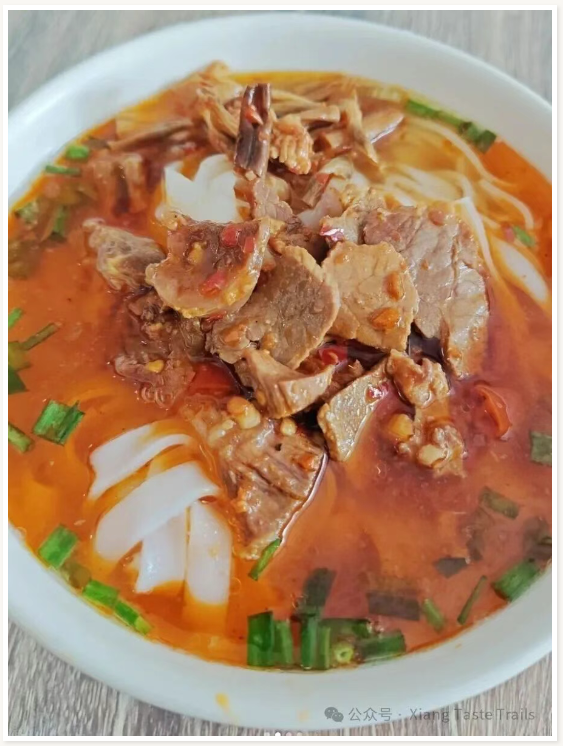
For Changsha locals, rice noodles have long surpassed the meaning of food itself, becoming a deep-rooted living habit and an inseparable homesickness. Changsha people working outside miss the taste of their hometown's rice noodles the most. Every time they return home, their first stop is definitely their usual rice noodle shop. Slurping a bowl of steaming hot rice noodles, they instantly find the sense of belonging of being home. This bowl of rice noodles, wrapped in thick milky bone broth and spicy chili oil, hides the vitality of Changsha's streets and lanes, the daily life of old Changsha people, and the unique flavor and feelings of this city, passed down from generation to generation, never changing.
If you like contents, like, comment and follow us! let's continue exploring the world of Changsha street snack culture together!
Written by: Elena
Edited by:Elena
Images via the Internet
Source:Xiang Taste Trails

















 京公网安备11010802044359