
Qingdao Jiaodong International Airport Departure Guide
I. Domestic Departures
Arrival at Terminal: For domestic departures, please enter the terminal through Gates 3-5 on Level L4.
Explosives Detection Check: Before entering the terminal, all passengers and their carry-on items are subject to an explosives detection check.
Check-in & Baggage Drop:
- Online Check-in: You can check in in advance via the mobile app or the airline's official website.
- On-site Check-in:
-
- At the Integrated Transportation Center (GTC): Check-in services at the Metro Transfer Hall on Level B1 of the GTC will cease 60 minutes before the scheduled departure time.
- At the Terminal: Self-service check-in at the Domestic Departure Hall on Level L4 will cease 50 minutes before the scheduled departure time. According to the "Qingdao Easy Boarding · Last-Minute Check-in" service launched on July 1, 2026, check-in cut-off times for domestic outbound flights have been optimized:
- Passengers without checked baggage: need to arrive at the boarding gate 15 minutes before the scheduled departure time.
- Passengers with checked baggage: The check-in cut-off time is 30 minutes before the scheduled departure time (applicable to all airlines handled by Qingdao Airport, including China Southern Airlines, China Eastern Airlines, Qingdao Airlines, and Shandong Airlines' express services).
If you encounter security peak hours, it is still recommended to allow sufficient time for security screening.
Check-in Island Distribution:
- Island H: Qingdao Airlines (QW);
- Island J: China Eastern Airlines (MU), Shanghai Airlines (FM), China United Airlines (KN);
- Island Q: Shandong Airlines (SC), Air China (CA), Shenzhen Airlines (ZH), Kunming Airlines (KY);
- Island R: Spring Airlines (9C), 9 Air (AQ);
- Island K: Other airlines;
- Islands L, M, N, P: Self-service Baggage Drop counters.
Note:
- Subject to change; please refer to the actual situation.
- Passengers with special service needs, please go to the relevant counters in the Domestic Departure Hall on Level L4.
- Passengers traveling with infants must check in at the manual counters.
Pre-Security Check: Self-service pre-security gates are available at the pre-check area. Simply place your valid ID or boarding pass on the designated scanner. Once your information is verified, you may proceed to the security screening area. (Note: Accompanying persons should stop here.)
Security Check:
Items Prohibited from Both Carry-on and Checked Baggage
- Firearms and weapons (including major components) and their replicas.
- Explosive or combustible substances and devices, including: ammunition, blasting equipment, pyrotechnics (such as fireworks and signal flares) and their replicas.
- Controlled instruments, including: controlled knives, police and military equipment, and other controlled instruments as stipulated by national regulations.
- Dangerous goods, including: compressed and liquefied gases, pyrophoric substances, substances that become flammable in contact with water, flammable liquids, flammable solids, oxidizing agents and organic peroxides, toxic substances, corrosive substances, and radioactive materials.
- Ignition sources (including all types of ignition devices), such as: lighters, matches, cigarette lighters, and magnesium rods.
- Power banks and lithium batteries with a rated energy exceeding 160Wh (except those used for electric wheelchairs).
- Alcoholic beverages with an alcohol content greater than 70% by volume.
- Other items prohibited from transport as stipulated by national laws, administrative regulations, and rules.
Items Allowed as Carry-on with Restrictions
- Rules for Carrying Power Banks and Lithium Batteries:
Power banks and lithium batteries are prohibited as checked baggage. The following restrictions apply for carry-on items (except for lithium batteries used for electric wheelchairs):
A. Must have clear and complete markings, and have a rated energy of less than or equal to 100Wh;
B. When the rated energy is greater than 100Wh but less than or equal to 160Wh, they must be approved by the airline and each passenger is limited to two units.
C. Passengers are prohibited from carrying power banks on domestic flights that do not have a 3C certification mark, have an unclear 3C certification mark, or belong to a recalled model or batch.
2. Rules for Carrying Liquids:
- On domestic flights, liquids are prohibited from being carried on board (except for cosmetics, toothpaste, and shaving cream for personal use during the journey). Cosmetics for personal use during the journey must meet the following conditions:
A. One item per type;
B. Placed in a container with a single unit volume not exceeding 100 mL and be subject to an open-bottle inspection;
C. Toothpaste and shaving cream are limited to one item per type and must not exceed 100g (mL).
- On international and regional flights, liquids may be carried if they meet the following conditions:
A. Placed in a container with a single unit volume not exceeding 100 mL;
B. The container must be placed in a transparent, resealable plastic bag with a maximum volume of 1L, and each passenger is allowed only one such plastic bag. Any excess must be checked as baggage.
- When transiting from an international/regional flight to a domestic flight within the same airport control area, duty-free liquids carried on board must meet the following conditions:
A. Present proof of purchase;
B. Placed in a sealed, intact, and transparent plastic bag;
C. Confirmed by security check.
If you leave the airport control area during your domestic connecting flight, you must check the duty-free liquids brought on board as baggage.
- Liquid dairy products necessary for infants during air travel, and liquid medicines necessary for passengers with diabetes or other diseases during travel, may be carried on board only after being confirmed by security check.
- Liquids purchased or obtained by passengers within the airport control area or on the aircraft may be carried on board before leaving the airport control area.
Items Prohibited as Carry-on but Allowed as Checked Baggage
- Alcoholic beverages (must have clear and complete markings, be in retail packaging, and each container must not exceed 5L):
- When the alcohol content is less than or equal to 24% by volume, there is no limit on the quantity for checked baggage;
- When the alcohol content is greater than 24% but less than or equal to 70% by volume, each passenger may check no more than 5L.
- When the alcohol content exceeds 70% by volume, it is prohibited to be checked as baggage.
- Sharp objects (such as fruit knives, scissors; scalpels, carving knives; knives, spears, swords, halberds used for martial arts and theatrical performances), blunt objects (such as baseball bats, golf clubs, trekking poles), tools (such as axes, chisels, awls, saws), and other items that could cause personal injury or endanger aviation safety and order.
Valid Travel Documents
According to the "Civil Aviation Security Check Regulations" (Order No. 76 of 2016), valid travel documents include: Resident Identity Cards, temporary Resident Identity Cards, passports, military officer certificates, civilian cadre certificates, conscript certificates, non-commissioned officer certificates, civilian personnel certificates, employee certificates, Armed Police officer certificates, Armed Police soldier certificates, and Seafarer's Certificates for residents of mainland China; Mainland Travel Permits for Hong Kong and Macau Residents for residents of Hong Kong and Macau; Mainland Travel Permits for Taiwan Residents for residents of Taiwan; passports, Diplomatic Identity Cards issued by the Ministry of Foreign Affairs, and Foreign Permanent Resident ID Cards for foreign nationals; and other valid travel documents as specified by the Civil Aviation Administration.
For residents of mainland China under the age of 16, valid travel documents also include birth certificates, household registration books, student ID cards, or identity certificates issued by the public security authority at their place of household registration.
Quick Security Screening Process
- It is prohibited to carry ignition sources on board. Please remove and dispose of them yourself or hand them over to staff before security check.
- While waiting for the security check, please have your valid travel document and boarding pass ready. If you find that you have forgotten your travel document, promptly use your mobile phone to access the mini-program for a temporary boarding certificate or go to the police station set up by the Airport Public Security Bureau in the terminal.
- Before undergoing the security check, please take out all items from your pockets, power banks, umbrellas, computers, and other items from your carry-on baggage, and place them in the tray provided.
- Domestic security lanes 1, 2, 43, and 44 are First Class, Business Class, and Care Channels (with priority for military personnel and firefighters). Domestic lanes 10 and 36 are Green Channels (for late-arriving passengers, model workers, high-level talents, etc.). Lane 21 is the Easy Security Check Channel. (The specific availability of security lanes is dynamically adjusted based on passenger traffic; please refer to the actual situation on site.)
- If you are a late-arriving passenger or need assistance, please contact the "Green Vest" staff nearby at any time.
Proceeding to the Boarding Gate:
- Level L3 gates include: 1-26, 42-56, 66-75;
- Level L2 gates include: 27-29, 57-59;
- Level L1 gates include: 30-33, 36, 37A, 37B, 38-41, 60-63.
Passenger Boarding:
Boarding gates for domestic flights will close 15 minutes before the scheduled departure time.
(Note: To maintain a quiet and comfortable travel environment, Qingdao Jiaodong International Airport only broadcasts announcements in the boarding areas corresponding to the flight. To avoid missing important information, please arrive early at your boarding gate, rest and wait, and listen for announcements.)
II. International Departures
Arrival at Terminal: For international departures, please enter the terminal through Gates 1-2 on Level L4.
Explosives Detection Check: Before entering the terminal, all passengers and their carry-on items are subject to an explosives detection check.
Check-in & Baggage Drop:
For international departures, please proceed to the A-F islands for check-in:
- Island A: All Nippon Airways (NH, with self-service kiosks), Himalaya Airlines (H9), Air Company (RF), Jin Air (LJ);
- Island B: Korean Air (KE, with self-service kiosks);
- Island C: Cathay Pacific (CX), Air Macau (NX, with self-service kiosks), Jeju Air (7C), Air Busan (BX);
- Island D: Capital Airlines (JD), Scoot (TR);
- Island E: China Eastern Airlines (MU), Xiamen Airlines (MF), T'way Air (TW);
- Island F: Qingdao Airlines (QW), Shandong Airlines (SC);
Note: Subject to change; please refer to the actual situation.
The check-in cut-off time for international and regional flights at Qingdao Airport is 50 minutes before the scheduled departure time (45 minutes for Korean Air, 60 minutes for Scoot). The cut-off time for self-service check-in kiosks is 60 minutes before scheduled departure (50 minutes for Air Macau). Please allow ample time for check-in.
Pre-Security Check: Self-service pre-security gates are available at the pre-check area. Simply place your valid ID or boarding pass on the designated scanner. Once your information is verified, you may proceed to the security screening area. (Note: Accompanying persons should stop here.)
Health Quarantine and Customs Inspection:
"Red Channel" for Outbound Goods Declaration
- Carrying cultural relics, endangered animals and plants and their products, biological species resources, precious metals such as gold and silver;
- Resident passengers carrying personal travel items such as cameras, video cameras, laptop computers, etc., with a unit price exceeding RMB 5,000, which must be brought back into China;
- Carrying cash exceeding RMB 20,000 yuan, or foreign currency cash exceeding the equivalent of USD 5,000;
- Carrying cargo, samples, advertising materials;
- Other items requiring customs declaration.
Items Restricted from Export by the People's Republic of China
- Precious metals such as gold and silver and their products;
- National currency;
- Foreign currency and securities;
- Radio transceivers and communication encryption devices;
- Valuable Chinese medicinal materials;
- General cultural relics;
- Other items restricted from export by customs, such as microorganisms, biological products, blood and blood products, human genetic materials, and controlled knives.
Customs Regulations for Inbound and Outbound Passengers
I. The following inbound passengers should choose the "Declaration" Channel (also known as the "Red Channel") for customs clearance and present their declaration documents to customs for the entry of goods:
- Carrying animals, plants and their products, microorganisms, biological products, human tissues, blood and blood products;
- Resident passengers who have acquired items overseas with a total value exceeding RMB 5,000;
- Non-resident passengers who intend to leave items in China with a total value exceeding RMB 2,000;
- Carrying more than 1,500 ml of alcoholic beverages (with an alcohol content above 12 degrees), or more than 400 cigarettes, or more than 100 cigars, or more than 500 grams of tobacco;
- Carrying cash exceeding RMB 20,000 yuan, or foreign currency cash exceeding the equivalent of USD 5,000;
- Carrying separately transported baggage, cargo, samples, advertising materials;
- Other items requiring customs declaration.
II. The following outbound passengers should choose the "Declaration" Channel (also known as the "Red Channel") for customs clearance and present their declaration documents to customs for the export of goods:
- Carrying cultural relics, endangered animals and plants and their products, biological species resources, precious metals such as gold and silver;
- Resident passengers carrying personal travel items such as cameras, video cameras, laptop computers, etc., with a unit price exceeding RMB 5,000, which must be brought back into China;
- Carrying cash exceeding RMB 20,000 yuan, or foreign currency cash exceeding the equivalent of USD 5,000;
- Carrying cargo, samples, advertising materials;
- Other items requiring customs declaration.
III. Articles Prohibited from Import by the People's Republic of China
- All kinds of weapons, imitation weapons, ammunition and explosive devices;
- Counterfeit currency and counterfeit securities;
- Printed matter, films, photographs, records, films, audio tapes, video tapes, laser discs, computer storage media, gambling chips and other items harmful to China's politics, economy, culture, and morality;
- All kinds of virulent poisons;
- Opium, morphine, heroin, cannabis, and other narcotics and psychotropic substances that can cause addiction;
- Animals, plants and their products carrying dangerous pathogens, pests and other harmful organisms;
- Food, drugs or other items that are harmful to human and animal health, from epidemic areas, or can transmit diseases.
IV. Articles Prohibited from Export by the People's Republic of China
- All items listed in the prohibited import category;
- Manuscripts, printed matter, films, photographs, records, films, audio tapes, video tapes, laser discs, computer storage media and other items whose content involves state secrets;
- Valuable cultural relics and other cultural relics prohibited from export;
- Endangered and precious animals and plants (including specimens) and their seeds and breeding materials.
V. Articles Restricted from Import by the People's Republic of China
- Radio transceivers and communication encryption devices;
- Tobacco and alcohol;
- Endangered and precious animals and plants (including specimens) and their seeds and breeding materials;
- National currency;
- Other items restricted from import by customs, such as microorganisms, biological products, blood and blood products, human genetic materials, controlled knives, and satellite television receiving equipment.
VI. Articles Restricted from Export by the People's Republic of China
- Precious metals such as gold and silver and their products;
- National currency;
- Foreign currency and securities;
- Radio transceivers and communication encryption devices;
- Valuable Chinese medicinal materials;
- General cultural relics;
- Other items restricted from export by customs, such as microorganisms, biological products, blood and blood products, human genetic materials, and controlled knives.
VII. Passengers from yellow fever epidemic areas must present a valid yellow fever vaccination certificate to customs upon entry. Chinese citizens intending to reside abroad for one year or more must hold a health certificate issued by customs. Chinese citizens who have resided abroad for one year or more must declare their health status to customs upon entry.
Security Check:
(Security check regulations for international departures are the same as those for domestic departures; please refer to the relevant section above.)
Items Prohibited as Carry-on but Allowed as Checked Baggage
- Alcoholic beverages (must have clear and complete markings, be in retail packaging, and each container must not exceed 5L):
- When the alcohol content is less than or equal to 24% by volume, there is no limit on the quantity for checked baggage;
- When the alcohol content is greater than 24% but less than or equal to 70% by volume, each passenger may check no more than 5L.
- When the alcohol content exceeds 70% by volume, it is prohibited to be checked as baggage.
- Sharp objects (such as fruit knives, scissors; scalpels, carving knives; knives, spears, swords, halberds used for martial arts and theatrical performances), blunt objects (such as baseball bats, golf clubs, trekking poles), tools (such as axes, chisels, awls, saws), and other items that could cause personal injury or endanger aviation safety and order.
Items Allowed as Carry-on with Restrictions
Rules for Carrying Power Banks and Lithium Batteries:
Power banks and lithium batteries are prohibited as checked baggage. The following restrictions apply for carry-on items (except for lithium batteries used for electric wheelchairs):
A. Must have clear and complete markings, and have a rated energy of less than or equal to 100Wh;
B. When the rated energy is greater than 100Wh but less than or equal to 160Wh, they must be approved by the airline and each passenger is limited to two units.
Rules for Carrying Liquids:
- On domestic flights, liquids are prohibited from being carried on board (except for cosmetics, toothpaste, and shaving cream for personal use during the journey). Cosmetics for personal use during the journey must meet the following conditions:
- One item per type;
- Placed in a container with a single unit volume not exceeding 100 mL and be subject to an open-bottle inspection;
- Toothpaste and shaving cream are limited to one item per type and must not exceed 100g (mL).
- On international and regional flights, liquids may be carried if they meet the following conditions:
- Placed in a container with a single unit volume not exceeding 100 mL;
- The container must be placed in a transparent, resealable plastic bag with a maximum volume of 1L, and each passenger is allowed only one such plastic bag. Any excess must be checked as baggage.
- When transiting from an international/regional flight to a domestic flight within the same airport control area, duty-free liquids carried on board must meet the following conditions:
- Present proof of purchase;
- Placed in a sealed, intact, and transparent plastic bag;
- Confirmed by security check.
- If you leave the airport control area during your domestic connecting flight, you must check the duty-free liquids brought on board as baggage.
- Liquid dairy products necessary for infants during air travel, and liquid medicines necessary for passengers with diabetes or other diseases during travel, may be carried on board only after being confirmed by security check.
- Liquids purchased or obtained by passengers within the airport control area or on the aircraft may be carried on board before leaving the airport control area.
Items Prohibited from Both Carry-on and Checked Baggage
- Firearms and weapons (including major components) and their replicas.
- Explosive or combustible substances and devices, including: ammunition, blasting equipment, pyrotechnics (such as fireworks and signal flares) and their replicas.
- Controlled instruments, including: controlled knives, police and military equipment, and other controlled instruments as stipulated by national regulations.
- Dangerous goods, including: compressed and liquefied gases, pyrophoric substances, substances that become flammable in contact with water, flammable liquids, flammable solids, oxidizing agents and organic peroxides, toxic substances, corrosive substances, and radioactive materials.
- Ignition sources (including all types of ignition devices), such as: lighters, matches, cigarette lighters, and magnesium rods.
- Power banks and lithium batteries with a rated energy exceeding 160Wh (except those used for electric wheelchairs).
- Alcoholic beverages with an alcohol content greater than 70% by volume.
- Other items prohibited from transport as stipulated by national laws, administrative regulations, and rules.
Valid Travel Documents
Valid travel documents for international flights include: Passports and Seafarer's Certificates; Mainland Travel Permits for Hong Kong and Macau Residents for residents of Hong Kong and Macau; Exit-Entry Permits for Traveling to and from Hong Kong and Macau for mainland residents; Mainland Travel Permits for Taiwan Residents for residents of Taiwan; Exit-Entry Permits for Traveling to and from Taiwan for mainland residents; for foreign nationals, passports, Diplomatic Identity Cards issued by the Ministry of Foreign Affairs, and Foreign Permanent Resident ID Cards, etc.
Border Inspection:
240-Hour Visa-Free Transit Policy
According to the visa-free transit policy optimized by the National Immigration Administration starting December 17, 2024, the stay duration for eligible foreign nationals transiting through China has been extended to 240 hours (10 days) .
Citizens of the 55 eligible countries holding valid international travel documents (with a validity period of at least 3 months) and an onward ticket or proof of onward trip to a third country (region) within 240 hours (with confirmed date and seat), may transit through China without a visa for a stay of no more than 240 hours .
During the 240-hour visa-free transit period, the scope of activities is limited to the administrative area of Shandong Province. When transiting, you must inform the airline in advance to apply to the border inspection authority, and obtain and fill out the "Temporary Entry Foreigner Arrival Card" and "Temporary Entry Foreigner Departure Card." Qingdao Airport has set up a "240-Hour Visa-Free Transit Service Zone" to provide convenient services for transit passengers.
The 55 eligible countries for the 240-hour visa-free transit policy :
Europe (40 countries): Austria, Belgium, Czech Republic, Denmark, Estonia, Finland, France, Germany, Greece, Hungary, Iceland, Italy, Latvia, Lithuania, Luxembourg, Malta, the Netherlands, Poland, Portugal, Slovakia, Slovenia, Spain, Sweden, Switzerland, Monaco, Russia, the United Kingdom, Ireland, Cyprus, Bulgaria, Romania, Ukraine, Serbia, Croatia, Bosnia and Herzegovina, Montenegro, North Macedonia, Albania, Belarus, and Norway.
Americas (6 countries): United States, Canada, Brazil, Mexico, Argentina, and Chile.
Oceania (2 countries): Australia and New Zealand.
Asia (7 countries): Republic of Korea, Japan, Singapore, Brunei, United Arab Emirates, Qatar, and Indonesia.
Passenger Information
- Border Inspection Procedures: Passengers on international departures (or arrivals) must present their valid international travel documents (including passports and other substitute documents) and visas (including residence permits and entry permits) to the immigration inspection station for verification before they are permitted to exit (or enter) the country. In addition, foreign nationals entering China are required to have their fingerprints and other biometric information collected and verified. Departing passengers must also present their boarding passes to the immigration officers.
- Entry/Exit Registration Cards: When passing through border inspection, all passengers must fill out the Entry/Exit Registration Card truthfully, except for mainland residents, Hong Kong residents, Macau residents, and Taiwan residents who are exempt from this requirement. The cards are available at the card-filling counters in the waiting hall.
- Regulations on Carrying Weapons for Entry/Exit: Passengers carrying weapons for entry or exit must apply to the relevant authorities in advance. When passing through border inspection, they must truthfully declare the weapons to the border inspection station and complete the relevant procedures with the approval documents from the relevant authorities.
Proceeding to the Boarding Gate:
After completing departure procedures, please proceed to the corresponding boarding gate according to your boarding pass information. Flights at contact stands use Gates 76-89; flights at remote stands use Gates 90-91. Please take the escalator next to Gate 83 to go downstairs to wait.
Passenger Boarding:
Please arrive at the boarding gate at least 15 minutes before the scheduled departure time to avoid being late.
Note: To maintain a quiet and comfortable travel environment, Qingdao Jiaodong International Airport only broadcasts announcements in the boarding areas corresponding to the flight. To avoid missing important information, please arrive early at your boarding gate, rest and wait, and listen for announcements.
Source:www.qdairport.com
The English version is for reference only. If there are differences between the English version and the Chinese version, the Chinese version shall prevail.
https://www.qdairport.com/cms/front/processArticle/179/%E5%9B%BD%E5%86%85%E5%87%BA%E5%8F%91/4346/35
Tourism
More+-
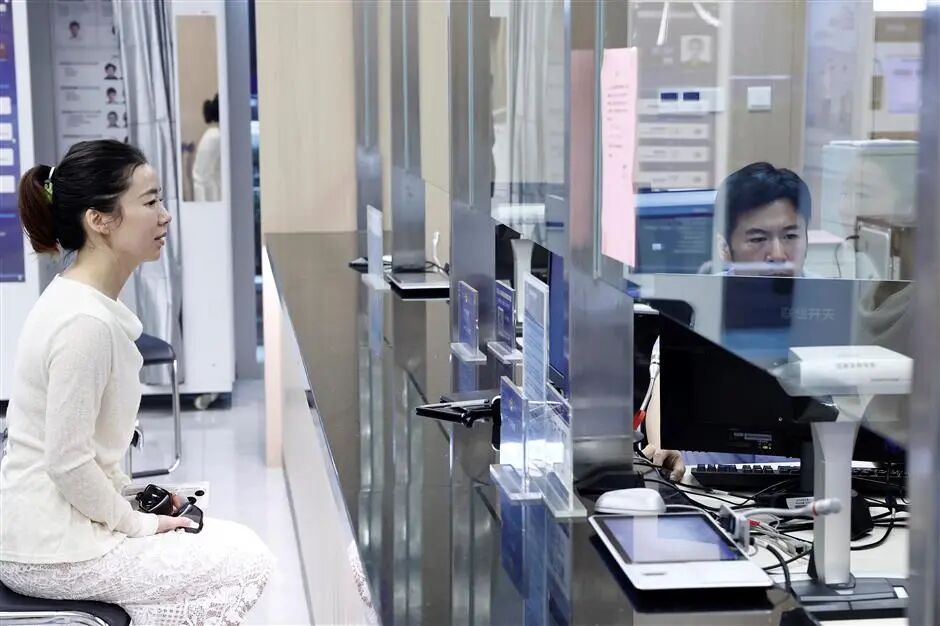
China Launches Nationwide Online Accommodation Registration for Foreigners
-

Suzhou rolls out nine measures to boost inbound tourism
-
Visa-Free Transit Policies
-
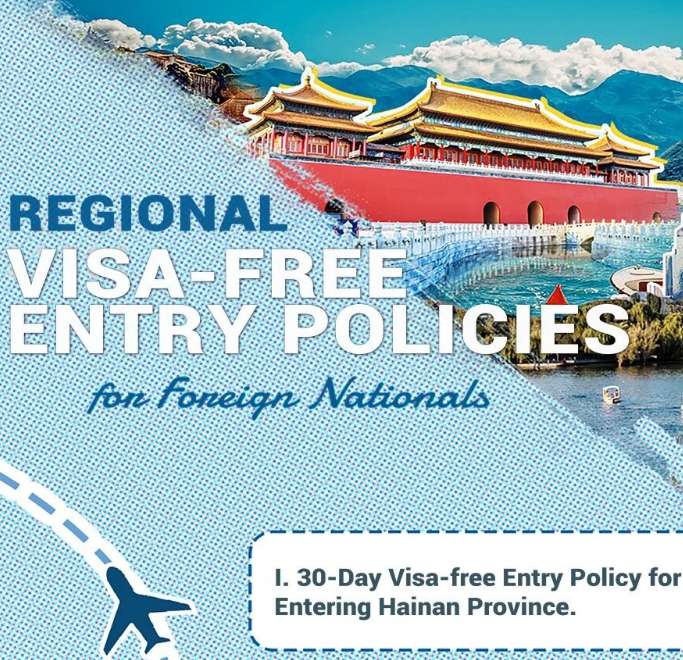
China's Entry Facilitation Policies for Foreign Nationals
-
Policy Interpretation of the Online Accommodation Registration Service for Foreigners Residing or Staying in Domiciles Other Than Hotels
Discover






 京公网安备11010802044359
Contact Us:86-10-58882453 86-10-58882413