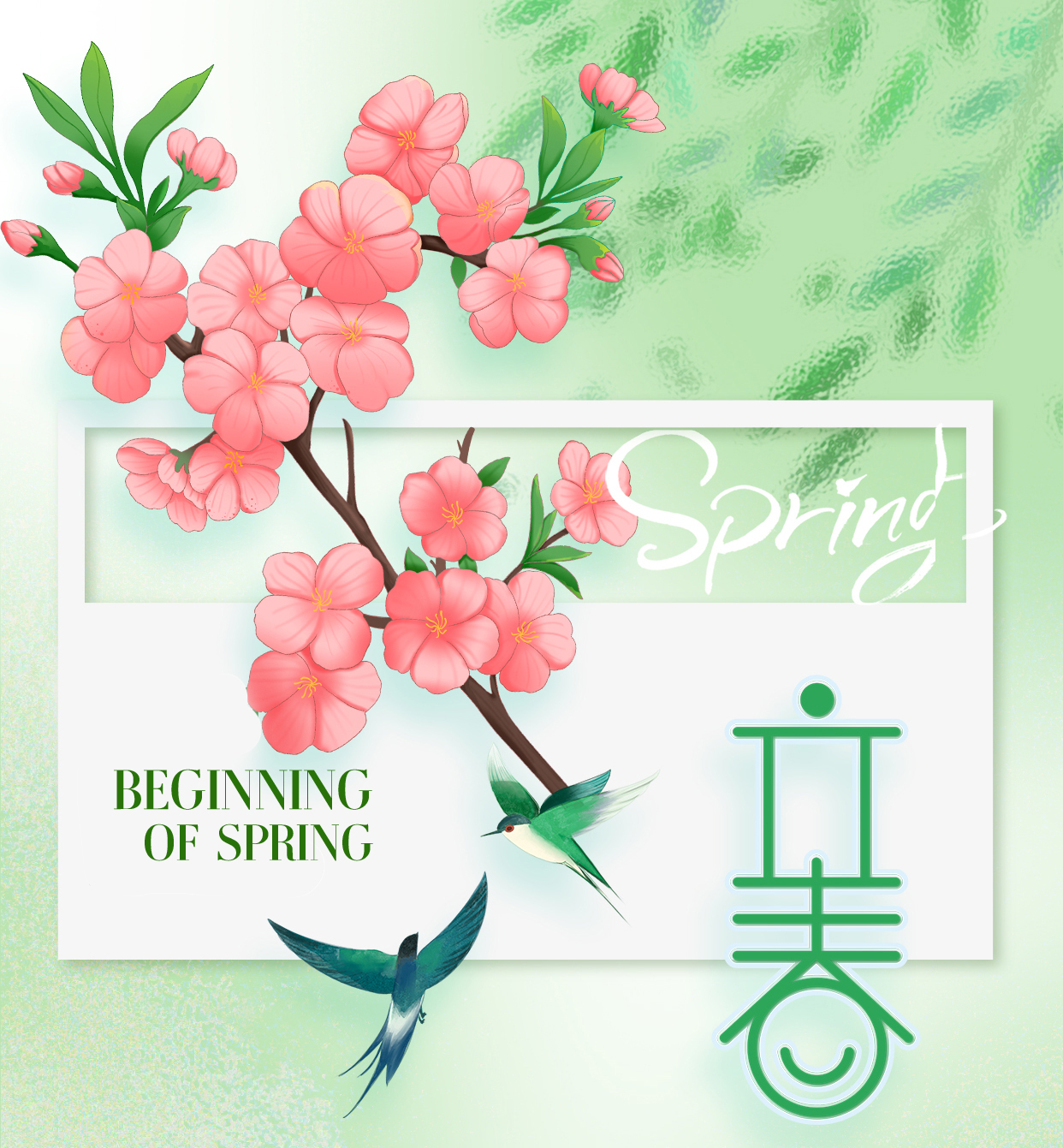
Beginning of Spring, known as “Li Chun” in Chinese, marks the commencement of the first solar term among the twenty-four traditional Chinese solar terms. It signifies the end of winter hibernation and the beginning of a season characterized by warmth, growth, and renewal. The term usually falls on February 4th or 5th annually when the sun reaches the celestial longitude of 315 degrees.
The name itself encapsulates its essence: “Li” means “beginning” or “start,” while “Chun” represents spring, a symbol of warmth and burgeoning life.
This solar term is astronomically defined, and the period from Beginning of Spring to Beginning of Summer is collectively regarded as spring.
Traditional Customs and Celebrations
Historically, Beginning of Spring held significant importance, with rituals conducted to welcome the season. In ancient times, from imperial courts to local communities, ceremonies were held to honor Goumang, the deity of spring and plants, also revered as the “Green Emperor.” Officials during the Han Dynasty would wear green garments and head coverings during these rites, while common people adorned silk swallow-shaped ornaments.
Several enduring customs are associated with this day:
“Biting the Spring” (Biting the Spring): In many regions, people consume seasonal foods such as spring pancakes, spring rolls, or radishes. This practice symbolizes welcoming the new season and is believed to promote health and ward off illness.
Posting Spring Calligraphy and Paintings: A tradition dating back to the Tang Dynasty involves affixing auspicious calligraphy and paintings depicting spring themes on doors and walls to express hopes for good fortune in the coming season.
“Whipping the Spring Ox”: In agrarian societies, a custom involved lightly striking an ox figurine made of paper or earth with colored sticks, known as “whipping the spring ox.” This ritual aimed to dispel the ox's winter lethargy and encourage farmers to prepare for spring ploughing.
The Three Pentads of Beginning of Spring
The solar term is further divided into three pentads, each spanning five days and observing specific natural phenomena:
First Pentad: The East Wind Thaws the Ice. The east wind brings warming breezes, causing the frozen ground to begin thawing.
Second Pentad: Hibernating Insects Stir. As temperatures rise and the soil softens, insects that hibernated underground start to become active.
Third Pentad: Fish Rise Carrying Ice. Ice in rivers begins to melt, and fish start swimming beneath the remaining fragments of ice.
Corresponding to these pentads, specific flowers bloom in sequence: winter jasmine during the first pentad, sour cherry blossom during the second, and purple magnolia during the third.
As a pivotal solar term within the traditional Chinese calendar, Beginning of Spring embodies the cultural appreciation for natural cycles and the hopeful transition from the dormant winter to the vibrant, life-giving spring. It serves as a reminder that “the whole year's work depends on a good start in spring,” urging people not to miss the opportunities of this auspicious time.


 京公网安备11010802044359