


The United Nations Secretary-General's Advisory Board on Zero Waste recently announced that Suzhou has been selected as one of the global "20 Cities Towards Zero Waste," becoming a model city for zero-waste urban development worldwide.
In September 2025, the UN Secretary-General's Advisory Board on Zero Waste launched the global 20 Cities Towards Zero Waste initiative, aiming to select pioneering cities worldwide that exemplify waste reduction, resource recycling, and sustainable management with replicable success stories to offer practical solutions to the world.
In recent years, Suzhou has continued to promote its zero-waste city construction, achieving 100% coverage in the collection, transportation, and disposal systems for domestic waste across its 8,600-square-kilometer urban and rural areas. The city has successfully tackled the annual challenge of processing 9.2067 million tons of household waste. Through waste incineration, Suzhou generated 3.03 billion kWh of electricity in 2024, equivalent to saving 1 million tons of standard coal, which was enough to power 1.1 million households for a year. It also achieved a 56% reduction in total carbon emissions and a 67% decrease in carbon intensity throughout the entire process.
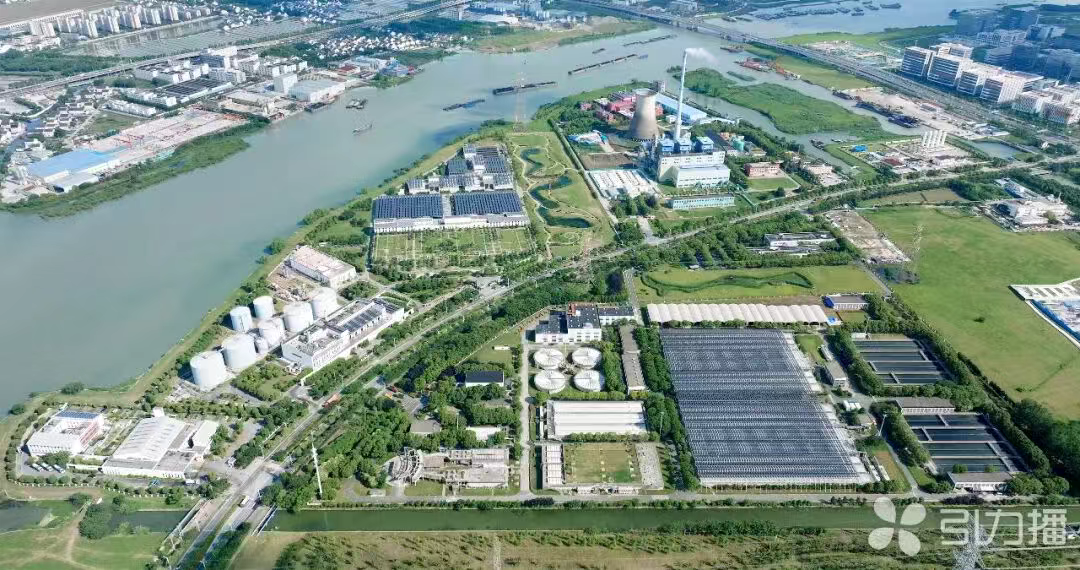
Suzhou Industrial Park Circular Economy Industrial Park/Photo courtesy of Suzhou Industrial Park Ecology and Environment Bureau
Suzhou's zero-waste case study will be globally launched on March 30, 2026 (the International Day of Zero Waste) and prominently showcased at commemorative events in New York, Nairobi, and other locations.
(Source: Yinlibo)
Source:iSzhou


 京公网安备11010802044359