


6.5 seconds to manufacture an air conditioner! Enterprise Open Day garners international guests' praise
May 30, 2026
On May 19, the "Enterprise Open Day" debuted at the 21st Optics Valley of China International Optoelectronic Exposition (OVC Expo), featuring three distinct routes: Super Factory, Artificial Intelligence, and Optical Chip Manufacturing. This key supporting activity allowed global industry experts, buyers, and scholars to explore leading enterprises and research platforms in Optics Valley. Visitors praised the cutting-edge technologies on display, including humanoid robots and advanced manufacturing capabilities.
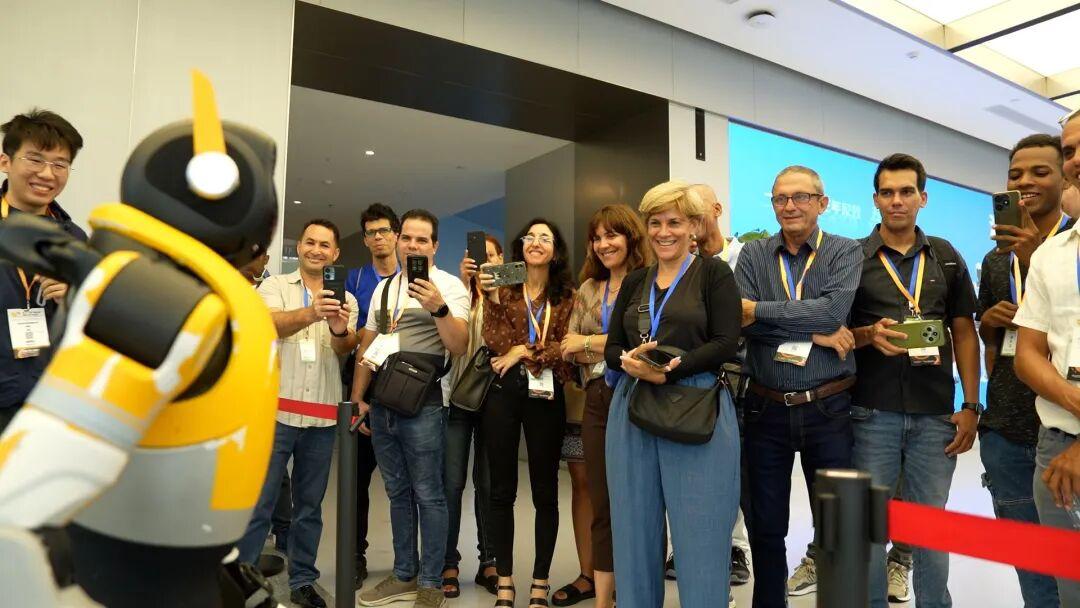
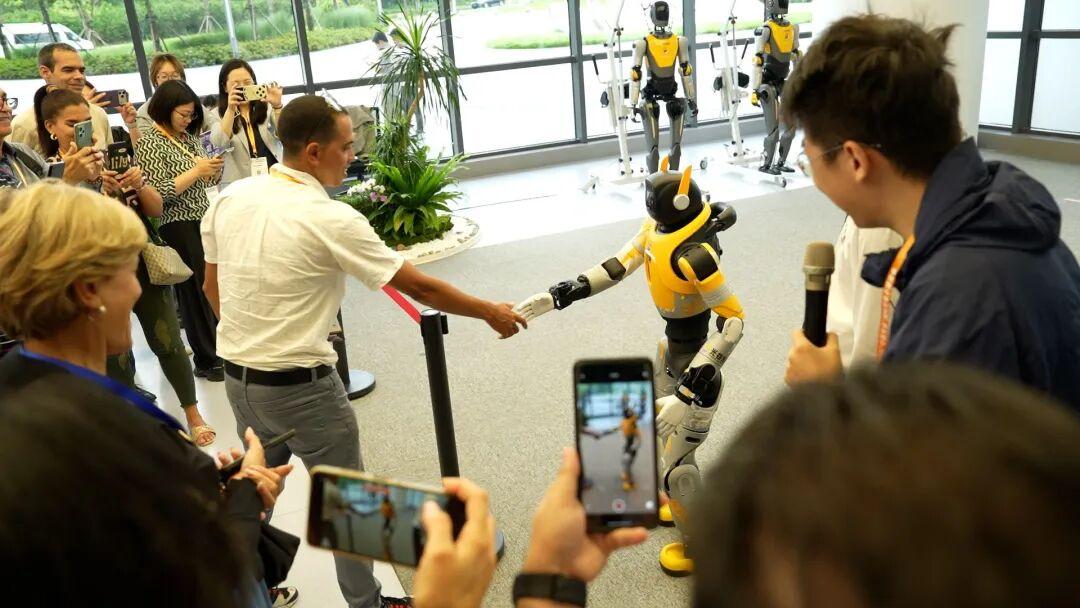
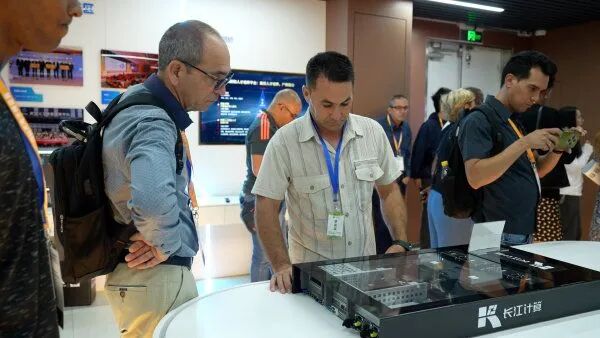
On the highly anticipated "Artificial Intelligence Track," a foreign delegation of over twenty people from Cuba visited the Wuhan Supercomputing Center and the Hubei Humanoid Robot Innovation Center.
As the first humanoid robot professional training and data platform in Central China, as well as the largest of its kind with the most diverse scenarios in the country, this center integrates a movement training ground, a data collection area, and a talent cultivation base. During the visit, the lively "Photon" humanoid robot, with its smooth body movements and rich emotional interaction capabilities, became the center of attention.
From shaking hands and making heart shapes to singing "London Bridge," this robot, a former champion of the first World Robot Competition, demonstrated to the international guests Wuhan's innovative explorations in high-performance servo drives, dexterous hand design, and multimodal large models.
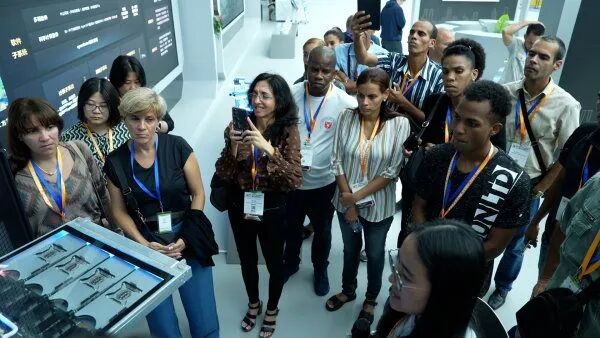
"The development speed of Wuhan in the robotics field is astonishing—it's incredible!" exclaimed LISSET DE LA CARIDAD, Director of the Automation Department of the Ministry of Industry of Cuba, after the visit, unable to hide her excitement. She had originally come to Wuhan to participate in an international training program — the Seminar on Key Infrastructure Cybersecurity for Information and Operational Technologies for Cuba, hosted by the Ministry of Commerce of China and undertaken by the Wuhan Research Institute of Posts and Telecommunications. However, she unexpectedly gained technological insights in Wuhan.
In an interview, LISSET DE LA CARIDAD specifically highlighted the potential application of robots in high-risk scenarios: "What impressed me most is that these robots can replace humans in dangerous environments in the future. For example, in fire rescue, they can enter disaster scenes instead of firefighters to save lives. In laboratories, they can handle toxic and hazardous gases and substances. This is not only a tremendous technological advancement but also a great protection for human life."
In addition to the excitement on the "Artificial Intelligence Track," the other two tracks were equally enriching. The "Super Factory Track" led professional visitors to Huagong Laser, TCL China Star Optoelectronics, and Xiaomi's "Dark Factory" (lights-out factory), where they witnessed firsthand the ultimate intelligent manufacturing speed of producing one air conditioner every 6.5 seconds. The "Optical Chip and Intelligent Manufacturing Track" delved into the upstream of the industrial chain, allowing participants to experience up close the collaborative innovation strength of the entire "Optical Chip, Display, Terminal, and Network" industry chain.
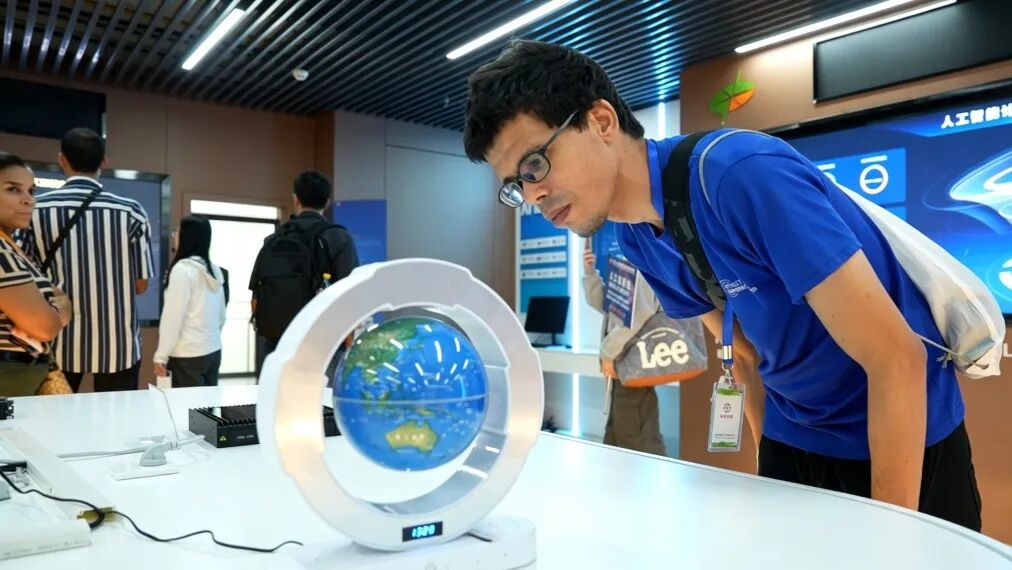
From precision manufacturing to supercomputing power to embodied intelligence, the Optical Valley International Optoelectronic Expo, through its innovative "exhibition + on-site visit" model, not only showcased the "hard technology" of Optics Valley to global merchants but also transformed the "visitor flow" of the exhibition into "lasting value" for industrial cooperation through face-to-face exchanges.
Source:ChangjiangWeekly


 京公网安备11010802044359