
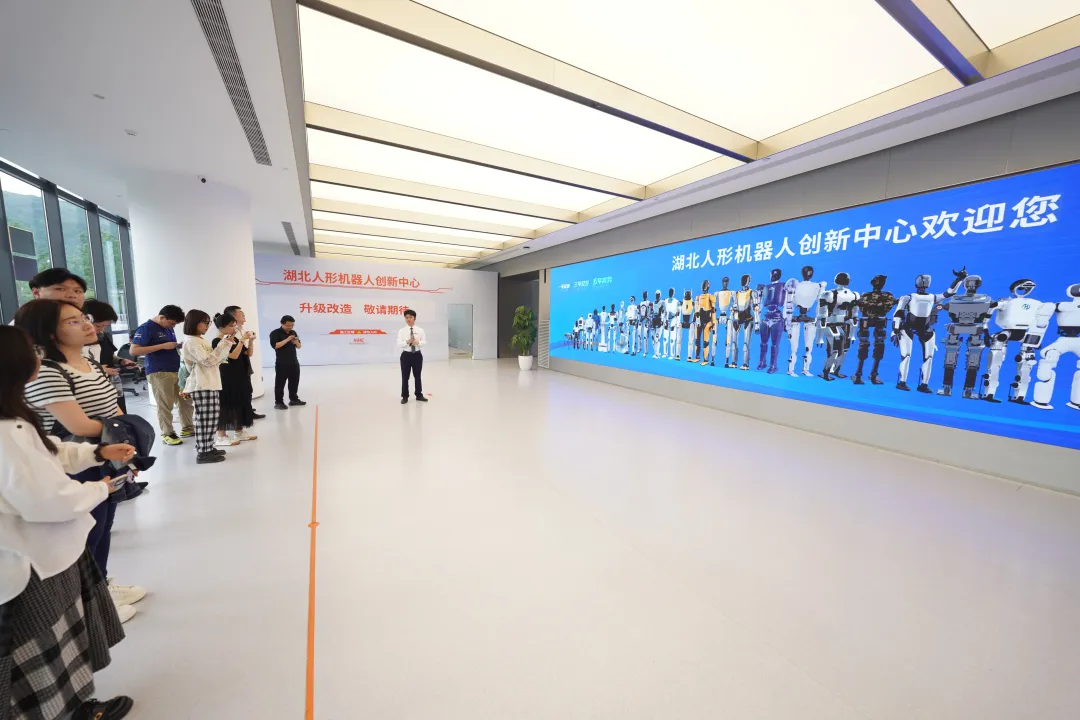
The training venue of Hubei Humanoid Robot Innovation Center in Wuhan Optics Valley is China's largest professional training platform for humanoid robots with the most diverse scenarios. Spanning 3,100 square meters, it features over 30 highly simulated scenarios. Under the guidance of trainers, more than a hundred humanoid robots repeatedly practice movements such as walking, grasping and carrying. Hubei-developed humanoid robots are stepping out of laboratories and factories to enter the mainstream market, ordinary households and industrial workshops. In the future, people will be able to purchase robots just like buying cars.

At supermarket shelves, humanoid robots sort fruits and vegetables; by kitchen sinks, they wash tableware; in bedrooms, they fold clothes; on assembly lines, they carry electronic components... At the motion training ground of the Hubei Humanoid Robot Innovation Center in Wuhan Optics Valley, the press group witnessed a host of intelligent operational scenarios.
Stepping into the training ground, one feels as if stepping onto the set of a sci-fi blockbuster. Spanning 3,100 square meters, the venue houses over 30 highly simulated functional scenes arranged in a scattered layout. Under the guidance of trainers, more than a hundred humanoid robots repeatedly practice walking, grasping, delivering and other movements. The clicking of rotating mechanical joints, the buzzing of data acquisition devices and the trainers’ commands blend together harmoniously.
As China’s largest and most diverse professional training platform for humanoid robots, it integrates motion training, data collection and scenario-based applications. Every day, people watch these robots evolve from clumsy beginners to dexterous operators.
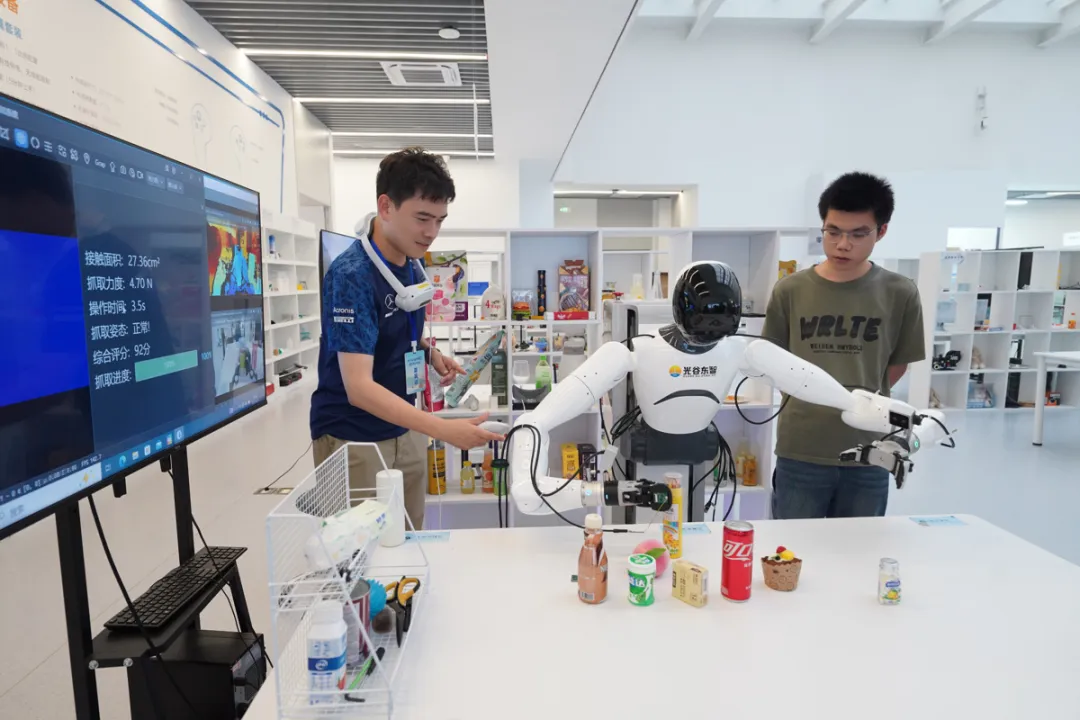
A data collector wearing a VR headset bends over, squats down, reaches out and picks up components from the shelf in slow motions. The worker then places the parts into a carton, lifts the box, stands up and puts it onto another shelf, moving as deliberately as a robot.
"Through motion capture technology, every movement of data collectors is recorded, converted into data and uploaded to robot systems. Robots then learn by imitation, while algorithms are continuously optimized to boost operational precision," explained Li Jin, a staff member. "Industrial scenarios demand extremely high accuracy, with a permissible error of no more than 0.1 millimeters."
Last November, the country's first 7S store dedicated to humanoid robots opened in Wuhan. It offers solutions for over ten application scenarios including industrial manufacturing, cultural tourism guidance, elderly care and special operations.
Humanoid robots developed in Hubei are stepping out of laboratories and factories to enter the mainstream market, ordinary households and workshop floors. In the future, people will be able to purchase robots just like buying a car.

The world’s optoelectronics looks to China, China’s optoelectronics looks to Wuhan, and Wuhan’s optoelectronics thrives in Optics Valley. The press group visited HGTECH in Wuhan Optics Valley to discover how this distinctive optical technology shines across the globe.
Not long ago, HGTECH unveiled the world’s first 12.8T XPO optical module with the highest transmission rate globally. Luo Chuanneng, CTO of HG Genuine, a subsidiary of HGTECH, explained: "A 12.8T module can be simply understood as a combination of eight 1.6T optical modules. It features ultra-high density and a pluggable design, delivering a peak transmission rate of 12.8T. More than just a simple assembly, it leverages advanced liquid cooling technology to achieve far better heat dissipation than a single standalone module."
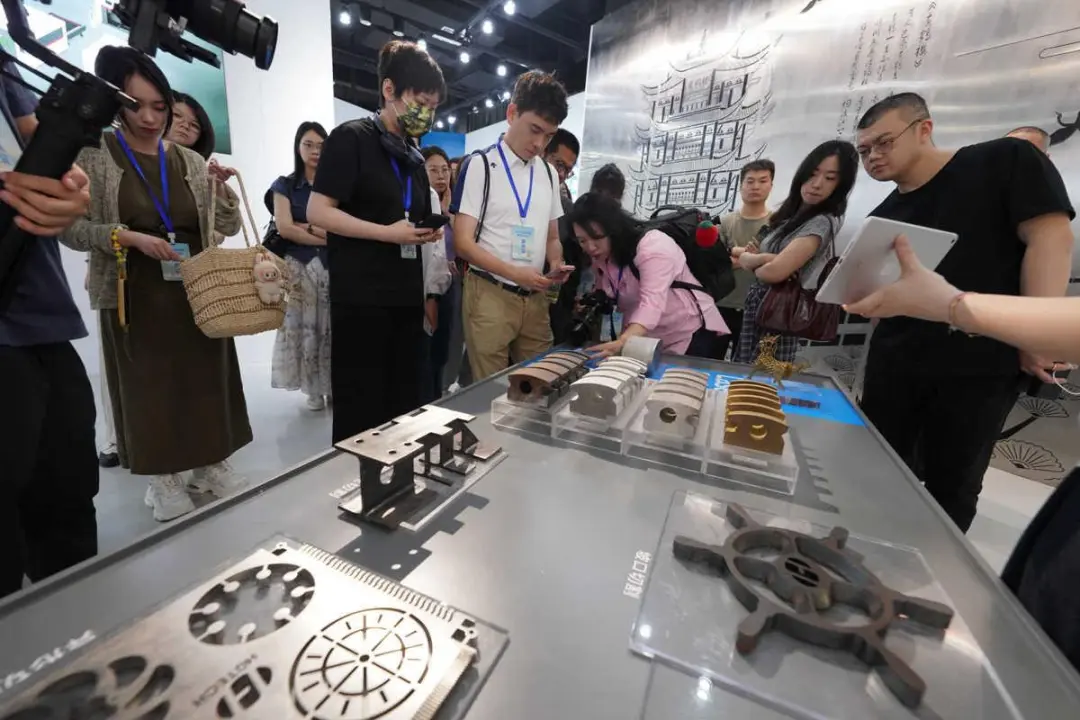
At the 21st China Optics Valley International Optoelectronic Expo, HGTECH also launched high-speed communication optical modules for automotive Ethernet. Capable of supporting access to high-definition sensors with tens of millions of pixels, they enable transmission with microsecond-level ultra-low latency and help reduce the overall weight of vehicles.
Over the past three years, HGTECH has achieved remarkable growth in optical interconnection products of 800G and above. It has globally launched the 12.8T XPO, 3.2T CPO optical engine with external laser source, and 6.4T NPO optical module solutions. Domestically, it debuted high-speed automotive Ethernet optical modules and 100G space-borne optical modules. The company also took the lead in realizing the engineering application of 3.2T NPO products, building a full-stack layout covering all technical routes for optical modules.
HGTECH is also expanding vigorously overseas. Its manufacturing plant in Thailand has been put into operation, mainly supplying products for AI computing power and sensors. The production base in Vietnam has also ramped up capacity, catering to equipment development for sheet metal processing, consumer electronics, auto parts and other sectors.
The "light of Hubei" has drawn worldwide attention. In recent years, the seven leading enterprises of Optics Valley, represented by HGTECH, Yangtze Optical Fibre and Cable, Accelink and FiberHome, have expanded their global presence. From Thailand and Vietnam to Indonesia, a brand-new export supply chain for "Optics Valley-made" products is taking shape.

Stepping into the workshop of Xiaomi Smart Home Appliance Factory in Wuhan Optics Valley, you will see giant injection molding machines running at full speed. Robotic arms precisely grab the newly formed frame of indoor air conditioners and swiftly move them away. At the production exit, finished air conditioners go through automatic packaging one after another.
"The injection molding and sheet metal workshops are fully automated. A 4.2-kilometer overhead conveyor system runs through six major production workshops. All key components undergo 100% AI vision inspection, and one air conditioner rolls off the production line every 6.5 seconds," a commentator at the factory told the press group. This is Xiaomi's third large smart manufacturing base across the country, following its mobile phone and automobile factories. The first phase boasts a peak annual production capacity of 7 million air conditioner sets, with a total output value of nearly 14 billion yuan.
What is a "dark factory"? The Xiaomi Smart Home Appliance Factory offers the answer: it requires no lighting during regular operation and needs no on-site workers, with fully automated equipment operating nonstop around the clock.
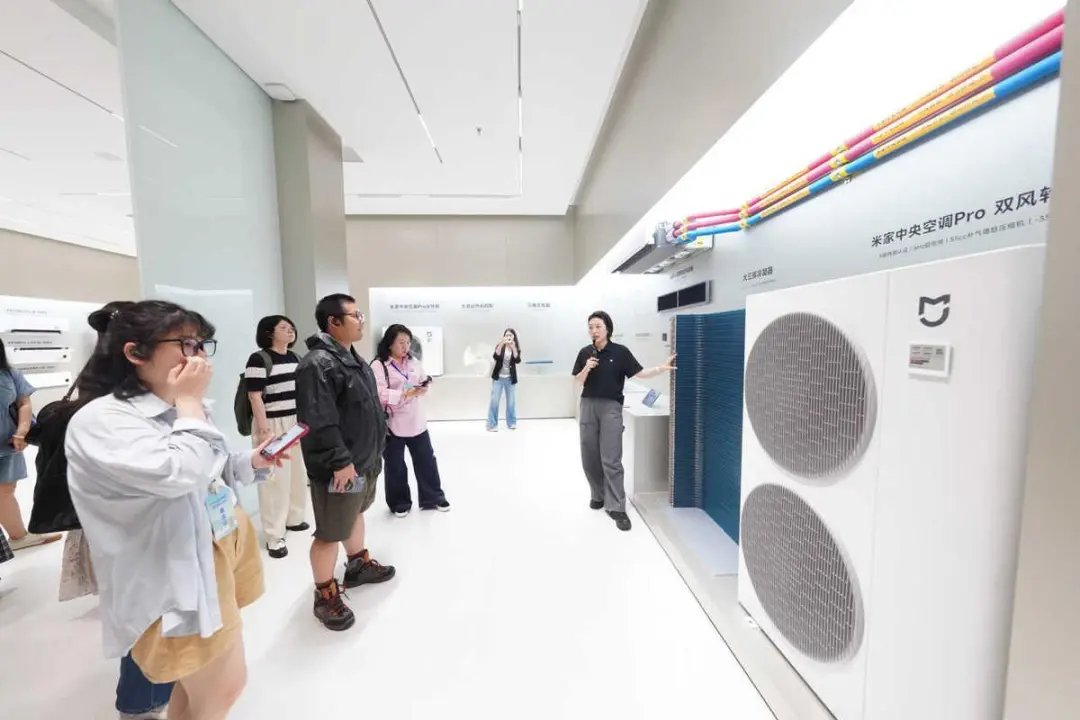
The three-dimensional intelligent logistics system across the factory park is equally impressive. Overhead conveyors transport materials between the six workshops, while AMR autonomous mobile robots handle the delivery of key materials inside each workshop. The overall coverage rate of intelligent logistics reaches 94%, supporting the production pace of one air conditioner every 6.5 seconds.
Extreme temperature conditions ranging from -65°C to 70°C, as well as the harshest climates across China — from the bitter cold of Mohe to the sweltering heat of Turpan — are all simulated in the factory's laboratories.
Known as a rigorous testing ground for home appliances, the lab area covers 7,000 square meters and consists of 46 professional laboratories. It has built a full-lifecycle testing system covering pre-research, development and mass production of air conditioners, laying a solid foundation for the quality of every finished product.
As Xiaomi's core base for home appliances, Wuhan Optics Valley will welcome major projects including a R&D center with thousands of employees and the global headquarters of Xiaomi large home appliances in the future. The factory will serve not only as a core manufacturing hub for Xiaomi's large home appliances, but also strive to set a benchmark for smart manufacturing in central China.

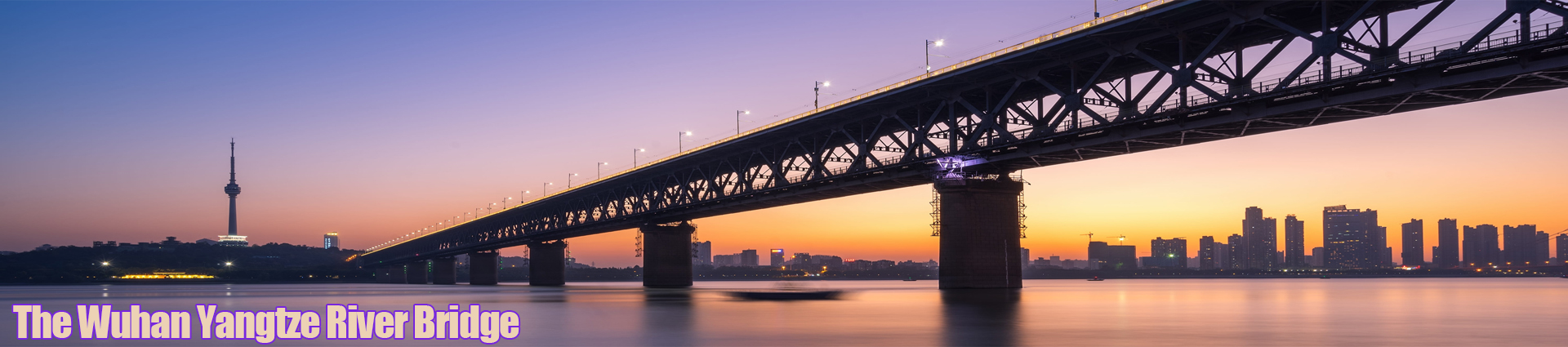
When talking about Wuhan’s iconic landmarks, the Wuhan Yangtze River Bridge — the first bridge over the Yangtze River — undoubtedly tops the list. The press group visited the bridge, tracing its historical footsteps and learning about the changes and development stories witnessed by this century-old structure.
"A single bridge spans north and south, turning the natural barrier into a thoroughfare." On October 15, 1957, the Wuhan Yangtze River Bridge was officially opened to traffic, ending the era when people on both river banks could only gaze across the mighty Yangtze with helplessness.
Standing at the Wuchang end of the bridge, visitors can see the monument commemorating its completion standing quietly beside the river. According to the bridge commentator, the monument’s cylindrical design symbolizes the pioneering large-scale tubular pile drilling construction technology adopted back then. Chinese and foreign builders worked side by side to innovate construction methods, completely eliminating caisson sickness common in traditional operations and laying a solid foundation for the bridge through technological breakthroughs.
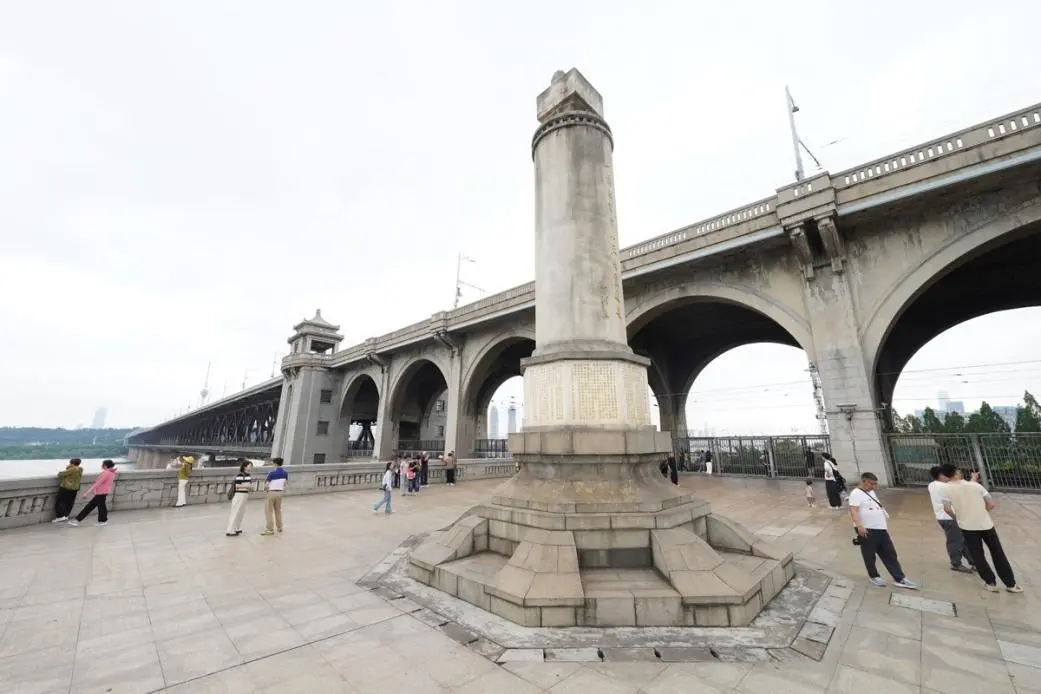
Over the past 69 years, more than 200 trains and over 100,000 vehicles have crossed the bridge every day. Even after being struck by large vessels, the bridge remains as sturdy as ever. None of its 21,285 tons of steel girders, eight piers or millions of rivets have developed cracks or come loose.
It is young people, however, that have made the bridge a viral hit. Riding a train across the bridge has become a hugely popular activity this year. Online videos showing the glittering river night view dotted with golden lights from train windows have amassed millions of likes on social media. Many netizens commented, "A ride across the bridge by train is an unmissable romantic experience when visiting Wuhan."
For the city of Wuhan, the Wuhan Yangtze River Bridge means far more than just a river crossing.
Centered around this landmark, the Yangtze River Central Axis of Wuhan is rapidly turning from blueprints into reality. Ecological restoration has been carried out along the two rivers and four riverfront areas, a hundred-mile ecological corridor has been completed, and riverside business districts have thrived. Like a steadfast anchor, the bridge underpins the city’s continuous upgrading and growth.

Four days after the launch of the flagship five-seater SUV — Voyah Taishan X8, the press group paid a visit to Voyah Auto Factory to explore the secrets behind the rise of this high-end new energy vehicle maker founded six years ago.
Inside the general assembly workshop of Voyah Auto Factory, robotic arms perform precise operations. AI vision inspection systems monitor assembly procedures in real time, and digital programs are rapidly flashed into intelligent modules. Multiple new energy vehicle models roll off the mixed-flow production line, with a brand-new vehicle coming out every 63 seconds on average.
Lu Fang, Chairman and Party Secretary of Voyah Auto, holds firm to the belief: "Only by securing independent control over core technologies can we build a solid foundation trusted by users and gain greater confidence for further development."
To date, Voyah Auto has established five major technological pillars: vehicle platform architecture, Voyah Power, intelligent cockpit, intelligent driving and Voyah technology ecosystem. The company boasts a total of 6,102 authorized patents.
Voyah has also blazed a distinctive path in vehicle development. In just three years, it has built a product lineup featuring three flagship models: Voyah Dreamer, Voyah Taishan and Voyah Chasing Light L, plus two SUV star models — Voyah FREE+ and Voyah Zhiyin. It stands among the new energy vehicle manufacturers with the most comprehensive product layouts in the industry.
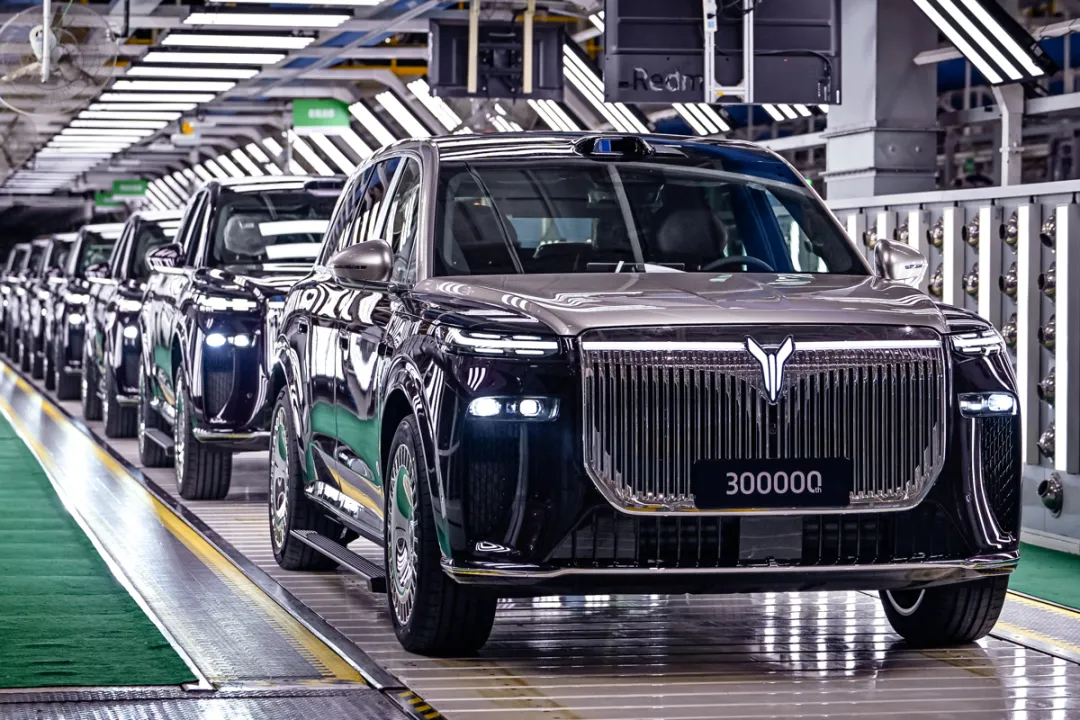
Li Boxiao, Deputy General Manager of Voyah Auto Sales & Service Co., Ltd., introduced that in 2025, Voyah became the first high-end new energy brand backed by central and state-owned enterprises in China to achieve cumulative sales of 300,000 vehicles. From January to April this year, the brand delivered a total of 49,038 units, a year-on-year increase of 36%, maintaining robust growth momentum.
Leveraging its comprehensive operational strengths, Voyah has steadily expanded its global footprint. Currently, its business covers 40 countries and regions worldwide with over 240 overseas sales outlets, winning recognition from more than 40,000 international customers.
The high-quality development of China's automotive industry has witnessed domestic brands transform from followers to leaders. Voyah embodies the immense potential of Chinese auto brands for the future.
Source: Changjiang Daily Wuhan International Communications Center


 京公网安备11010802044359