Tianjin
Tianjin is located on an alluvial plain that was formed after a marine regression. As early as the Paleolithic period, over 100,000 years ago, humans lived and reproduced in today's Jizhou District.
Over 4,000 years ago, the central urban area of Tianjin emerged from the sea. Later, the legendary emperor Yu the Great dug the Yuhe River, diverting water from the Yellow River into the sea through what is Tianjin today. Since then, the Yellow River has flowed into the sea through this area three times. Coupled with the joint action of "nine downstream rivers", an alluvial plain was formed and the coastline was gradually shifted eastward.
During the Spring and Autumn Period (770 BC - 475 BC), the coastline of Tianjin was located roughly to the east of today's Zhangguizhuang, Jugezhuang, and Shajingzi. By the Warring States Period (475 BC-221 BC), many densely populated villages had appeared in the plain area of Tianjin. Archaeological findings show that in the outskirts of Tianjin alone, remains of ancient villages have been discovered in as many as 50 places.
The Founding of Tianjin Garrison “Zhuanweitu” is a painting that depicts the transportation of grains in Tianjin during the reign of Emperor Kangxi (1662-1722) of the Qing Dynasty. The name "Tianjin" was adopted in the Ming Dynasty (1368-1644), meaning "the ford where the emperor, Son of Heaven, crossed the river". The city is also known as "Jingu" or "Jinmen".
The earliest official reference to the place is "Sanhui Haikou” (the mouth of three rivers) in Tong Dian (General Records) of the Tang Dynasty (618-907).
After the opening of the Beijing-Hangzhou Grand Canal in the Sui Dynasty (581-618), Tianjin became a transportation hub connecting the capital Chang'an to the east of Hangu Pass and east of Taihang Mountains due to its location near the rivers and the Bohai Sea. From the middle of the Tang Dynasty (618-907), Tianjin played a key role in transporting grain and silk from the south. During the Jin Dynasty (1115-1234), a fortress was built and in the Yuan Dynasty (1206-1368), a town as established at Zhigu, both serving as important military bases and grain transportation centers.
ln 1400, Zhu Di crossed the river at Zhigu and seized imperial power in Nanjing, becoming Emperor Yongle three years later. He established a garrison on December 23,1404 at the place where his troops crossed the river, naming it Tianjin. The left and right garrisons were added in 1405 and 1406. In 1652, the three garrisons were merged into the Tianjin Garrison, marking the founding of Tianjin and laying a foundation for its future development.
During the reign of Emperor Zhengde of the Ming Dynasty (1506-1521), Tianjin had become a bustling hub of river and sea transportation. The rivers were crowded with ships carrying grains, while the streets were lined with shops selling various goods. The majority of the trade was in grain and groceries from the south. By the end of the Ming Dynasty, Tianjin had transformed into a metropolis, rather than a garrison.
Tianjin is the only city in ancient China with an accurately recorded founding date. Since its official establishment in 1404, it has had a remarkable history of 619 years. Tianjin in Modern Times
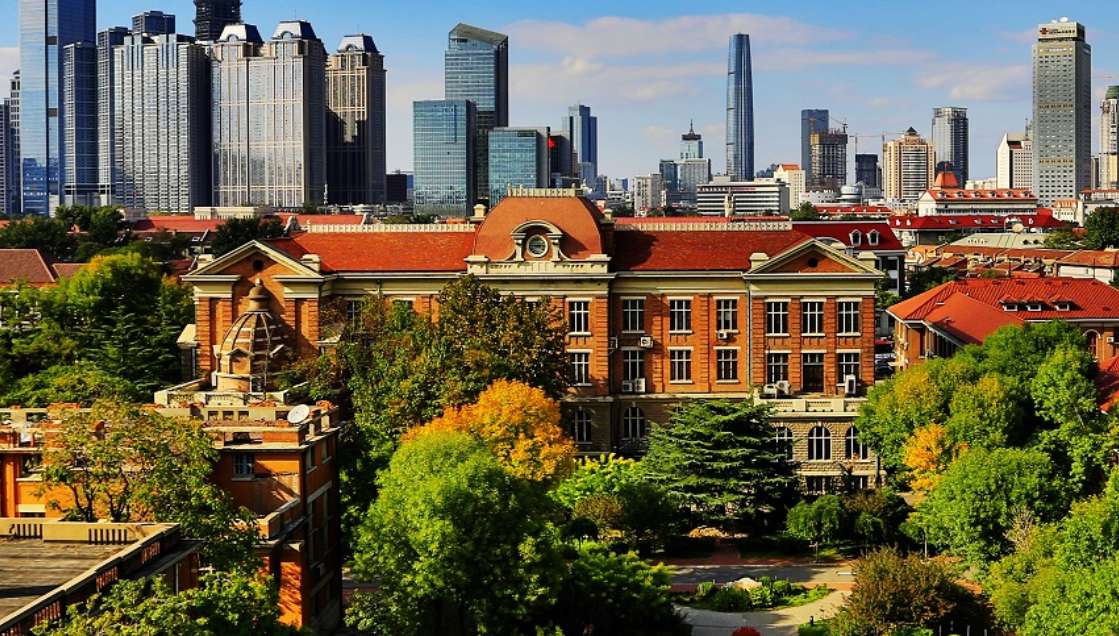
Tianjin was one of the first Chinese cities to come into contact with modern Western civilization and has been a leader in industry, finance, trade, business, education, and military affairs. It boasts more than 100 "firsts" in China, including the first university, public hospital, post office, and mint. ln the first half of the 20thcentury, Tianjin rapidly developed into an important foreign trade, industrial and financial center in northern China. It was also the second-largest industrial and commercial city, and the northern economic center of China. Thanks to its economic radiation and driving effects, northern China has witnessed unprecedented progress in modernization and export-oriented development across various industries. With the substantial improvement of overall economic strength, northern China has reversed the downward trend of its economic position and become one of the regions with a high level of economic development in China.
Location Advantage
Tianjin, located in northern China, is a transitional area from the Yanshan Mountains to the coastal plain. It has a total land area of 11,966.5 square kilometers, with the mounded plain area accounting for 93%. The highest point is Jiushanding Mountain, with an elevation of 1,078.5 meters above sea level. In contrast, the lowest point is only 3.5 meters, located in the southeast adjacent to the Bohai Bay. Tianjin has a geological history of 2 billion years, featuring diverse landforms. The Tianjin Jizhou District National Geopark is the only national geopark in China documenting the geological history of the Middle and Upper Paleozoic eras. Binhai New Area Beidagang Wetland The Haihe River, which is 73 kilometers long, meanders through the city and flows into the Bohai Sea. Tianjin's unique geographical location has made it a hub for north-south water transportation for over 1,300 years, from the Sui and Tang dynasties to the Ming and Qing dynasties.
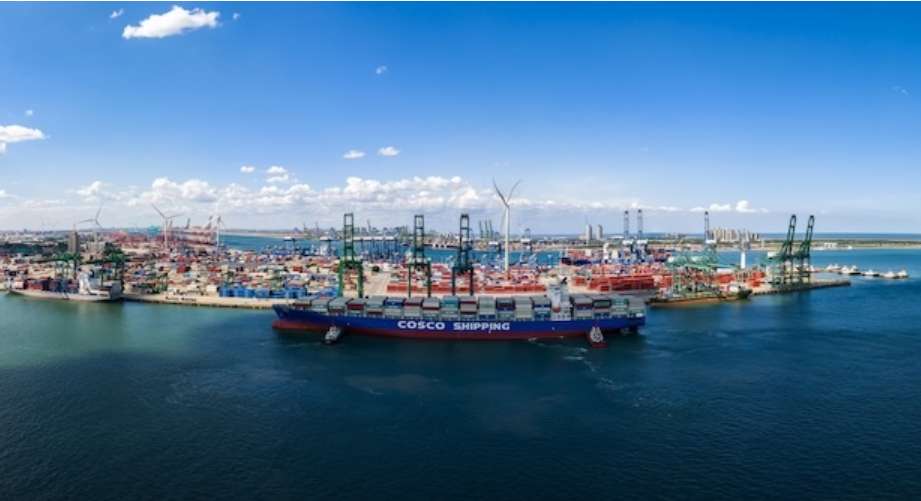
Tianjin is a crucial hub for both land and sea transportation along the "Belt and Road", located at the intersection of the Beijing-Tianjin-Hebei city cluster and the Bohai Sea Rim Economic Circle. It serves as an important seaport for neighboring inland countries. Tianjin Port is the strategic resource and hardcore advantage of Tianjin, with shipping routes to all major ports in the world and the largest liner services operated by the top three global shipping alliances. It is being developed as a "golden node" on the 21st Century Maritime Silk Road.
The Founding of Tianjin Garrison “Zhuanweitu” is a painting that depicts the transportation of grains in Tianjin during the reign of Emperor Kangxi (1662-1722) of the Qing Dynasty. The name "Tianjin" was adopted in the Ming Dynasty (1368-1644), meaning "the ford where the emperor, Son of Heaven, crossed the river". The city is also known as "Jingu" or "Jinmen".
The earliest official reference to the place is "Sanhui Haikou” (the mouth of three rivers) in Tong Dian (General Records) of the Tang Dynasty (618-907).
After the opening of the Beijing-Hangzhou Grand Canal in the Sui Dynasty (581-618), Tianjin became a transportation hub connecting the capital Chang'an to the east of Hangu Pass and east of Taihang Mountains due to its location near the rivers and the Bohai Sea. From the middle of the Tang Dynasty (618-907), Tianjin played a key role in transporting grain and silk from the south. During the Jin Dynasty (1115-1234), a fortress was built and in the Yuan Dynasty (1206-1368), a town as established at Zhigu, both serving as important military bases and grain transportation centers.
ln 1400, Zhu Di crossed the river at Zhigu and seized imperial power in Nanjing, becoming Emperor Yongle three years later. He established a garrison on December 23,1404 at the place where his troops crossed the river, naming it Tianjin. The left and right garrisons were added in 1405 and 1406. In 1652, the three garrisons were merged into the Tianjin Garrison, marking the founding of Tianjin and laying a foundation for its future development.
During the reign of Emperor Zhengde of the Ming Dynasty (1506-1521), Tianjin had become a bustling hub of river and sea transportation. The rivers were crowded with ships carrying grains, while the streets were lined with shops selling various goods. The majority of the trade was in grain and groceries from the south. By the end of the Ming Dynasty, Tianjin had transformed into a metropolis, rather than a garrison.
Tianjin is the only city in ancient China with an accurately recorded founding date. Since its official establishment in 1404, it has had a remarkable history of 619 years. Tianjin in Modern Times
Tianjin was one of the first Chinese cities to come into contact with modern Western civilization and has been a leader in industry, finance, trade, business, education, and military affairs. It boasts more than 100 "firsts" in China, including the first university, public hospital, post office, and mint. ln the first half of the 20thcentury, Tianjin rapidly developed into an important foreign trade, industrial and financial center in northern China. It was also the second-largest industrial and commercial city, and the northern economic center of China. Thanks to its economic radiation and driving effects, northern China has witnessed unprecedented progress in modernization and export-oriented development across various industries. With the substantial improvement of overall economic strength, northern China has reversed the downward trend of its economic position and become one of the regions with a high level of economic development in China.
Location Advantage
Tianjin, located in northern China, is a transitional area from the Yanshan Mountains to the coastal plain. It has a total land area of 11,966.5 square kilometers, with the mounded plain area accounting for 93%. The highest point is Jiushanding Mountain, with an elevation of 1,078.5 meters above sea level. In contrast, the lowest point is only 3.5 meters, located in the southeast adjacent to the Bohai Bay. Tianjin has a geological history of 2 billion years, featuring diverse landforms. The Tianjin Jizhou District National Geopark is the only national geopark in China documenting the geological history of the Middle and Upper Paleozoic eras. Binhai New Area Beidagang Wetland The Haihe River, which is 73 kilometers long, meanders through the city and flows into the Bohai Sea. Tianjin's unique geographical location has made it a hub for north-south water transportation for over 1,300 years, from the Sui and Tang dynasties to the Ming and Qing dynasties.
Tianjin is a crucial hub for both land and sea transportation along the "Belt and Road", located at the intersection of the Beijing-Tianjin-Hebei city cluster and the Bohai Sea Rim Economic Circle. It serves as an important seaport for neighboring inland countries. Tianjin Port is the strategic resource and hardcore advantage of Tianjin, with shipping routes to all major ports in the world and the largest liner services operated by the top three global shipping alliances. It is being developed as a "golden node" on the 21st Century Maritime Silk Road.
MORE+


Jobs
Hot Jobs
MORE+Discover
Upon Arrival

Attractions
Entertainment

Travel
Health

Service

Education
MORE+


Stories
MORE+




© Copyright : Foreign Talent Research Center, MOHRSS (人力资源和社会保障部国外人才研究中心) 1998-2026 网站备案号码 京ICP备08003099号-7  京公网安备11010802044359
京公网安备11010802044359