


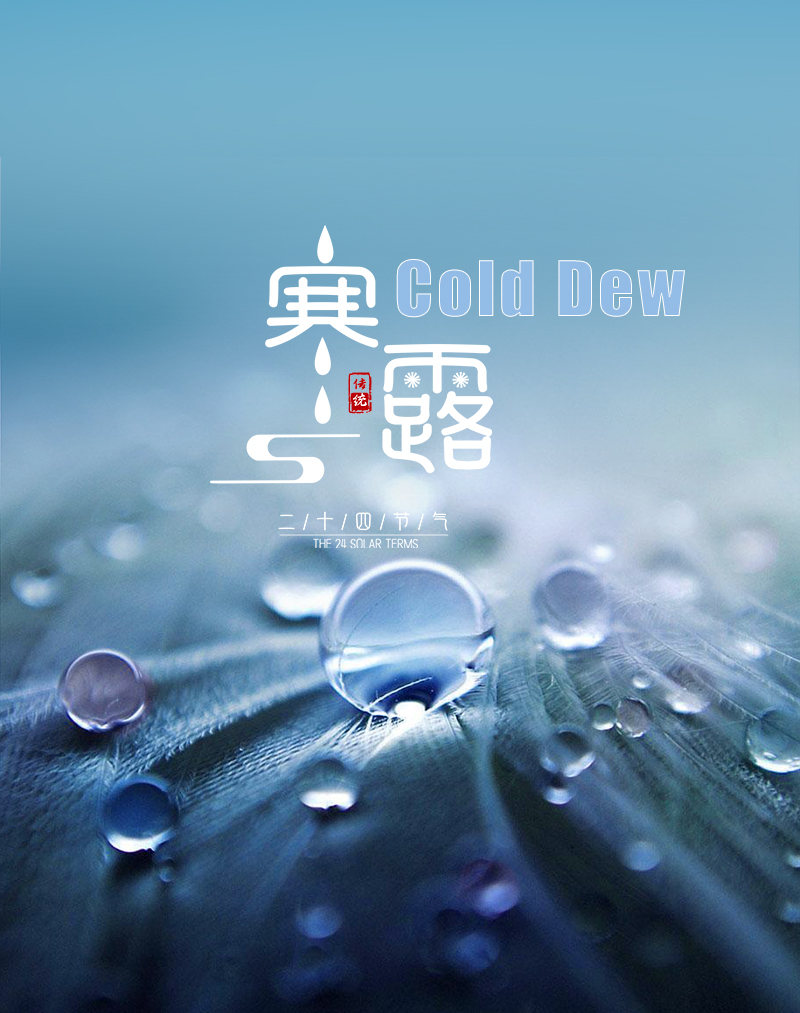
Cold Dew, or Hanlu, is the 17th of China‘s 24 solar terms. It begins around October 8 and ends around October 22 each year. It is the first solar term to feature the character han (寒), meaning “cold,” marking the shift from cool to cold weather. According to China Daily, the arrival of Cold Dew brings growing coldness, shorter daytime, and longer nights, with a hint of chill felt in the early mornings and evenings.
Food Customs:
Cold Dew is closely tied to seasonal foods. According to China National Radio (CNR), it is the best season for eating female crabs — as the saying goes, “September for round-bellied crabs, October for pointed-bellied ones.” In many regions, people also drink Cold Dew tea, which is known for its uniquely sweet and mellow fragrance. To prevent autumn dryness, there is a folk custom of eating sesame, with a popular proverb saying “Sesame and mung bean cake, eat it and you won‘t get sores”. In Fujian province, pomelos enter their peak harvest season during Cold Dew, and the juicy fruit becomes one of the defining tastes of autumn — eaten fresh, with a little salt to enhance sweetness, or paired with oolong tea. In Hunan province, the Dong ethnic group has the custom of making kippers during Cold Dew, using rice wine, salt, glutinous rice, pepper powder, and ginger to create a especially delicious preserved fish. Pomegranates are also ripe during this period, and many regions have the custom of drinking chrysanthemum wine to prevent autumn dryness — a tradition shared with the Double Ninth Festival.
Dressing and Health:
Cold Dew marks a clear turning point in temperature. As the Beijing News reports, “During White Dew, there is only a slight chill, but by Cold Dew, people feel the change deeply.” By this time, it is advisable to wear a sweater, especially in rural areas where people are more attuned to nature‘s shifts. The folk saying goes, “Cold Dew, Cold Dew, don’t expose your feet”, emphasizing the importance of keeping feet warm. People are advised to add clothing in the morning and evening, sleep with windows closed, and protect the neck, shoulders, and feet from the cold. A traditional dressing method is “inner layer close-fitting, middle layer loose, outer layer sealed at the cuffs” — with soft, close-fitting underwear for warmth, moisture-absorbing middle layers, and windproof outerwear.
Source: Chinajob


 京公网安备11010802044359