
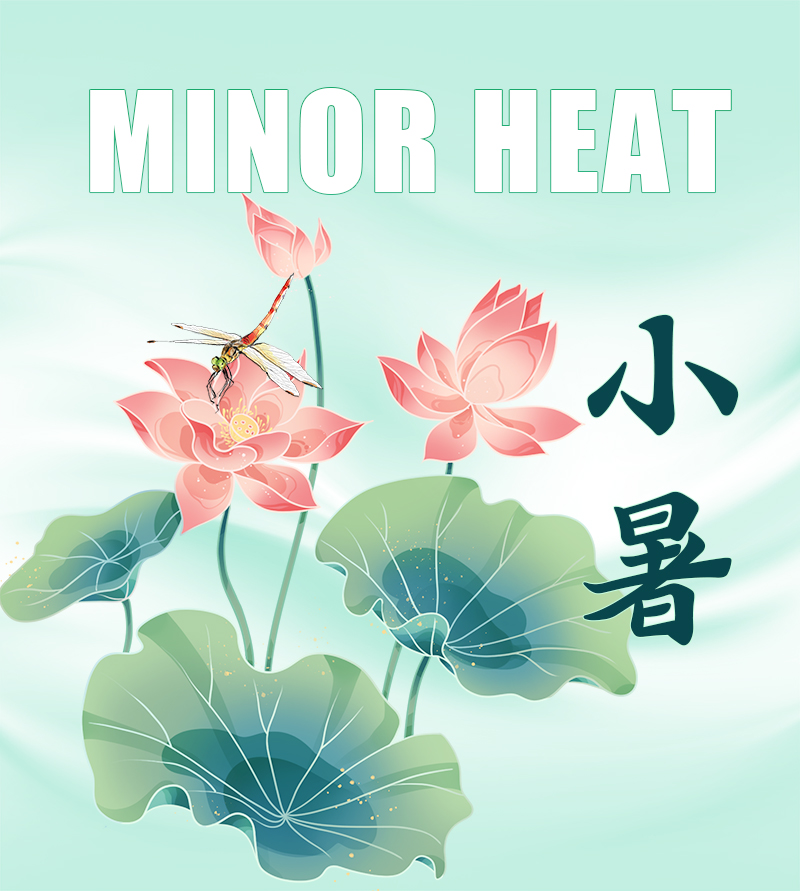
Minor Heat (Xiaoshu), the 11th of the 24 traditional Chinese solar terms, begins on July 7 this year. The name reflects the ancient belief that "the heat has arrived, but it has not yet reached its peak."
During Minor Heat, temperatures climb significantly across China, accompanied by abundant rainfall and strong sunlight. The season marks the approach of the "dog days" (Sanfu), when the weather turns notoriously hot and humid. As an old saying goes: during Xiaoshu and Dashu (Major Heat), the weather will "steam people first and boil them afterward."
In ancient times, the Chinese observed three natural phenomena during this period: crickets leave the fields for cooler yards, eagles soar to higher altitudes, and plants grow rapidly under the heat and rain. It is, as People's Daily Online describes, "a season of vibrant growth for all living things."
Common Traditions Across China
Several folk traditions are associated with Minor Heat:
- Eating fresh grains ("eating new") – In many parts of China, farmers mill newly harvested rice or wheat into flour, make patties or noodles, and share them with neighbors to celebrate the harvest and pray for good fortune.
- Eating dumplings – In northern China, eating dumplings during the "dog days" is a long-standing tradition. As the Beijing saying goes: "Dumplings for the first fu, noodles for the second, and pancakes with eggs for the third." Dumplings are believed to revive appetites during the hot summer days.
- Sunning clothes and books – With the year's strongest sunlight, families hang clothes and books outdoors to prevent mildew, giving rise to the saying "On the 6th day of the 6th lunar month, sunbathe your red and green garments."
- Eating lotus root – In southern water towns, people enjoy honey-glazed lotus root, which is valued for its heat-clearing and appetite-stimulating properties.
- "Sanfu tie" (dog-day plaster therapy) – A traditional Chinese medicinal practice during the dog days, where herbal plasters are applied to specific acupoints to expel cold and dampness from the body. This practice is widely observed in Beijing (where hospitals see long queues of patients seeking the therapy each year) and in Guangdong (where it is known as "Sanfu tianjiu").
Regional Traditions Across China
North:
- Beijing – The tradition of eating dumplings at the start of the dog days is deeply rooted. The people of Beijing believe that "eating dumplings in the dog days supplements summer and resists heat," and the dumpling's shape resembles a "golden ingot," symbolizing good fortune. Additionally, the "Sanfu tie" therapy is extremely popular, with major hospitals offering the service every year.
- Xuzhou (Jiangsu) – Eating mutton during the dog days is a long-standing tradition here, captured in the local saying: "A bowl of dog-day mutton soup in Pengcheng beats a prescription from a divine doctor." In 2021, the "Xuzhou dog-day mutton food custom" was inscribed on the national list of intangible cultural heritage.
South:
- Guangdong – Lingnan is hot and humid during Minor Heat, giving rise to the wisdom of living in harmony with the heat. The most popular practice is "Sanfu tianjiu" – applying herbal patches to acupoints to expel cold and dampness from the body. In Hakka areas, there is a tradition of "tasting the new" – cooking with freshly harvested rice and vegetables to celebrate the summer harvest.
- Hunan – With early rice ripening, there has long been a custom in the countryside of "tasting the new to thank the earth." The "June 6 Tasting New Festival" in southwestern Hunan is one of the region's most distinctive agricultural celebrations and was inscribed on the Hunan provincial intangible cultural heritage list in 2012. With its many rivers and ponds, Hunan is also known for its lotus root dishes – stir-fried lotus shoots, lotus root and pork rib soup, and crispy fried lotus root.
- Fuzhou (Fujian) – There is a saying: "Minor Heat eel is as good as ginseng" – eels are at their plumpest and most delicious during this time. Winter melon is also a favored food for relieving heat. In ancient times, sons-in-law in Fuzhou would give lychees to their fathers-in-law, and poets would gather at Xichan Temple to enjoy lychees and compose poetry.
In short: Minor Heat brings the full force of summer – heat, rain, growth, and a rich tapestry of traditions that have connected Chinese people to the rhythms of nature for centuries.
Source:Chinajob


 京公网安备11010802044359