


Recently, an AI-powered flying rescue robot introduced by Hangzhou’s scenic-area police has been drawing attention, with its almost sci-fi-like design catching viewers by surprise.
Hangzhoufeel was quick to spot this fresh example of technology entering everyday city life and shared the video on its overseas social platforms. On Facebook, it soon topped 140,000 views and received 228 interactions.
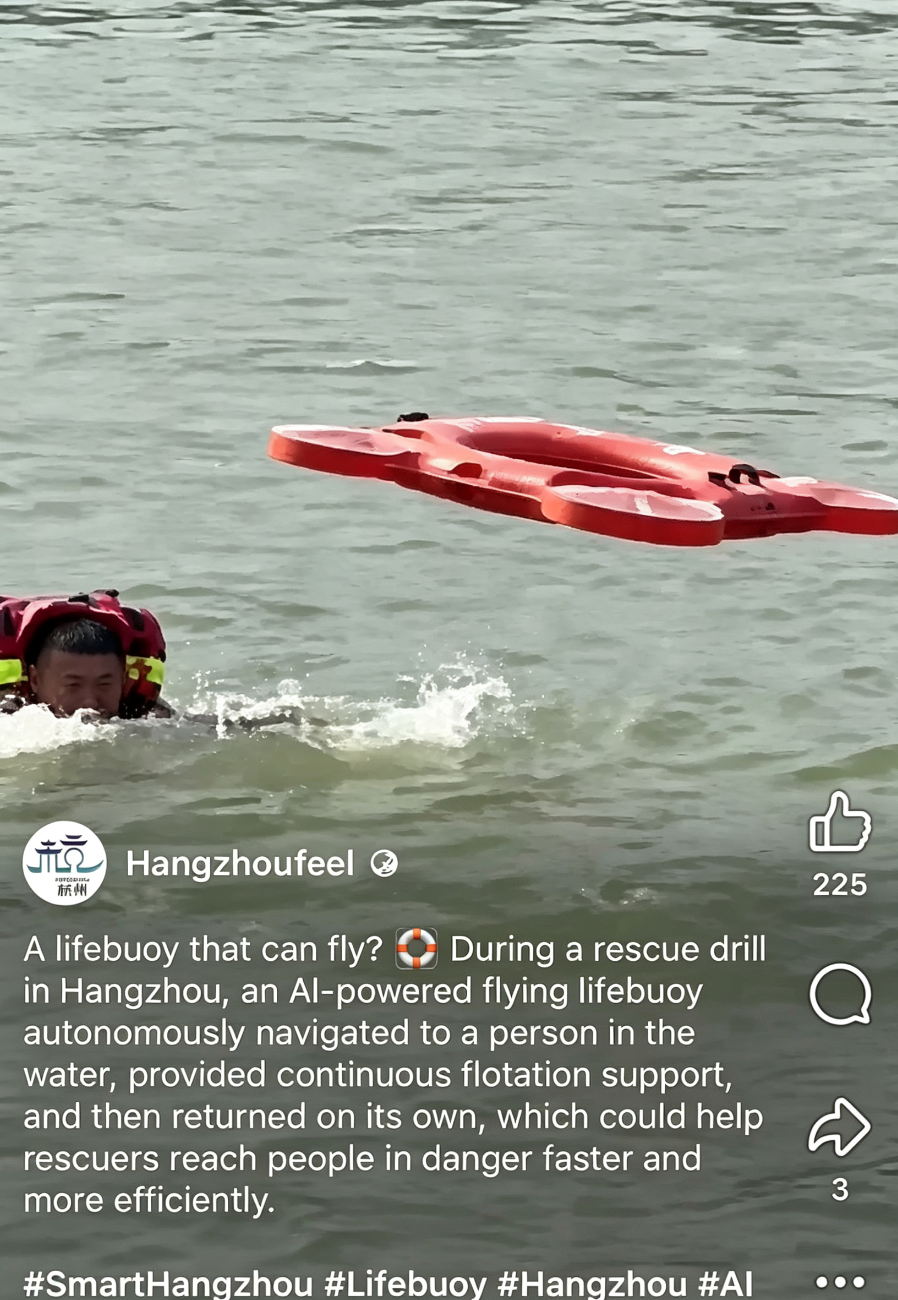
So why did a flying lifebuoy catch the attention of viewers overseas?
A lifebuoy that flies to you
During a water-rescue drill, an orange lifebuoy took off from the shore, flew toward a person in the water, then landed nearby to provide flotation support. Once the mission was complete, it returned automatically. It looks like an ordinary lifebuoy — except it can actually fly.
Developed by the Hangzhou Public Security Bureau’s West Lake Branch, the AI-powered flying rescue robot combines autonomous navigation with drone technology. In an emergency, it can quickly reach the target area, buying valuable time before professional rescuers arrive.
The story travels beyond Hangzhou
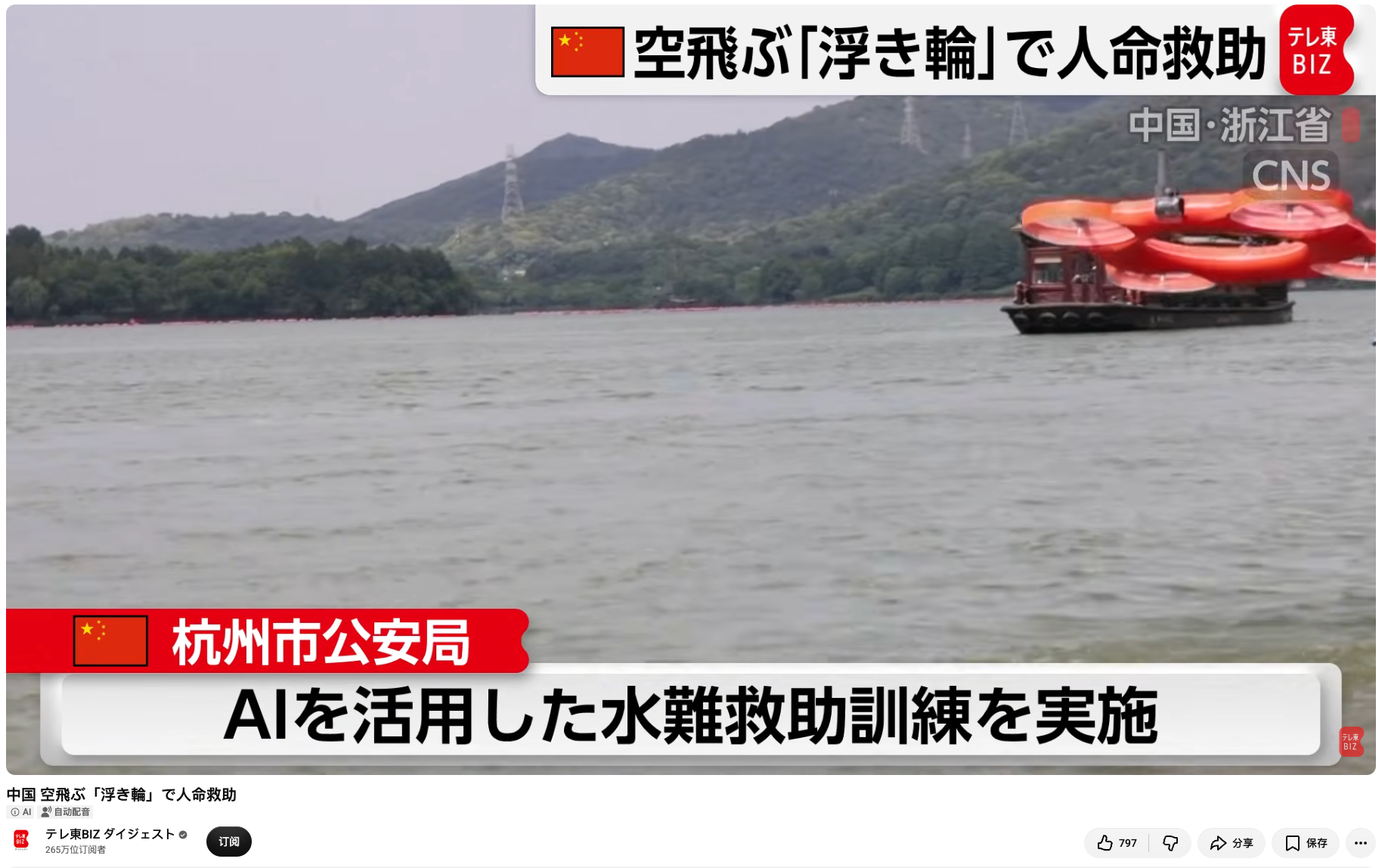
TV Tokyo’s “Tere-to BIZ Select” also featured the flying lifebuoy and its potential use in water emergencies, giving overseas audiences a direct look at this Hangzhou innovation.
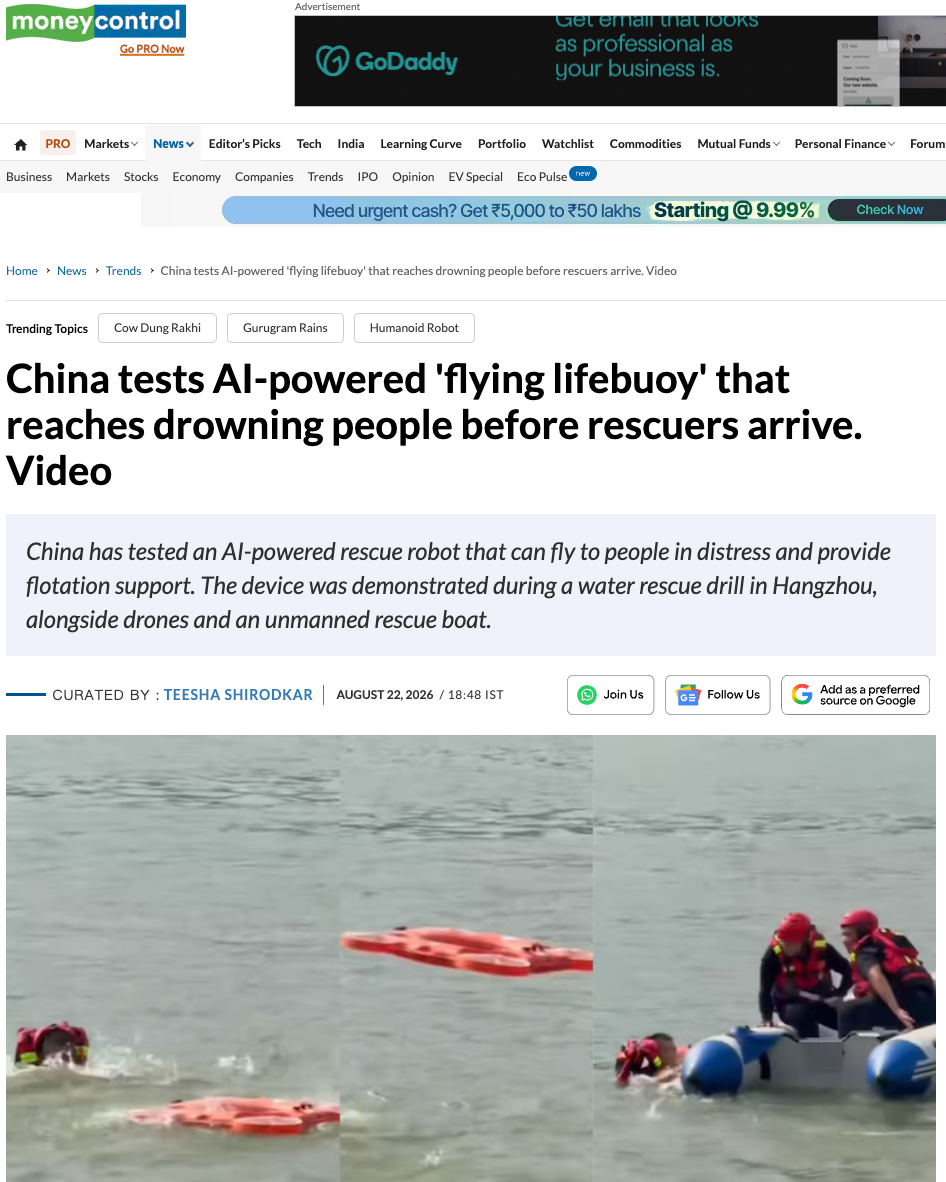
The story also caught the attention of Indian media. NDTV Profit described the AI-powered flying lifebuoy as a technology transforming water rescue, while Moneycontrol highlighted its ability to reach people in distress before rescuers arrive. Another Indian outlet, News Karnataka, focused on how the technology could improve emergency response in open water.
Technology is more than just “cool”
”Flying is certainly eye-catching, but the real value of this technology is that it allows rescue support to arrive one step earlier. In open waters such as lakes and rivers, there is often a gap between the moment an emergency is spotted and the arrival of professional rescuers.
A flying lifebuoy can make use of that gap by reaching the person first, providing basic flotation support and buying precious time for the rescue that follows. It is not meant to replace rescuers. Instead, it can act as a rescue assistant that gets a head start.
Beyond the flying lifebuoy, Hangzhou is also exploring technologies such as drones that deliver rescue equipment and coordinated search-and-rescue operations involving unmanned boats.
AI is part of everyday life in HangzhouAI
In Hangzhou, AI and robots are no longer limited to laboratories or technology exhibitions. They are finding their way into urban transport, culture and tourism, public services, and everyday places such as lakesides and parks. This is also the human side of Hangzhou that Hangzhoufeel has always tried to capture.
This time, it comes in the form of a flying lifebuoy. There is no complicated technical concept for ordinary people to decode. It simply addresses a very practical question: when danger strikes, can help arrive a little faster?
Perhaps this is another side of Hangzhou as a smart city — technology does more than make a city “smarter”; when it truly matters, it can also help the city reach out a little faster.
Source: Hangzhoufeel


 京公网安备11010802044359