


Stepping into the Liuxia Public Service Complex in Hangzhou’s Xihu District feels like entering a “home of the future” designed for older adults. An accessible smart kitchen and bathroom designed for wheelchair users, exoskeletons that assist with walking, and a wide range of eldercare technologies came into view, one after another. All these scenes left the international media delegation on a "Tech for Good" tour with yet another eye-opening experience — as if a new world had been unveiled to them. Turkmenistani influencer Guncha Atajanova, who has a background in clinical medicine, came eager to learn how technology could improve the lives of older adults. Here, she found the answer.
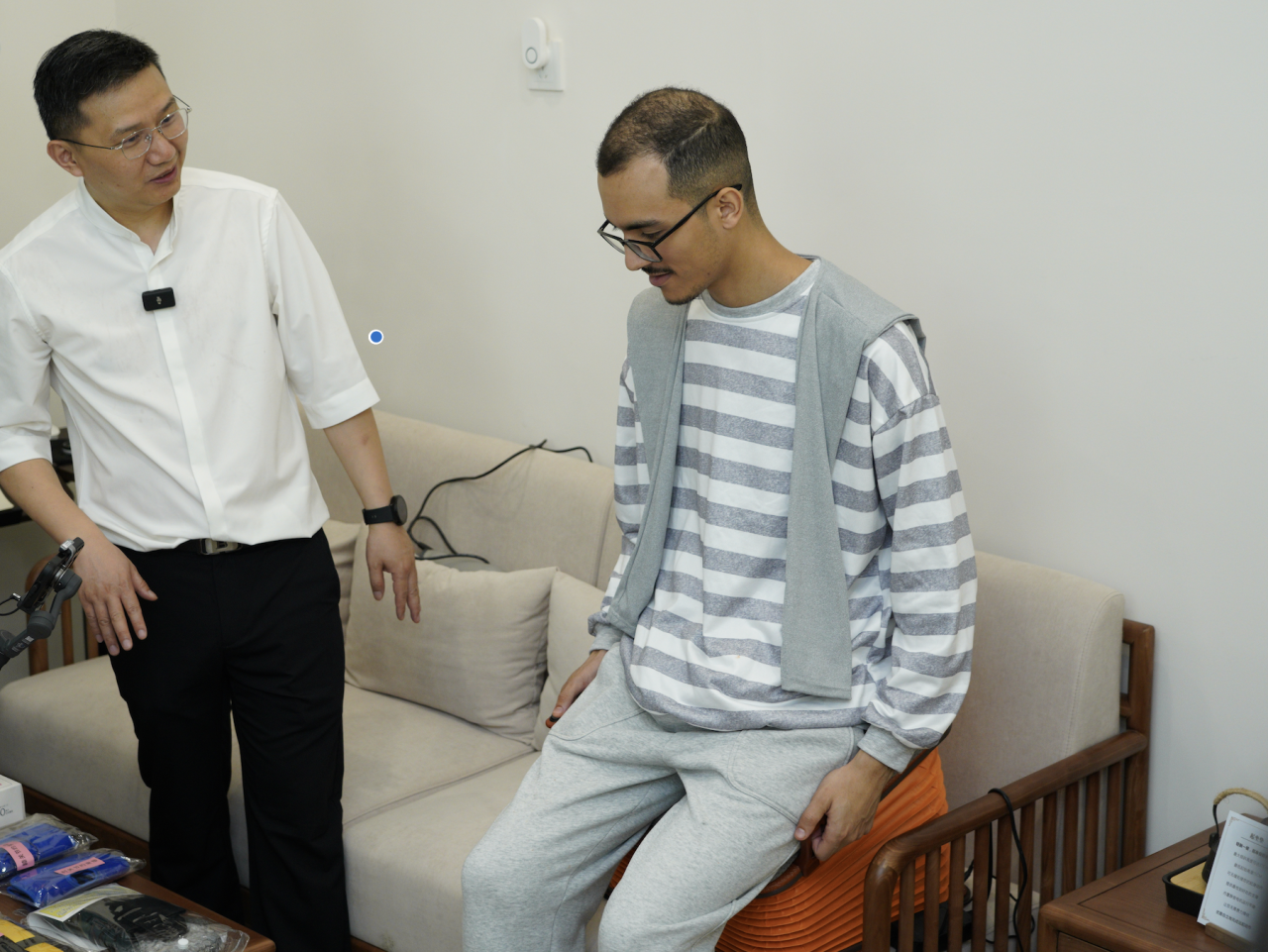
“Many older people aren't simply looking for a better chair,” said Qiu Zhenghua, Head of Hangzhou Operations at Yuexin Lehuiju, which manages the eldercare center, pointing to what looked like an ordinary cushion. “As they get older, standing up from a seated position becomes difficult, and that moment of getting up can also cause dizziness and lead to falls. This seat lift can solve that problem.” Moroccan influencer Ossama ABBAD immediately sat down to try it. With the press of a button, the seat gently lifted, and in less than ten seconds, he was naturally brought to a standing position.
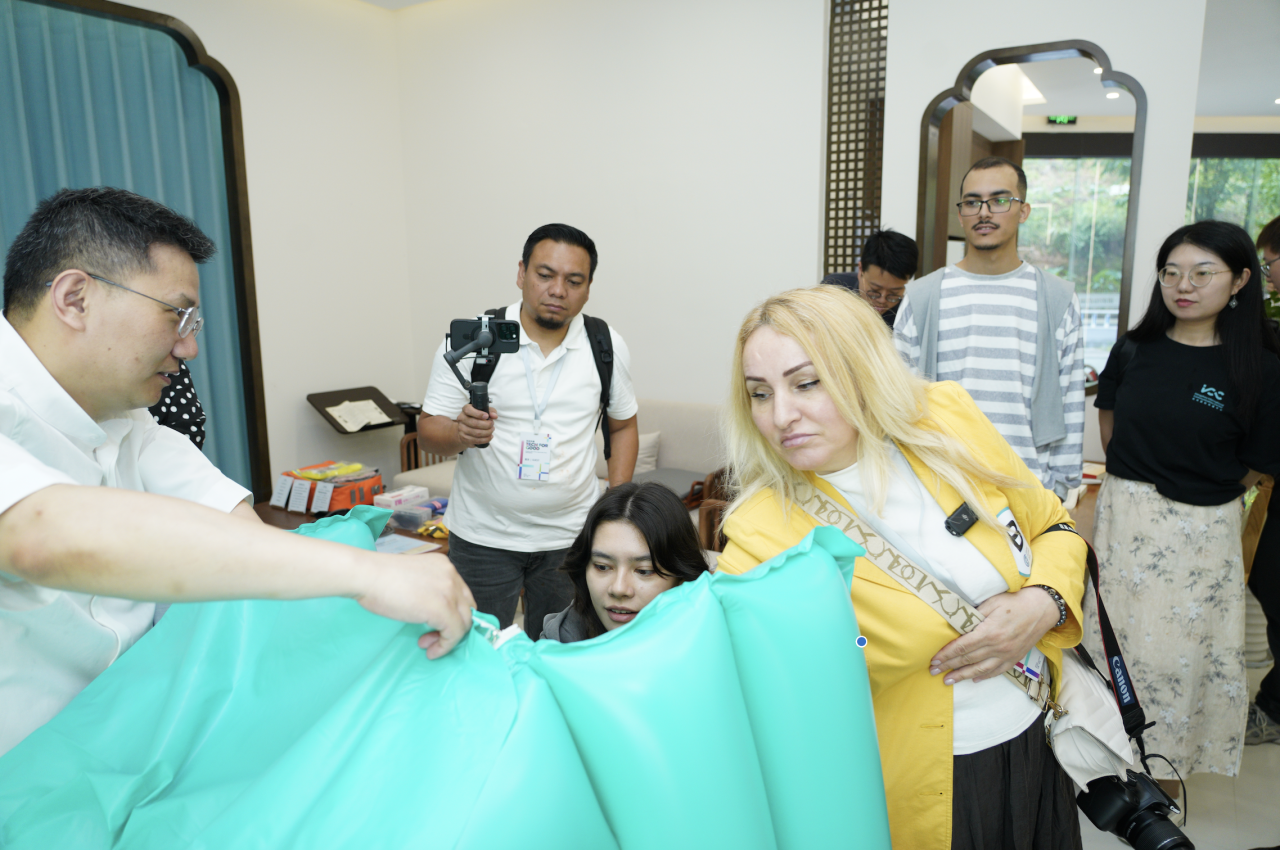
What impressed the media delegation even more was the smart bathing machine. It is a foldable inflatable bathing system that takes just 30 seconds to inflate into a private bathtub. Once an elderly person lies inside, fine water jets spray gently from tiny openings around the sides, allowing them to enjoy a full-body bath without scrubbing themselves. So far, in China, more than 45 million older adults with physical or cognitive impairments face significant challenges when it comes to bathing, including safety risks, and a lack of privacy. Technologies like this are making it possible for them to enjoy a comfortable bath with dignity.
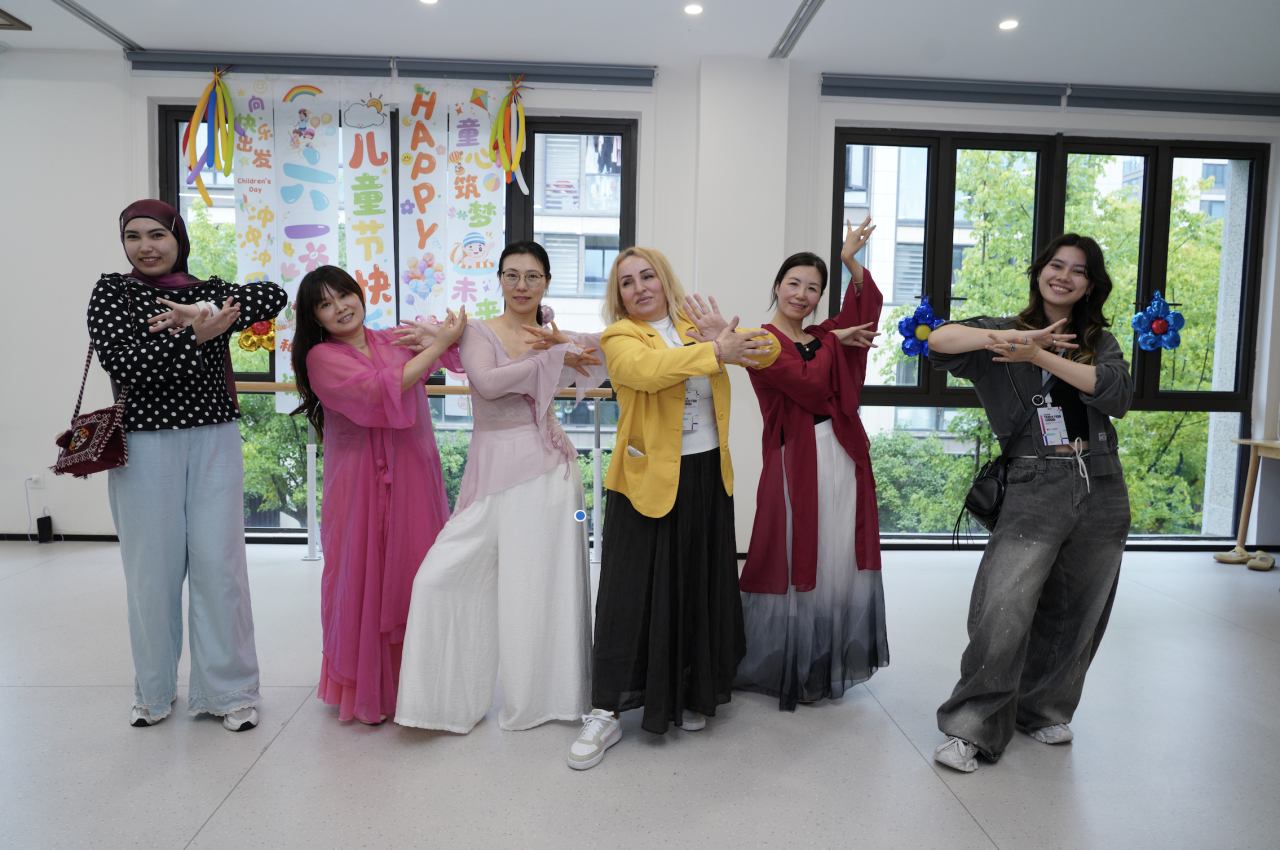
In another section of the center dedicated to senior living, the delegation met two local women who proudly introduced their community in the Hangzhou dialect. “We are locals,” they said. “Our community has just kept getting better. We have a 24-hour gym, dance classes, and even an intelligent robot that can play chess with you.” In Hangzhou, many communities offer spaces where older adults can stay active and engaged. They are not simply receiving care passively, but actively participating in activities and enjoying their own fulfilling lives.
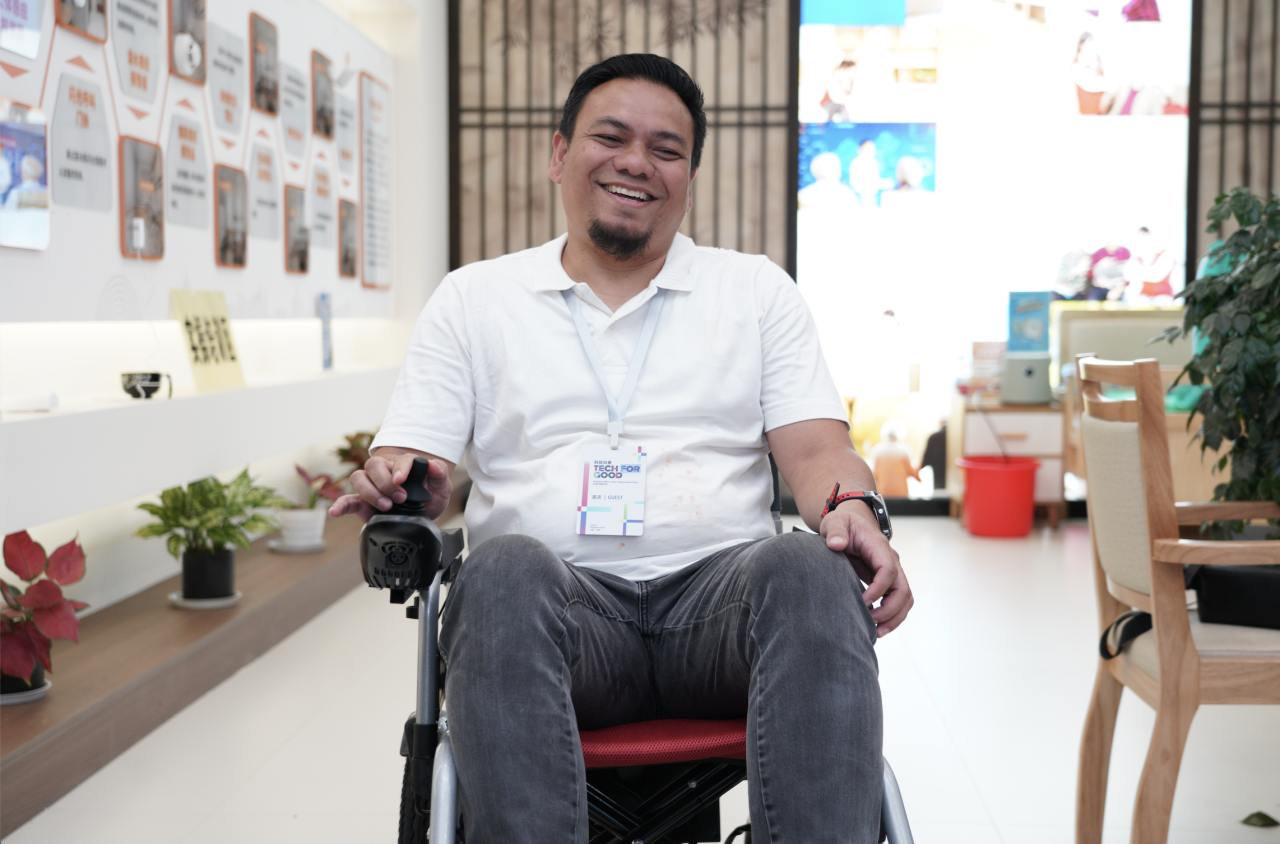
French host Manon Ruhlmann found the experience fascinating. “In France, I rarely see such a centralized technology exhibition and experience center dedicated to senior care services, especially one located right inside a community. This is definitely something worth promoting.” Azerbaijan influencer Esmira Gasimova watched everything closely and said, “In Azerbaijan, the older generation is our greatest treasure. The government continues to expand social support for older adults every year. What touches me the most is that Hangzhou’s technology is truly helping people, making it easier for seniors to bathe, cook, and go out independently.”
If the Liuxia Public Service Complex focuses on addressing the decline of physical abilities among older adults, “Haima Remembers” tackles a more hidden and heartbreaking challenge: Alzheimer’s disease.
The final stop of the tour was Hai Ma Ji De (Haima Remembers) (Hangzhou) Health Technology Co., Ltd., a company dedicated to using AI to enable the early screening, prevention, and intervention of cognitive impairment.
One sentence on the wall made Esmira stop and reflect for a long moment: “Treat every parent in the world as if they were our own.” She said, “In Azerbaijan, many families are also facing the challenges brought by dementia among older adults. If we can use accessible tools to detect warning signs earlier, it is not only a breakthrough in technology, but also a reflection of social care.”

With her medical background, Guncha paid particular attention to this issue. “Alzheimer’s disease is not only a major challenge for patients, but also for their families and caregivers. Here, I can see the hopes. Medical innovation can help older adults maintain their cognitive abilities for longer and live more independently.”
Initiated by the Hangzhou International Communication Center (HZICC), the second phase of the "Gateway to Opportunities, China's Industry Stories" international communication program has gone through a month-long global recruitment campaign. From June 3 to 5, the final delegation brought together overseas media professionals and content creators from countries including Indonesia, Azerbaijan, Morocco, Mexico, Kazakhstan, Turkmenistan, Pakistan, and other countries. They embarked on a journey to explore what is “Tech for Good” in Hangzhou.
Source: Hangzhoufeel


 京公网安备11010802044359