
The "Nihao China!" event, with South Korean photographers on a photography tour in Changsha was held between May 12 and 14, 2026. The event was co-hosted by the China National Tourist Office, Seoul and the Changsha Municipal Bureau of Culture, Tourism, Radio, and Television. Several photographers from the South Korea Photographers Association captured Changsha's natural landscapes, history, and culture through their lenses, embarking on a journey of discovery into Huxiang culture.
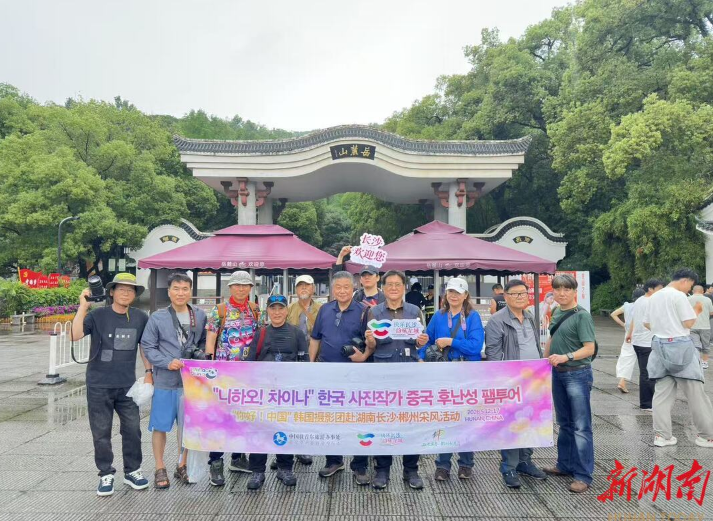
The South Korean photography delegation visits the Yuelu Mountain Scenic Area.
Using an integrated model of cultural tourism, photography, and media promotion, this photography tour aimed to foster a deeper understanding of Changsha's cultural and tourism resources among the South Korean photography community through on-site creative work. The initiative sought to produce a collection of high-quality images with global communication impact, further expanding Changsha's influence in the South Korean tourism market.
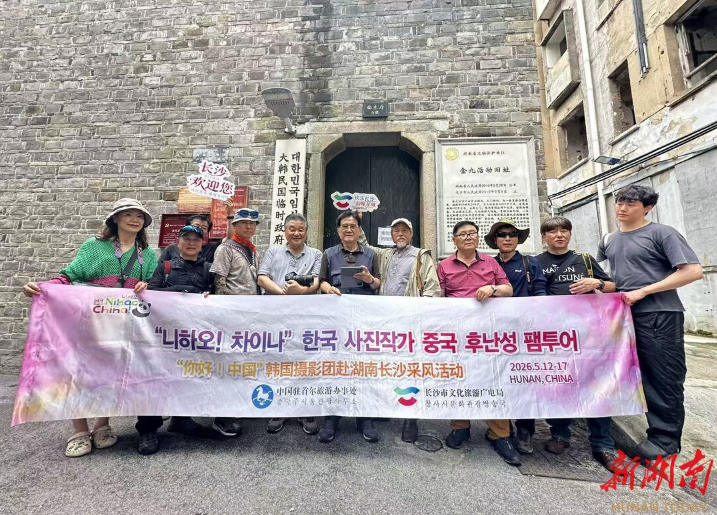
The South Korean photographers pose for a group photo in front of the Former Site of Kim Koo's Activities in Changsha.
During the three-day trip, the photographers visited several well-known cultural and tourist attractions in Changsha. From the sightseeing platform atop the Yuelu Mountain Scenic Area, they overlooked the Xiangjiang River, Orange Isle, and the downtown Changsha. At the Aiwan Pavilion, they experienced the simple yet elegant architectural artistry and the historical atmosphere steeped in over two centuries of cultural heritage. In the Tongguan Kiln Ancient Town, the Tang-style architectural complexes and the Tongguan Water Show complemented each other beautifully. The photographers frequently pressed their shutters to capture this distinctive cultural tourism town.
Upon entering the Changsha Museum, bronze vessels of the Shang and Zhou dynasties, artifacts from the Chu-Han period and Changsha Kiln ceramics from the Tang dynasty connect the historical threads spanning thousands of years in Changsha, providing rich cultural context for their photographic creations. The neatly-arranged granite-paved lanes of Chaozong Street Historical and Cultural Block, together with the Republican-era mansions, Jia Yi's former residence, trendy shops, and bustling eateries along the alleys of Taiping Old Street during the Ming and Qing dynasties, serve as rich sources of inspiration for the photographers. The Former Site of Kim Koo's Activities in Changsha, situated in the Chaozong Street Block, moved the delegation to pause and reflect, as it stands as a testament to the enduring friendship between China and South Korea forged through shared adversity.
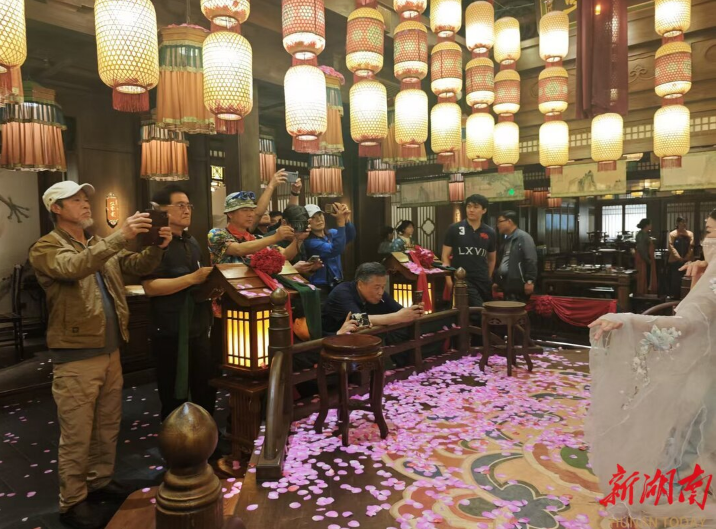
The photography delegation watches a traditional Chinese performance at a Tang-style cultural and tourism restaurant.
The South Korean photographers were also impressed by the "Changsha flavor." In the quaint Dongmao Street Teahouse, over a bowl of gaiwan tea and a few plates of traditional pastries, the photographers savored the authentic, laid-back pace of everyday life while capturing heartwarming scenes steeped in nostalgia. Stepping into the Wenheyou Culinary and Cultural Complex, they immersed themselves in the atmosphere of ancient Changsha, tasting the authentic Hunan delicacies like spicy crayfish, stinky tofu, and sugar-coated glutinous rice cakes that delighted both their lens and taste buds.
At a Tang-style cultural and tourism restaurant, the three-story market featuring spectacular performances such as Sichuan opera face-changing, traditional dances, and NPC interactions, instantly transported the photographers back to the prosperous Tang Dynasty. Classic Huxiang cuisine like topmouth culter, steamed fish head with chopped chili, and the signature frog dish had everyone eating nonstop. At Fire God Palace or Huogongdian Restaurant, a time-honored Chinese brand and a famous Chinese restaurant, the Huxiang folk culture—where "a restaurant houses a hall, a hall houses a temple, outside the temple lies a theater, and within the theater lies food"—left photographers in awe. Traditional Changsha snacks such as steamed fish head with chopped chili, stinky tofu, sugar-coated glutinous rice cakes, and Chairman Mao's red-braised pork enabled the photographers to fully appreciate the legacy of culinary culture.
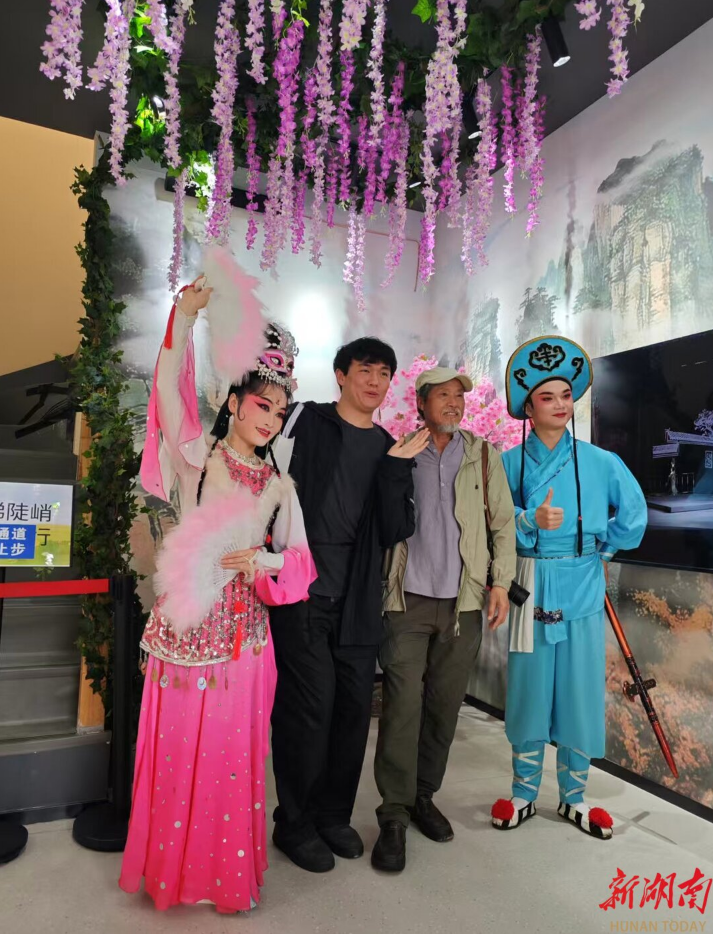
The photographers interact with Huagu Opera artists at the Changsha Opera Intangible Cultural Heritage Exhibition Center.
The photographers also experienced Changsha's unique cultural and tourism projects. At night, the delegation boarded a cruise ship on the Xiangjiang River, gliding through the dazzling lights lining both banks of the Orange Isle, capturing the city's enchanting nightscape—where mountains, rivers, and the isles converge—through their lenses. At the Changsha Opera Intangible Cultural Heritage Exhibition Center, the photographers enjoyed performances and interactive experiences featuring intangible cultural heritage such as Huagu Opera, Xiang Opera, Hunan embroidery, Gushan inkstone, and Changsha palm-leaf weaving. They took photos with the performers and personally experienced the unique charm of traditional Huxiang crafts and the rich, vibrant heritage. Additionally, the delegation experienced Changsha's characteristic foot bath wellness culture at a Yeahcome store.
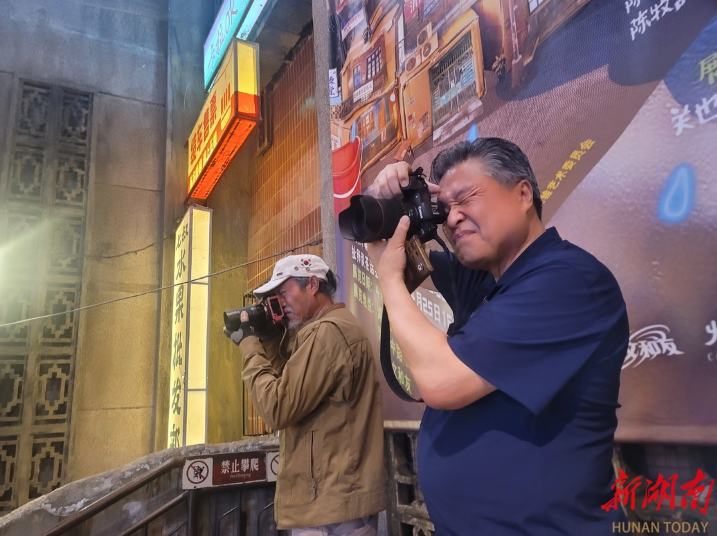
The delegation takes photos at Wenheyou in Changsha.
A South Korean photography delegate said that during the three-day trip, he witnessed Changsha's rich history, the vibrant energy of its daily life, and the charm of its old streets and alleys. He took many beautiful photos and created wonderful memories. Upon returning home, he plans to recommend Changsha's beauty to his friends and share his photos on social media to promote the city's cultural and tourism resources.
A spokesperson from the Changsha Municipal Bureau of Culture, Tourism, Radio, and Television noted that, as a national historical and cultural city, Changsha boasts both a rich historical heritage and a blend of stunning natural landscapes and a vibrant modern urban atmosphere, offering an abundance of subjects for photographic creation. "Using light and shadow as a medium and culture as a bridge, we aim to evoke emotional resonance among South Korean audiences through 'visible beauty.' We hope to leverage the 'soft power' of cultural exchange to expand inbound tourism to Changsha. We strive to achieve a breakthrough in brand recognition and foster emotional engagement with Changsha's urban image in the South Korean market," he added.
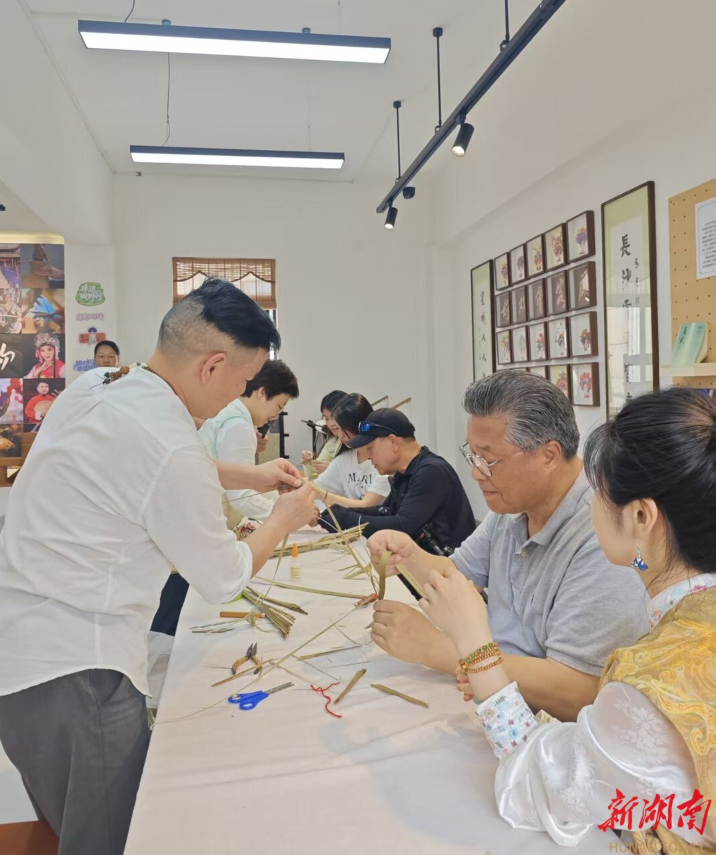
South Korean photographers learned to make Changsha palm-leaf weaving.
The cultural exchanges between Changsha and various sectors in South Korea are becoming increasingly close, and the interactions between the two sides continue to grow. To date, Changsha has established friendship city relations with Gumi, Daegu, and Gwangju in South Korea. South Korea has long ranked among the top source markets for inbound tourists to Changsha. In September 2025, Changsha successfully hosted the "Happy Changsha, Charming Star City" Changsha Cultural and Tourism Promotion Event in Seoul, continuously cultivating the core South Korean inbound tourism market.
This photography tour represents a targeted follow-up initiative by Changsha to focus on the South Korean inbound tourism market and build on the success of previous promotional efforts. It is also a practical step toward deepening cultural and tourism cooperation between Changsha and South Korea and securing a steady flow of visitors. Moving forward, Changsha will continue to actively cultivate the South Korean inbound tourism market by organizing delegations to attend international tourism exhibitions in Seoul. Additionally, outstanding works from this photography tour will be selected for special features on South Korean websites. By leveraging visual media, Changsha aims to keep enhancing the visibility and influence of its cultural and tourism brand in South Korea, further attract South Korean tourists to visit Changsha, and steadily expand the scale of inbound tourism from South Korea.
Translator: Yu Jiangjiang
Source: en.changsha.gov.cn (Chinese source: hunantoday)


 京公网安备11010802044359