


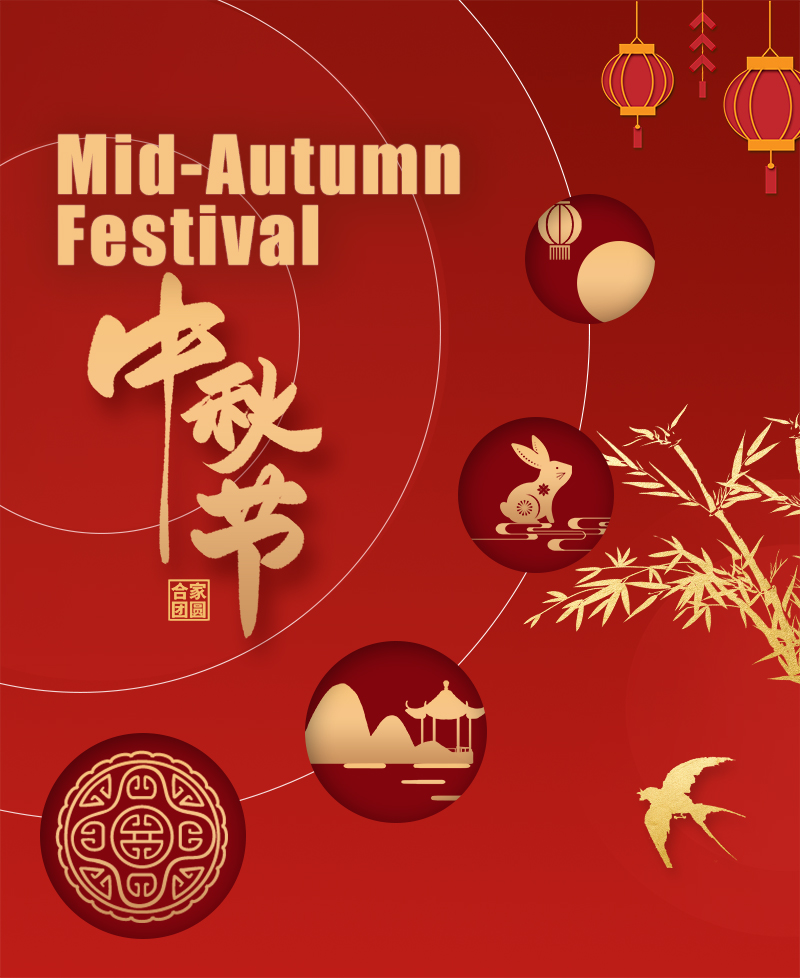
Key Facts: The Mid-Autumn Festival, also known as the Moon Festival, is one of the most important traditional Chinese festivals, second only to the Spring Festival (Chinese New Year). It falls on the 15th day of the eighth lunar month, when the moon is at its roundest and brightest. The day symbolizes harvest, family reunion, and gratitude.
Name and Origin
The festival takes its name from the fact that it is always celebrated in the middle of the autumn season. The Chinese have celebrated this festival at least since the Tang Dynasty (618–907), though descriptions of “Mid-Autumn” first appeared in the Rites of the Zhou, a collection of ritual matters from the Western Zhou Dynasty some 3,000 years ago.
In feudal times, Chinese emperors prayed to Heaven for a prosperous year. They chose the night of the 15th day of the eighth lunar month to hold a ceremony in praise of the moon. The Temple of the Moon (Yuetan) in Beijing was where emperors of the Ming and Qing dynasties worshipped the moon.
Core Symbolism: Reunion
The full moon on this day is seen as a symbol of family reunion, which is why the festival is also known as the “Festival of Reunion.” Mooncakes are traditionally round, as the Chinese word for “round” has a similar pronunciation to the words for “reunion” and “perfect”.
Customs and Traditions
Eating Mooncakes: Eating mooncakes while watching the full moon is an essential part of the festival. The word “moon cake” first appeared in the Southern Song Dynasty. A popular legend traces mooncakes to the 14th century, when rebel leader Zhu Yuanzhang used them to pass secret messages calling for an uprising against the Yuan Dynasty rulers.
Moon Worship: Since ancient times, the Mid-Autumn Festival has had the custom of moon worship. Today, people still worship the moon to express good wishes for home and country.
Lanterns and Dragon Dances: These are traditional activities during the holiday, popular mainly in south China, particularly in Guangdong Province and Hong Kong.
Lord Rabbit: Known as Tu’er Ye in Chinese, the Lord Rabbit is a traditional icon of the festival, depicted with a human body and rabbit’s ears and mouth.
Modern Status
The Chinese government listed the Mid-Autumn Festival as intangible cultural heritage in 2006. It was made a public holiday in 2008. In 2023, a worldwide campaign celebrating the festival was launched with the participation of over 60 overseas China cultural centers and tourism offices, featuring performances, exhibitions, and interactive experiences to share Chinese culture globally.
Source: People's Daily / China Daily / English.gov.cn


 京公网安备11010802044359